Multiplexer Integrated Circuits and how they optimize data routing in modern electronics
Multiplexer integrated circuits help you control data. They work like a traffic controller at a busy street. Each signal is like a car waiting its turn. The circuits pick the right path for each signal.
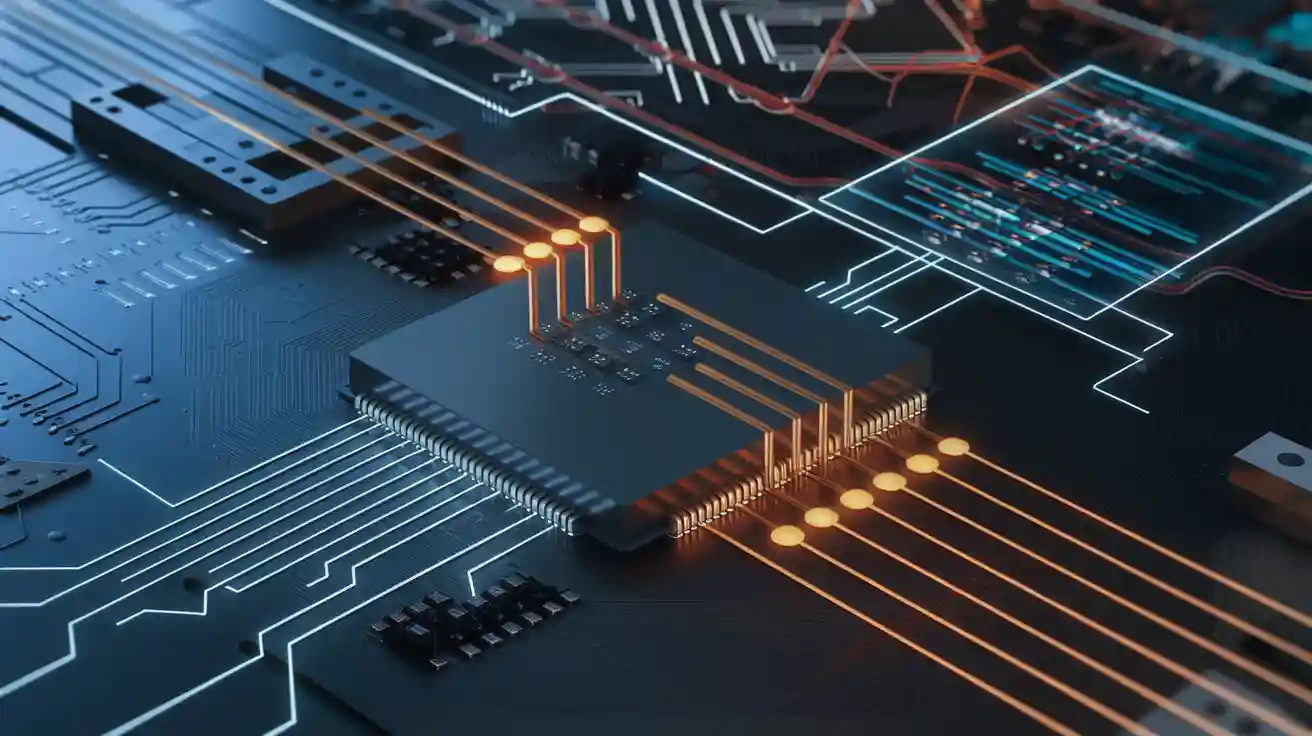
Multiplexer integrated circuits help you control data. They work like a traffic controller at a busy street. Each signal is like a car waiting its turn. The circuits pick the right path for each signal. They send one signal from many inputs to one output. This keeps data moving smoothly and fast. It also means you need less hardware and can handle more data. When you make data flow better, you use fewer resources. This helps the whole system work better.
Key Takeaways
-
Multiplexer integrated circuits pick one input from many. They send data through one output. This saves hardware and space.
-
Control signals work like switches. They help multiplexers pick the right data path fast and correctly.
-
Using multiplexers means less wiring and fewer parts. This makes electronics smaller, faster, and more dependable.
-
Multiplexers and demultiplexers work together to send data both ways. This makes systems more flexible and quicker.
-
These circuits are very important in computers, phones, cars, and networks. They help handle more data for less money.
Multiplexer Integrated Circuits in Data Routing
Role in Digital Systems
Multiplexer integrated circuits help control how data moves in electronics. They work like smart traffic controllers. These circuits use control signals to pick one input from many. Then, they send that input to one output. This lets you decide which data goes through at any time. For example, in memory, a mux helps choose the right memory spot by turning on the right address line. In arithmetic logic units, mux circuits let you pick between different jobs or data sources. Simple control signals make this happen.
Multiplexer integrated circuits are important in devices like analog-to-digital converters. You can connect many inputs to one converter. This saves hardware and makes your system work better. In network switches and routers, mux circuits help pick the right data packet from many. They send it to the correct place. This keeps data moving fast and correctly.
Mux circuits are also used in digital communication systems. They mix several data streams into one channel using time-division multiplexing. This lets you send many signals, like phone calls, over one line without mixing them up. Control signals make sure only the right input gets sent out at the right time.
Bandwidth and Resource Optimization
Multiplexer integrated circuits help you use your system’s bandwidth and resources well. When you use a mux, many inputs can share one wire or path. This makes bandwidth use better and means you need fewer wires or parts. For example, in data systems, you can connect many sensors to one analog-to-digital converter. This lowers hardware costs and makes your system smaller.
-
Mux circuits make digital logic simpler by needing fewer parts. This saves space, uses less power, and makes things more reliable.
-
In memory devices, mux circuits lower pin counts. This lets you design smaller and easier-to-grow systems.
-
In telecommunications, mux circuits make networks smaller and less complex. You can make your network faster and bigger without adding lots of new parts.
New research shows that advanced mux designs, especially those using machine learning, can reach much higher bandwidths. Some devices now go past a 200 nm bandwidth, so data moves faster and better. These new mux circuits also lose less data during transmission.
Simulation studies show that good flow control in mux circuits, like managing voice bit rates and keeping data buffers small, lowers packet delays and stops data from piling up. This means better data flow, even when the system is busy. New mux designs using FinFET technology at 10 nm use less power, are smaller, and switch faster than old MOSFET designs. This helps move data quickly and efficiently in today’s electronics.
Industry reports say mux and demux parts are used in fast optical communication systems. Companies like Intel, Cisco, and Huawei use these circuits for data centers and 5G networks. These systems need lots of channels, exact wavelength choices, and little crosstalk. Mux circuits help meet these needs, so they are very important for fast and reliable data routing today.
How Multiplexer Integrated Circuits Work
Control Signals and Selection
You use control signals to pick which input goes to the output. These signals work like switches. They tell the mux what input to choose. Each control signal is a 0 or a 1. This helps the mux decide which path to use. When you change the control signals, the data path changes too. This is called signal switching.
Multiplexer integrated circuits use logic gates to make choices. Gates like AND, OR, and NOT help with this. The control signals turn on certain gates. Only the chosen input can go to the output. For example, a 4-to-1 mux uses two control signals. If you set them to 01, the second input goes to the output. The table below shows how different mux circuits use control signals:
|
Multiplexer Type |
Number of Inputs |
Number of Control Signals |
Control Signal Binary Combinations |
Input Selected by Control Signals |
|---|---|---|---|---|
|
2-to-1 |
2 |
1 |
0, 1 |
0 selects input 1, 1 selects input 2 |
|
4-to-1 |
4 |
2 |
00, 01, 10, 11 |
00 selects input 1, 01 selects input 2, 10 selects input 3, 11 selects input 4 |
|
8-to-1 |
8 |
3 |
000 to 111 |
Each binary code selects one of the eight inputs |
|
16-to-1 |
16 |
4 |
0000 to 1111 |
Each binary code selects one of the sixteen inputs |
You can see that control signals help you pick the right input for your data.
Interaction with Demultiplexers
Mux circuits often work with demultiplexers to move data both ways. A mux picks one input from many and sends it to one output. A demultiplexer does the opposite job. It takes one input and sends it to one of many outputs. Control signals decide where the input goes.
|
Aspect |
Multiplexer (MUX) |
Demultiplexer (DEMUX) |
|---|---|---|
|
Function |
Selects one input from many inputs to a single output |
Routes a single input to one of many outputs based on selection lines |
|
Circuit Type |
Combinational circuit |
Combinational circuit |
|
Selection Lines |
Control which input is forwarded |
Control which output receives the input |
|
Mathematical Relation |
n inputs selected by m selection lines (n = 2^m) |
n outputs controlled by m selection lines (n = 2^m) |
|
Circuit Components |
Data input lines, selection lines, output line, logic gates |
Single input line, selection lines, multiple output lines, logic gates (AND, OR, NOT) |
|
Truth Table Example |
Selection lines determine which input is output |
Selection lines determine which output is active |
|
Practical Applications |
Telecommunications, broadcasting, computer memory addressing |
Signal distribution in telecommunications, memory address decoding, data routing in networks |
|
System Design Techniques |
Cascade arrangements to increase throughput and robustness |
Cascade arrangements to handle higher signal volumes and improve robustness |
You use mux and demux circuits together in many systems. These include telecommunication networks and computer memory. Using both lets you send data in both directions. This makes your system more flexible and faster. Studies in optical networks show mux and demux circuits help you get fast and reliable data. When you use them together, you can move data quickly and cut down on delays.
Types and Features
Common Multiplexer Types
There are different types of multiplexer integrated circuits. Each type helps you move data in its own way. The most common types are:
-
2-to-1 Multiplexer: You pick one of two data inputs. You use one control signal to do this.
-
4-to-1 Multiplexer: Two control signals let you pick from four data inputs.
-
8-to-1 Multiplexer: You use three control signals to choose from eight data inputs.
-
16-to-1 Multiplexer: Four control signals help you pick one out of sixteen data inputs.
Some multiplexers are analog. They can handle both digital and analog data. Data multiplexers are used in memory, ALUs, ADCs, and networks. These types help you move data easily and keep circuits simple.
Tip: Always check how many control signals you need. This helps you pick the right multiplexer for your project.
Key Features for Efficiency
Multiplexer integrated circuits have features that make them work better. You use control signals to pick which data input goes to the output. This makes your circuit design simple and quick.
The 74HC157 multiplexer has four multiplexers in one chip. You can control all four with one Line Select input. This lets you handle many data streams at once. The Enable pin lets you turn the chip on or off.
Here are some good things about efficient multiplexers:
-
Low power use keeps your system cool and saves energy.
-
Internal logic gates help you manage signals and data with fewer parts.
-
You can use fewer wires and parts, so your design is smaller and more reliable.
-
Fast switching lets you move data quickly with less delay.
|
Performance Metric |
S-FED-based Multiplexer |
CMOS-based Multiplexer |
|---|---|---|
|
Noise Immunity |
High (up to 100 mV) |
Lower |
|
Power Consumption |
Very low |
Higher |
|
Propagation Delay |
Low at low power |
Higher at low power |
|
Power-Delay Product |
Much lower |
Higher |
|
Switching Frequency |
Lower |
You can see that new S-FED-based multiplexers work better. They have higher noise immunity and handle data faster. They also use less power and have less delay. When you use control signals well, your data routing gets smarter and your system works better.
Advantages in Modern Electronics
Simplified Circuit Design
Multiplexer integrated circuits make building circuits easier. These chips let you connect many inputs to one output. You do not need as many wires or parts. This makes your design smaller and easier to put together. You also save space on your circuit board. Using fewer parts means your system is more reliable and uses less power.
Multiplexers help you keep your wiring neat and simple. You can spend more time making your project work well instead of fixing messy wires.
Here is a table that compares new multiplexer designs to old ones:
|
Metric |
Proposed Multiplexer (R-CQCA-based) |
Existing Designs |
|---|---|---|
|
Quantum Cost |
6 (per R-CQCA gate) |
Higher |
|
Gate Count |
Reduced |
Higher |
|
Garbage Outputs |
Optimal |
More |
|
Latency |
0.25 |
Higher |
|
Area |
0.24 µm² |
Larger |
|
Cell Complexity |
177 cells |
More |
|
Design Approach |
Modular, reversible |
Less modular |
Reduced Latency and Improved Performance
Multiplexer integrated circuits help data move faster. You can switch between signals very quickly. This means your system reacts right away. Lower latency means you do not wait long for data to move. This is important for video streaming, gaming, and real-time controls.
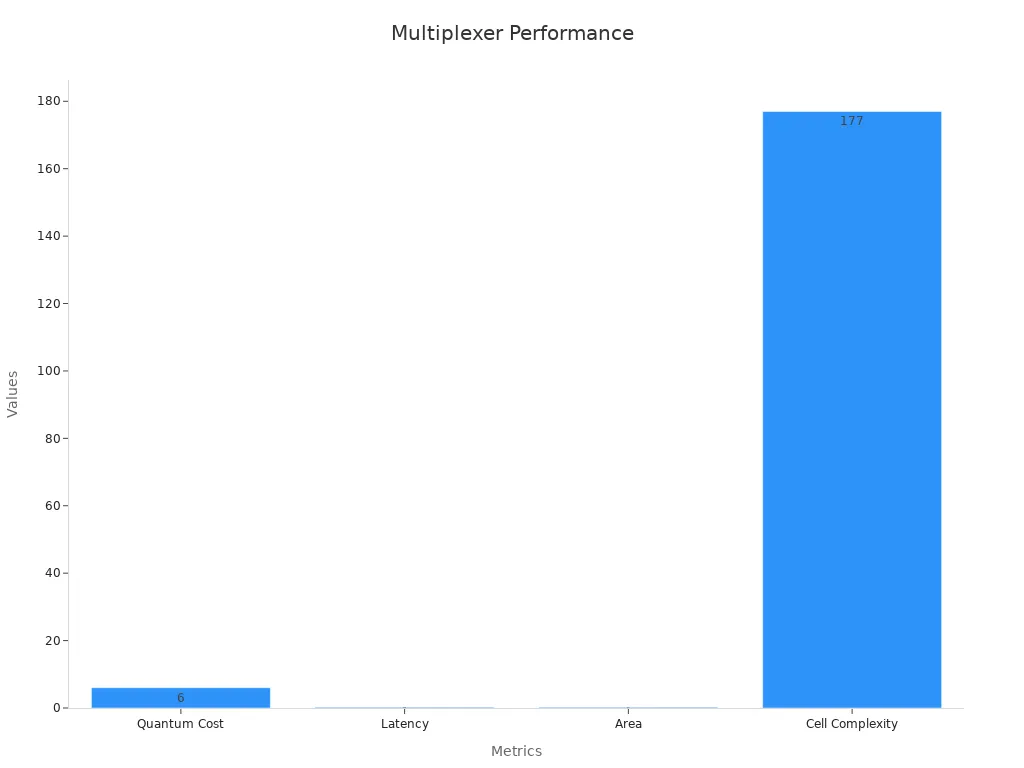
The chart shows the new multiplexer uses less space and has lower latency than old ones. This helps your devices run faster and use less energy.
Real-World Applications
You can find multiplexer integrated circuits in many digital devices. They are used in computers, smartphones, and network equipment. They help route data in routers and switches, so your internet stays fast and stable. You also see them in memory chips, where they pick the right data to read or write.
-
In cars, multiplexers help control sensors and safety systems.
-
In medical devices, they collect data from different sensors.
-
In smart homes, they manage signals from lights, alarms, and cameras.
Multiplexer integrated circuits make electronics smarter and more efficient. You can handle more data with less hardware. This saves money and space.
Multiplexer integrated circuits help you handle data well in electronics today. They make things work faster, cost less, and are easier to build. As digital systems get bigger and use more data, you will need these circuits even more.
Scientists now make multiplexers that move data quickly for 5G, cloud, and cars.
You might see new things soon, like:
-
Better multiplexers for IoT and smart gadgets
-
Fast solutions for data centers and robots
FAQ
What does a multiplexer do in electronics?
A multiplexer helps you pick one signal from many. It sends that signal to just one output. You use it to move data and make your circuits smaller.
How do you control which input a multiplexer selects?
You use control signals, called select lines, to choose. These signals tell the multiplexer which input to use. Each set of control signals picks a different input.
Where do you find multiplexers in real life?
Multiplexers are in computers, phones, cars, and network gear. They help move data in memory chips, routers, and smart home devices.
Can a multiplexer work with both digital and analog signals?
Yes, some multiplexers work with digital and analog signals. You must pick the right kind for your project. Always check the datasheet to see if it fits your needs.
Tip: Make sure your multiplexer matches your signal type for the best results.