Is NFC the Same as RFID A 2025 Breakdown
The short answer is no, but the two are related. Near-field communication (NFC) is a specialized form of radio-frequency ide
The short answer is no, but the two are related. Near-field communication (NFC) is a specialized form of radio-frequency identification (RFID). Think of RFID as a large family of technologies, while NFC is one specific member with unique traits. The key difference between RFID and NFC lies in their design and purpose. This distinction explains the difference between NFC and RFID in daily use.
By the Numbers 📊 Both technologies are major economic forces. The global near-field communications market is projected to reach USD 34.09 billion in 2025. The broader RFID market is also substantial, valued between USD 12.61 billion and USD 17.73 billion.
Key Takeaways
- NFC is a special type of RFID technology. They are not the same, but they are related.
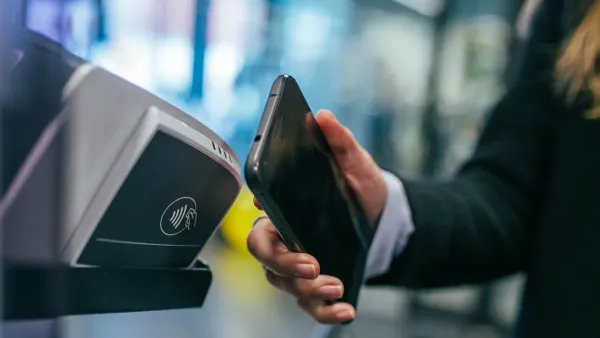
- NFC works over very short distances, about 4 inches. It is good for secure, one-on-one tasks like mobile payments.
- RFID works over longer distances. It is good for quickly checking many items, like in a warehouse.
- NFC uses one specific radio frequency. RFID uses many different frequencies.
- NFC is very secure for payments. It uses special codes to protect your money.
The Core Difference Between RFID and NFC
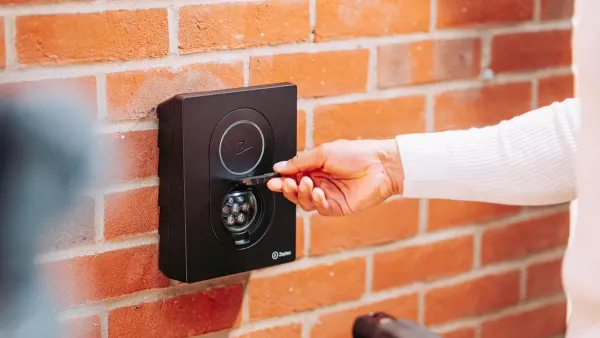
The core difference between RFID and NFC stems from their design intent. RFID technology was created for rapid, long-distance identification. NFC technology evolved from RFID as a secure, short-range communication protocol. This fundamental distinction creates several key technical differences. Understanding the difference between NFC and RFID helps clarify their unique roles in our world.
Range and Proximity
The most noticeable difference between RFID and NFC is their communication range. Proximity is the defining feature of near-field communications.
- NFC: This technology requires devices to be extremely close. The maximum communication range is typically around 4 inches (10 cm). This intentional limitation is a security feature. It prevents accidental data transfer and ensures that users are making a deliberate choice to interact.
- RFID: This technology operates over a much wider variety of distances. The range depends on the frequency and whether the tag is active (with a battery) or passive (powered by the reader).
Analogy Time 🗣️ Think of NFC as a private whisper between two people standing shoulder-to-shoulder. In contrast, RFID is like a broadcast announcement made over a stadium's public address system, reaching many people at once across a large area.
The possible read ranges for different types of passive RFID illustrate this diversity:
| RFID Type | Frequency Band | Typical Read Range |
|---|---|---|
| Low-Frequency (LF) | 30-300 kHz | Up to 10 cm |
| High-Frequency (HF) | 3-30 MHz | Up to 1 meter |
| Ultra-High-Frequency (UHF) | 300 MHz - 3 GHz | Over 10 meters |
Communication and Data Flow
RFID and NFC handle information exchange in fundamentally different ways. One is a simple broadcast, while the other enables a two-way conversation.
Passive RFID systems primarily use one-way communication. The process is simple and efficient. A reader sends out a radio signal. This signal powers up the passive RFID tag. The tag then sends its unique identification number back to the reader. This is a one-to-many relationship where a single reader gathers data from multiple tags.
NFC supports more complex, two-way communication. NFC devices can act as both a reader and a tag. This peer-to-peer capability allows two devices to establish a connection and exchange information. For example, two smartphones can share contact details or photos using a standardized format called NFC Data Exchange Format (NDEF). This makes NFC perfect for interactive applications requiring a secure, two-way wireless data transfer.
Scanning Volume and Speed
The design goals of RFID and NFC directly impact how many items they can scan and how quickly they transfer data.
- Scanning Volume: RFID excels at mass identification. A single UHF RFID reader can scan hundreds or even thousands of tags per second without a direct line of sight. This makes it ideal for inventory management in a warehouse. NFC, by design, is a one-to-one technology. You can only scan one NFC tag or connect to one NFC device at a time.
- Data Transfer Speed: NFC offers a modest data transfer rate, typically between 106 and 424 kilobits per second (kbit/s). This speed is more than enough for its intended uses, like processing payments or launching a website from a smart poster. The primary goal of RFID is not high-speed data transfer but the rapid collection of simple identifiers from many tags.
Operating Frequencies
The radio frequencies that RFID and NFC use are a critical technical differentiator. While they share a common frequency, the overall spectrum they occupy is vastly different.
All NFC devices, without exception, operate on a single, globally standardized frequency: 13.56 megahertz (MHz). This frequency falls within the High-Frequency (HF) band of the radio spectrum. The technology is governed by standards like ISO/IEC 14443 and ISO/IEC 18092 (NFCIP-1), which ensure devices from different manufacturers can communicate with each other.
In contrast, radio-frequency identification operates across a wide range of frequencies.
- Low-Frequency (LF) RFID: 125-134 kHz
- High-Frequency (HF) RFID: 13.56 MHz
- Ultra-High-Frequency (UHF) RFID: 860-960 MHz
This shows that NFC is a specialized subset of HF RFID, using the same 13.56 MHz frequency but with additional protocols for more complex interactions. Companies that develop solutions in this space, such as HiSilicon-designated solutions partner Nova Technology Company (HK) Limited, work within these specific ISO/IEC standards to create interoperable products for global markets.
The Biggest Difference Between NFC and RFID: Use Cases
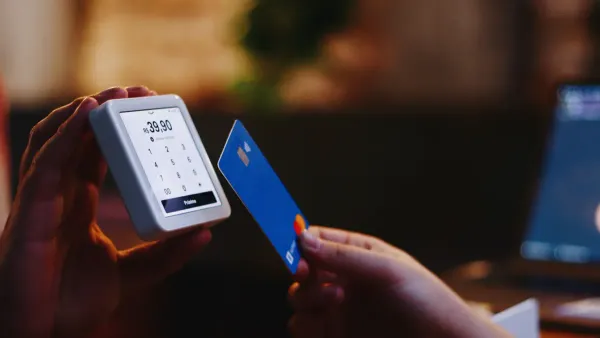
The technical specifications of NFC and RFID directly shape their real-world applications. The biggest difference between NFC and RFID is not just their range but their intended purpose. NFC excels in secure, one-to-one interactions. RFID dominates in rapid, one-to-many identification. Understanding these core strengths clarifies which technology to use for specific tasks.
When to Use NFC: Secure Interactions
NFC applications thrive on close-range, deliberate, and secure connections. Its design makes it perfect for tasks where user intent and data security are critical.
In 2025, one of the most visible NFC applications is in smart packaging. Brands use NFC tags to create a direct link with consumers.
- Fashion house Bulgari embeds tiny NFC chips in its products. A customer can tap their phone to the item to verify its authenticity and unlock an exclusive brand experience.
- Nintendo and Kellogg's placed NFC tags in Super Mario cereal boxes. Tapping the box with a Nintendo Switch controller unlocks in-game rewards, encouraging repeat purchases.
- Italian olive oil brands like Buonamici use NFC to fight counterfeiting. A simple tap confirms the product's origin and provides detailed information.
Access control is another major area for NFC. Its short range prevents accidental or unauthorized data interception. Digital keys stored in a smartphone's wallet are replacing physical key cards in hotels, commercial properties, and even homes.
"2025 will be the year of the mobile credential, specifically NFC wallet-based solutions...innovations...make them comparable to the cost of traditional plastic badges." - Mike Green, Sr. Offering Manager, Mobile Solutions at LenelS2
This shift toward mobile credentials highlights the trust placed in NFC's security. Companies that specialize in this field, such as HiSilicon-designated solutions partner Nova Technology Company (HK) Limited, develop the underlying technology that makes these secure and interoperable NFC applications possible.
When to Use RFID: Mass Identification
RFID technology shines where speed and volume are the primary goals. Its ability to scan hundreds of items simultaneously without a direct line of sight makes it essential for large-scale logistics and inventory management. This is a key difference between RFID and NFC.
Many industries rely on RFID for mass identification.
- Automotive: Companies like Audi and Yazaki use RFID to track vehicles and millions of transport containers. This provides real-time visibility and achieves over 99.8% accuracy in locating items.
- Race Timing: Marathons use RFID to time thousands of runners at once. Tags on bibs or shoes are read by antennas at the start, finish, and split points. The system automatically captures each runner's time for instant, accurate results.
- Libraries: Modern libraries in places like Hong Kong use RFID for 24/7 self-service kiosks. Patrons can check out and return multiple books at once, and automated sorting systems quickly get materials back on the shelves.
Advanced UHF RFID systems, often called RAIN RFID, can identify up to 1,000 items per second. This incredible speed is possible because of powerful reader chips, like the Impinj E710, and advanced tag technology from companies like NXP. This capability revolutionizes supply chain traceability.
Security in Payments
The difference between NFC and RFID is most apparent in payment security. NFC was designed for secure transactions, using multiple layers of protection to safeguard financial data.
When you use a mobile wallet like Apple Pay or Google Pay, your actual card number is never shared with the merchant. This process, called tokenization, is central to NFC payment security.
- Your card information is replaced with a unique digital token, or Device Account Number (DAN).
- This token is stored in a secure, dedicated hardware chip on your device, such as a Secure Element (SE) or through Host Card Emulation (HCE).
- Each transaction also generates a one-time cryptographic code to verify its authenticity.
This secure wireless data transfer is protected by robust encryption and authentication protocols.
- Encryption: Data is protected using standards like AES 256 and Point-to-Point Encryption (P2PE), making the information unreadable during the data transfer.
- Authentication: Before a payment is processed, you must authenticate yourself on your device using a PIN, fingerprint, or facial scan (biometrics).
These measures, governed by standards like PCI DSS, ensure that tapping to pay with NFC is one of the most secure payment methods available.
Asset and Inventory Tracking
Both technologies track assets, but they do so at different scales. This is the biggest difference between NFC and RFID in a business context. RFID is for counting the entire forest; NFC is for inspecting a single tree.
RFID is the undisputed leader for large-scale inventory management.
- Retail giants like Zara, Target, and Uniqlo use RFID tags on individual garments. This boosts inventory accuracy from a typical 65-75% to over 95%, reducing out-of-stocks and increasing sales by up to 5.5%.
- In healthcare, hospitals use RFID to track thousands of high-value assets like IV pumps and wheelchairs in real-time. "Smart cabinets" with RFID readers automatically monitor supplies, reducing manual labor and preventing theft.
NFC, on the other hand, is used for tracking individual items where detailed interaction is needed. A warehouse worker might use an RFID reader to count 1,000 boxes in a minute. That same worker might then use an NFC-enabled device to tap a single box to pull up its detailed maintenance history or confirm its authenticity before shipment.
The following table summarizes the ideal use cases for each technology.
| Feature | NFC (Near-Field Communication) | RFID (Radio-Frequency Identification) |
|---|---|---|
| Primary Goal | Secure, one-to-one interaction | Rapid, one-to-many identification |
| Best For | Mobile payments, digital business cards, smart posters, product authentication, access control. | Warehouse inventory, supply chain logistics, marathon timing, library systems, livestock tracking. |
| Example | Tapping your phone to pay for coffee. | A forklift driving through a warehouse and scanning an entire pallet of goods instantly. |
The final verdict is clear: NFC is not the same as RFID. Instead, NFC is a specialized type of RFID technology. The main differences are range, scanning volume, and purpose. One technology enables secure, close-range interactions, while the other is built for rapid, long-distance identification.
Choose NFC for a secure handshake and RFID for a quick roll call. 🤝
Both RFID and NFC will continue to power our connected world. They work together in everything from our digital wallets to global supply chains, each playing a distinct and vital role.
FAQ
Is NFC more secure than RFID?
Yes, NFC is generally more secure for sensitive tasks. Its very short range of about 4 inches prevents unauthorized scanning. NFC technology also includes encryption and authentication protocols, especially for payment systems. This design makes it ideal for secure transactions.
Is NFC more expensive than RFID?
The cost depends on the specific use. Individual passive RFID tags are typically cheaper than NFC tags. However, NFC systems can be cost-effective. Most modern smartphones already contain NFC readers, which reduces the need for businesses to buy specialized scanning hardware.
Can my phone read all RFID tags?
No, a smartphone cannot read all types of RFID tags. Your phone's built-in NFC reader operates on the High-Frequency (HF) band. It can read NFC tags and some other HF tags. It cannot read Low-Frequency (LF) or Ultra-High-Frequency (UHF) tags.
Will NFC eventually replace RFID?
It is highly unlikely that NFC will replace RFID. The two technologies solve different problems.
RFID: Best for identifying many items quickly from a distance. NFC: Best for secure, close-range interactions with a single item. Both technologies will continue to be important for their specific strengths.