Integrated Circuits as the Building Blocks of Modern Electronics
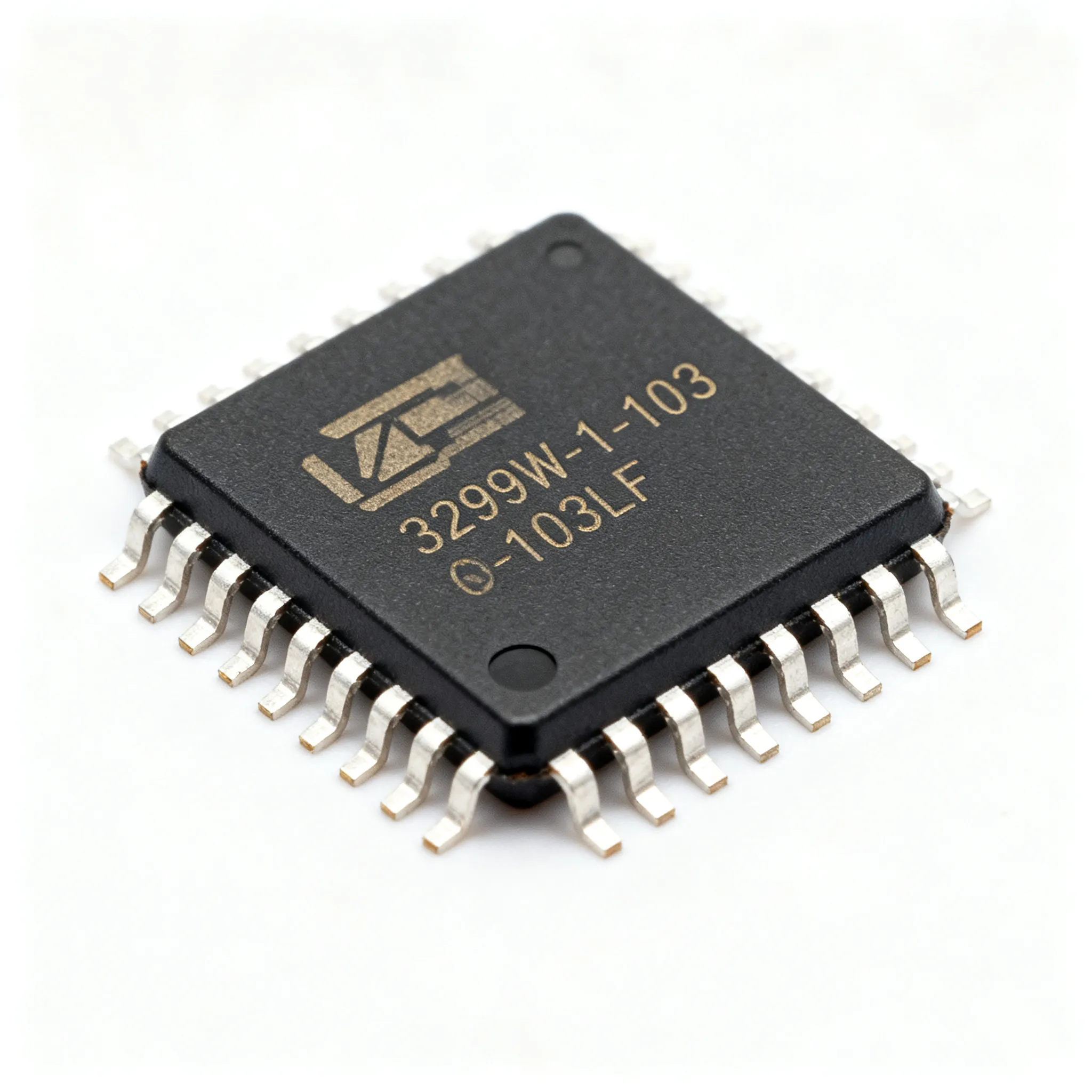
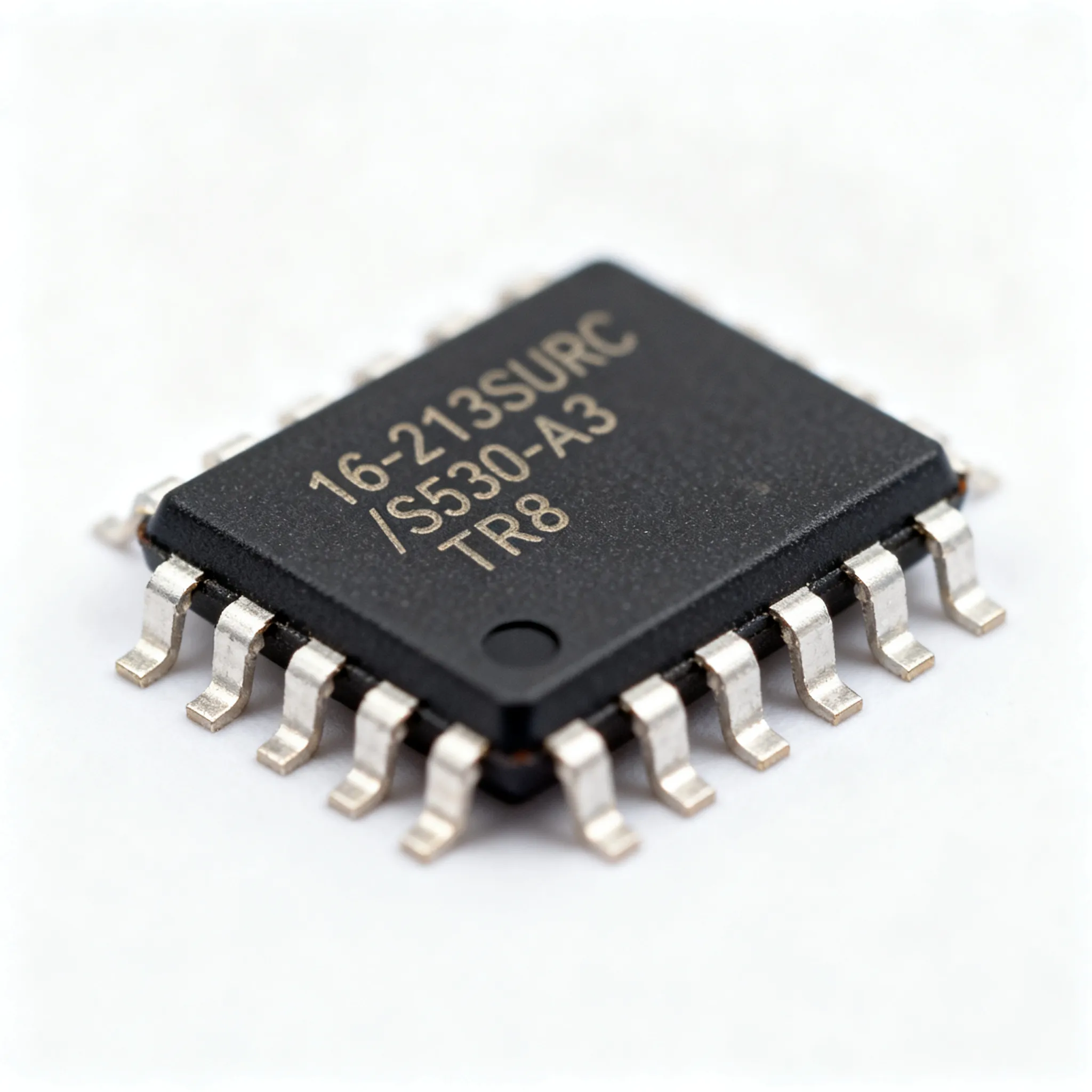
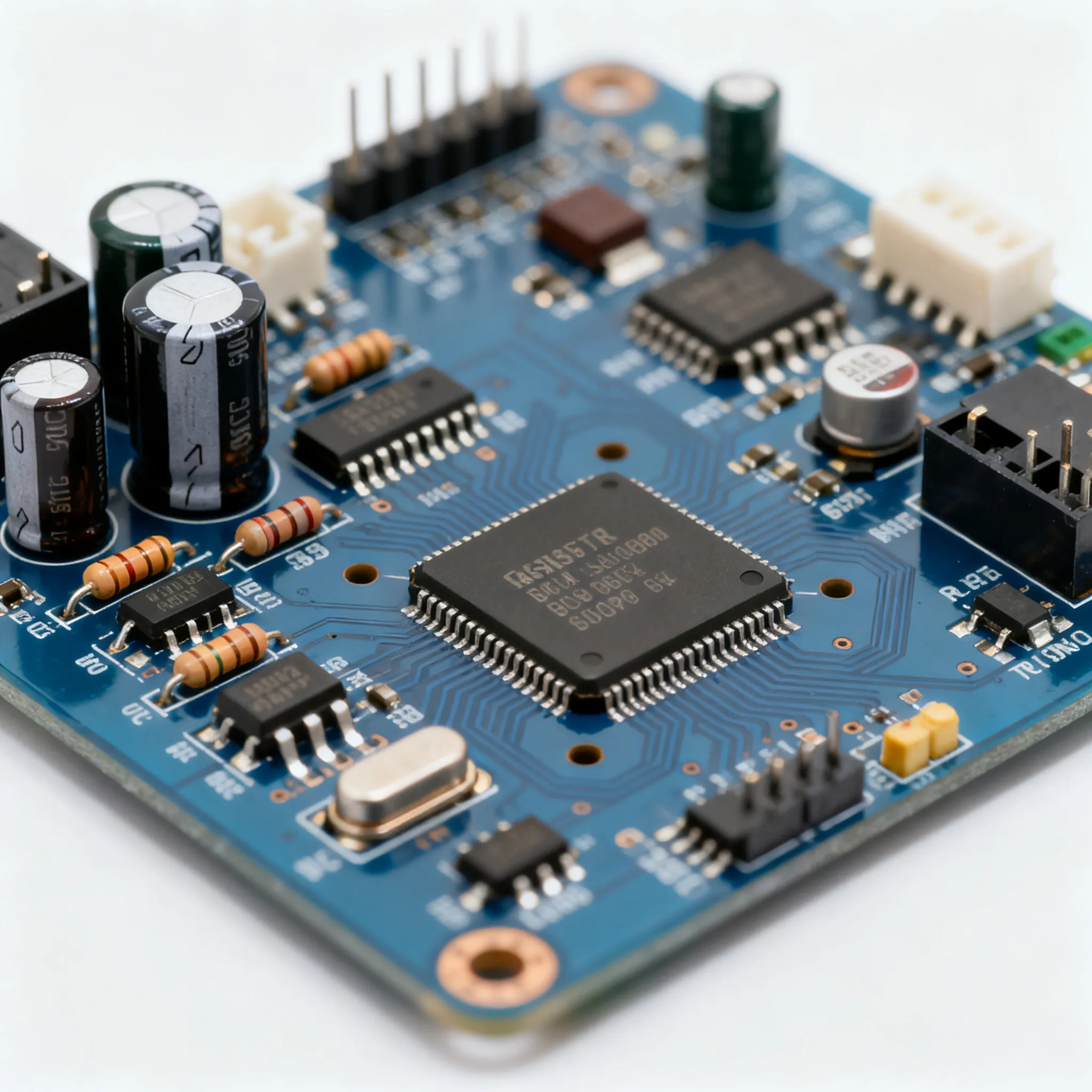
Integrated circuits stand as the building blocks of modern electronics, powering everything from smartphones to appliances. Each microchip combines electronic components like transistors, resistors, capacitors, and diodes on a single semiconductor chip.
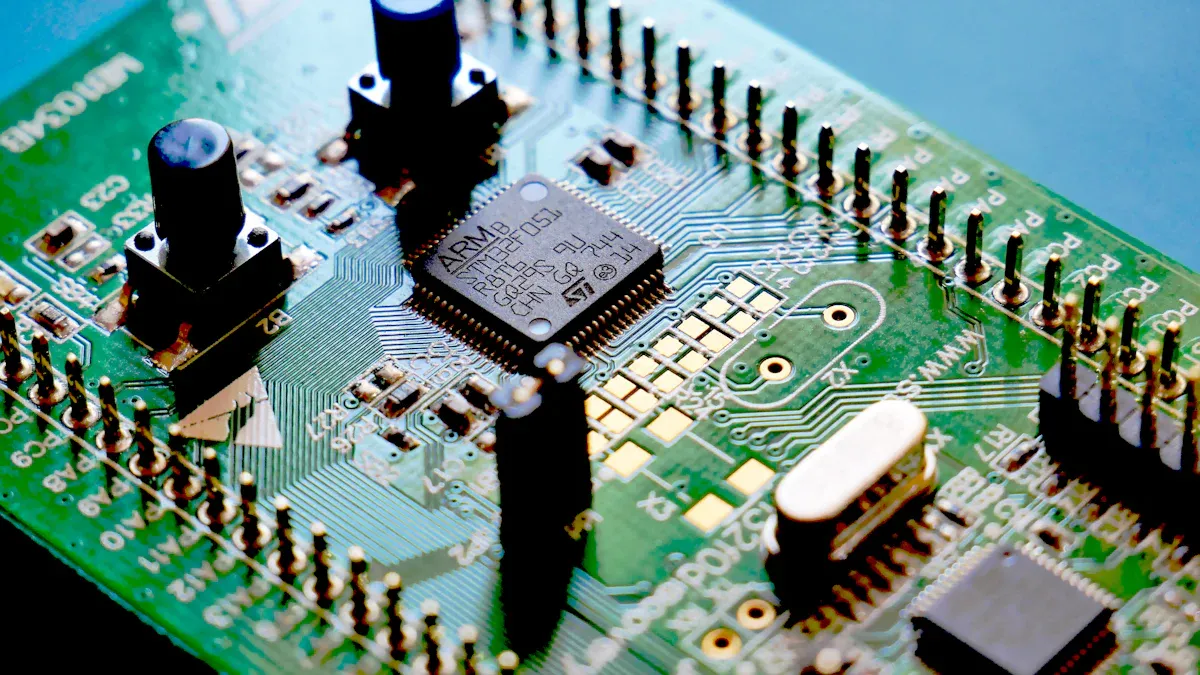
Integrated circuits stand as the building blocks of modern electronics, powering everything from smartphones to appliances. Each microchip combines electronic components like transistors, resistors, capacitors, and diodes on a single semiconductor chip. These microchips fit into nearly every modern electronic device, making technology smaller, faster, and more reliable.
-
Over the past 50 years, integrated circuits have enabled devices to shrink in size and drop in cost.
-
Lithographic advances have allowed more components to fit on a chip, doubling functionality every two years.
-
The cost per component has fallen by about 50% every three years, making electronics more accessible.
As a result, integrated circuits continue to shape the evolution of electronic components and drive innovation in technology.
Key Takeaways
-
Integrated circuits combine many electronic parts on a tiny chip, making devices smaller, faster, and more reliable.
-
ICs power almost all modern electronics, from smartphones and computers to medical devices and cars.
-
Miniaturization of ICs allows more functions in less space, improving device portability and battery life.
-
Different types of ICs handle digital, analog, or mixed signals, each serving unique roles in technology.
-
Future advances like 3D ICs, new materials, and AI design will make chips even more powerful and efficient.
ICs as Building Blocks
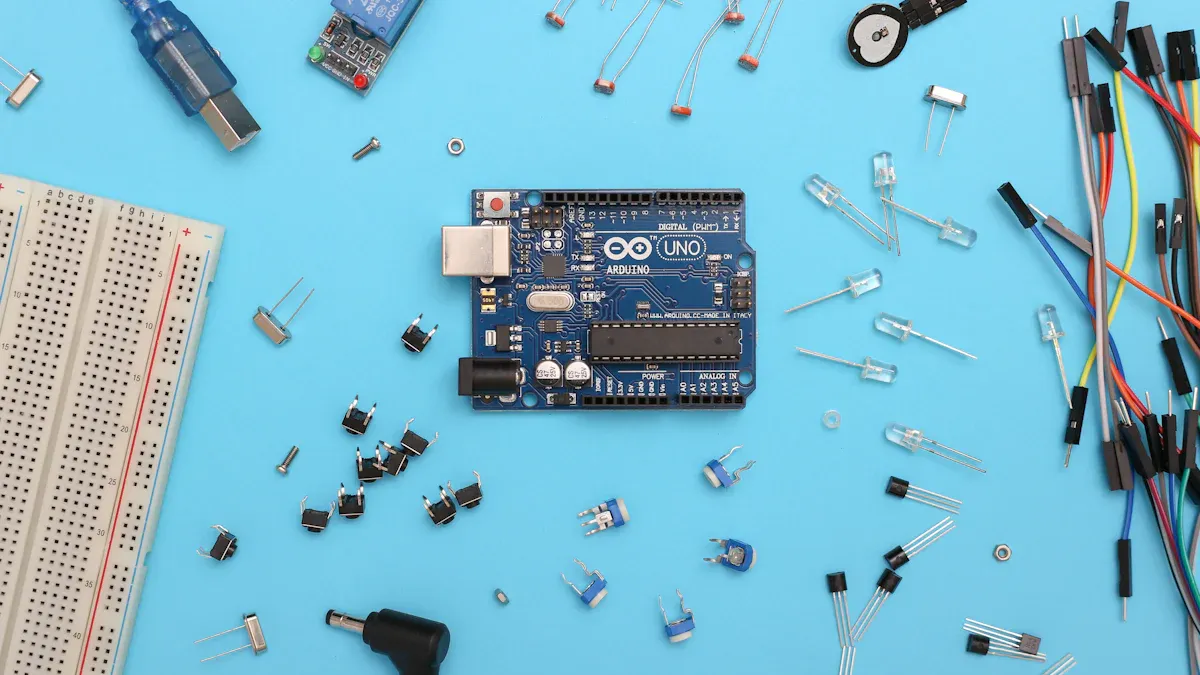
Role in Modern Electronics
Integrated circuits, or ICs, form the core of all digital devices. They power smartphones, computers, cars, and even medical equipment. ICs process electrical signals using tiny components like transistors, resistors, capacitors, and diodes. These parts work together to perform many important functions:
-
Microprocessors handle data processing and control in laptops, smartphones, and appliances.
-
Memory chips store information in devices, such as RAM and ROM.
-
Custom ICs manage special tasks, like measuring heartbeats in pacemakers or tracking glucose in monitors.
ICs also perform signal processing, data storage, logical operations, amplification, voltage regulation, and communication. These abilities make ICs essential for the operation of modern electronics.
In smartphones, ICs allow multitasking, clear visuals, and fast wireless connections. In computers, they support quick calculations and smooth software use. ICs help devices stay small and portable while still working efficiently.
Why ICs Matter
ICs changed electronics by combining many parts into a single chip. This change made devices smaller, lighter, and easier to carry. The integration of components also improved performance and reduced power use. ICs use less energy than separate parts, which helps batteries last longer in portable devices.
|
Feature |
Integrated Circuits (ICs) |
Discrete Components |
|---|---|---|
|
Very small, compact design |
Larger, separate parts |
|
|
Low, energy-efficient |
Higher, less efficient |
|
|
Reliability |
High, fewer failure points |
Lower, more connections |
|
Cost |
Lower due to mass production |
Higher due to assembly |
ICs also make devices more reliable. Fewer connections mean fewer chances for problems. Mass production lowers costs, making technology more affordable. Because of these benefits, ICs appear in almost every electronic device today. They truly stand at the heart of the core of all digital devices and continue to drive progress in technology.
Integrated Circuits Explained
What Is an Integrated Circuit
An integrated circuit, often called a microchip, is a small piece of semiconductor material that holds many tiny electronic parts. These parts include transistors, resistors, capacitors, and diodes. Engineers design these components to work together on a single chip. The result is a compact and powerful device that can perform many electronic functions.
A microchip can contain thousands to billions of these parts, all connected in a tiny space. This makes integrated circuits the main building blocks of modern electronics. They help devices process information, store data, and control signals. People find integrated circuits in computers, phones, cars, and even medical equipment.
-
An integrated circuit is a semiconductor wafer, usually made from silicon.
-
It contains miniaturized and interconnected components.
-
These circuits can handle tasks like amplification, timing, logic operations, and memory storage.
-
The entire system fits into a thin, compact chip.
Microchip Structure
A microchip has several layers and parts that work together. The base layer is the semiconductor wafer, most often made from silicon. On top of this wafer, engineers build tiny structures using special tools and chemicals. They add and shape materials to form transistors, resistors, and other components.
Each microchip has metal lines called interconnects. These lines link the different parts so they can send signals to each other. The design of these connections is very important. It affects how fast and how well the microchip works.
|
Chip Type |
Example |
Transistor Count (billions) |
Process Node (nm) |
Usage Context |
|---|---|---|---|---|
|
Microprocessor |
Apple M1 Ultra |
5 |
High-end laptops and desktops |
|
|
GPU |
Nvidia H100 |
80 |
4 |
Gaming, VR, supercomputing |
Modern microchips can hold tens to over a hundred billion transistors. These tiny switches control the flow of electricity and allow the chip to process information quickly. The small size of microchips means that devices can be powerful and still fit in your pocket.
Semiconductor Materials
The heart of every microchip is the semiconductor material. Silicon is the most common choice for integrated circuits. People use silicon because it is easy to find, not expensive, and simple to purify. Its crystal structure allows engineers to add other elements, which helps create the different parts inside the chip.
Silicon works well because it can handle heat and forms a strong insulating layer called silicon dioxide. This layer helps keep the parts inside the microchip working safely and efficiently. Other materials, like germanium and gallium arsenide, are used for special chips that need to work at very high speeds or in special conditions. However, these materials cost more and are harder to use.
Silicon's unique properties make it the best choice for most integrated circuits. It supports the dense packing of billions of components, which keeps costs low and performance high.
|
Semiconductor Material |
Key Properties |
Typical Applications |
Impact on Performance |
Impact on Cost |
|---|---|---|---|---|
|
Silicon (Si) |
Abundant, cost-effective, reliable |
General computing, consumer electronics, solar cells |
Versatile, moderate speed, good thermal stability |
Low cost, widely available |
|
Germanium (Ge) |
High electrical conductivity, sensitive to temperature |
High-speed transistors, photodetectors |
High speed, low voltage operation |
Higher cost, less abundant |
|
Gallium Arsenide (GaAs) |
Superior electron mobility, low noise, high-frequency performance |
High-speed communication systems, satellites, optoelectronics |
Excellent high-frequency and signal integrity |
Expensive, complex manufacturing |
|
Emerging Materials |
High critical energy field, potential for superior performance |
Power conversion, advanced sensors, future semiconductors |
Promises enhanced speed, efficiency, and thermal properties |
Higher cost, manufacturing challenges |
The choice of semiconductor material affects how well the microchip works and how much it costs. Silicon remains the top choice for most integrated circuits because it balances performance, cost, and reliability.
Types of ICs
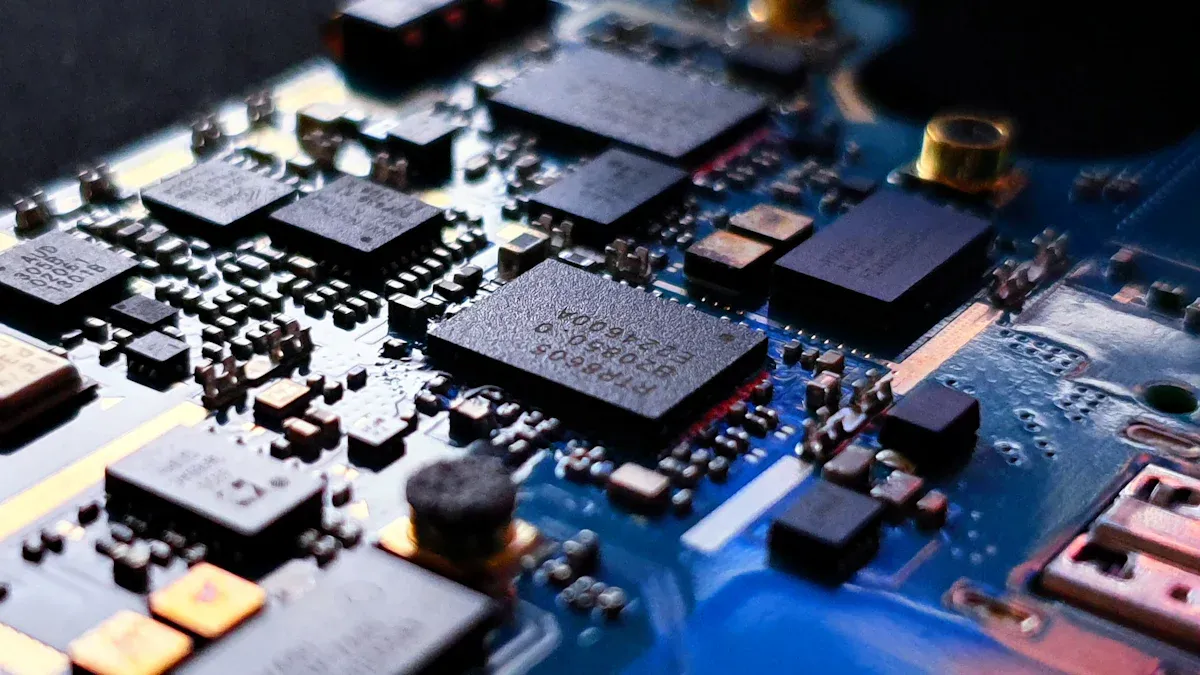
Integrated circuits, or ICs, come in many types. Engineers classify them by function, technology, complexity, and application. The main categories include digital, analog, mixed-signal, and specialized ICs. Each type serves a unique role in electronics.
|
Classification Basis |
Description |
Main Categories / Examples |
|---|---|---|
|
Function and Use |
Primary function and application area |
Digital ICs, Analog ICs, Mixed-Signal ICs |
|
Complexity and Integration |
Scale of integration and complexity |
|
|
Application Area |
Specific domains |
Audio, video, communication, computers, sensors, power |
Digital ICs
Digital ICs process information using binary signals—0s and 1s. These chips perform logic operations, data storage, and control tasks. They use logic gates, flip-flops, and memory cells. Microcontrollers and microprocessors are two of the most common ICs in this group. Microcontrollers combine a processor, memory, and input/output on one chip. Microprocessors focus on data processing and control in computers and smart devices.
-
Common ICs in this category include:
-
Logic gates (NAND, NOR)
-
Memory chips (RAM, flash memory)
-
Microcontrollers
-
Microprocessors
-
Counters and timers
-
Digital ICs offer high reliability, low cost, and small size. They resist noise and work well in many environments.
Analog ICs
Analog ICs handle continuous signals, such as sound or temperature. These chips amplify, filter, and modulate signals. They play a key role in audio equipment, sensors, and power management. Analog ICs are more sensitive to noise and require careful design.
|
Aspect |
Analog ICs |
Digital ICs |
|---|---|---|
|
Continuous (sound, temperature) |
Discrete (0s and 1s) |
|
|
Function |
Amplification, modulation, filtering |
Logic, arithmetic, data processing |
|
Applications |
Audio, sensors, power management |
Microcontrollers, microprocessors, memory |
Mixed-Signal ICs
Mixed-signal ICs combine analog and digital circuits on one chip. These chips convert signals between analog and digital forms. They include analog-to-digital converters (ADC) and digital-to-analog converters (DAC). Mixed-signal ICs appear in smartphones, automotive systems, and medical devices. They help devices process real-world signals and digital data together.
|
Aspect |
Description |
|---|---|
|
Definition |
Mixed-signal ICs process both analog and digital signals on a single chip. |
|
Applications |
Used in smartphones, tablets, cars, industrial automation, and medical tools. |
Specialized ICs
Specialized ICs serve unique functions in specific devices. Application-specific integrated circuits (ASICs) are custom-designed for one job, such as controlling a camera or managing power in a phone. System on a chip (SoCs) combine microprocessors, memory, and other parts into one chip for complex devices. Other specialized ICs include audio ICs, display drivers, interface ICs, and sensor ICs. These chips appear in products like smartphones, cars, and medical monitors.
Specialized ICs, such as ASICs and SoCs, allow engineers to create powerful, efficient devices for targeted uses.
IC Features and Applications
Miniaturization
Miniaturization stands as one of the most important features of integrated circuits. By placing many electronic parts onto a single chip, engineers can design smaller and lighter devices. This process allows smartphones, wearables, and even medical implants to fit more functions into less space.
-
Devices become more portable and powerful because integrated circuits combine many tasks on one chip.
-
Smaller chips mean shorter signal paths, which improves speed and reduces interference.
-
Miniaturization lets designers add larger batteries without making devices bigger, so users enjoy longer battery life.
-
Ball Grid Arrays (BGAs) help connect chips to circuit boards, making devices more reliable and compact.
Miniaturization has changed mobile phones from large, single-use tools into compact smartphones that handle many jobs at once.
Efficiency and Reliability
Integrated circuits have made electronics more efficient and reliable than ever before. Early computers used vacuum tubes, which were large and often failed. Today, ICs use less power, last longer, and work faster.
|
Feature |
Vacuum Tubes |
Integrated Circuits |
|---|---|---|
|
Size |
Large and heavy |
Compact with many parts inside |
|
Reliability |
Frequently failed |
More durable and longer-lasting |
|
Power Usage |
High |
Lower power consumption |
|
Cost |
Expensive to produce |
Cheaper to manufacture |
|
Performance |
Slower operation |
Faster operation |
Modern ICs use advanced methods like power gating and voltage scaling to save energy. Very Large Scale Integration (VLSI) packs more transistors into smaller chips, which boosts speed and reduces power use. Microcontrollers and microprocessors both benefit from these improvements, making them key parts in many devices.
Industry Uses
Integrated circuits play a vital role in many industries:
-
Consumer Electronics: ICs power smartphones, tablets, laptops, smart TVs, and wearables. Microcontrollers manage device functions, while microprocessors handle data processing.
-
Automotive Technology: Cars use ICs for engine control, safety systems, and electric vehicle battery management.
-
Medical Devices: ICs appear in pacemakers, glucose monitors, and imaging equipment, making healthcare safer and more effective.
-
Industrial Automation: Factories use ICs in robots, sensors, and controllers to improve efficiency and reliability.
Integrated circuits help reduce costs in large-scale manufacturing by allowing mass production and simpler assembly. This makes technology more affordable and accessible for everyone.
Advancements and Future Trends
3D ICs
Engineers have developed 3D integrated circuits (3D ICs) to meet the demand for faster and smaller devices. These chips stack components vertically, which brings several benefits:
-
Shorter connections between layers increase data transfer speeds and reduce latency.
-
Compact designs allow more functions in a smaller space, making devices lighter and more powerful.
-
Lower power consumption results from less signal loss and improved energy efficiency.
-
Vertical stacking helps manage heat better, which keeps devices reliable.
Many industries use 3D ICs, including supercomputers, smartphones, cars with advanced driver-assistance systems, and medical imaging tools. Key technologies in 3D ICs include through-silicon vias (TSVs), wafer bonding, and the use of new materials like graphene. The table below shows some important advancements:
|
Advancement/Technology |
Description |
Performance Improvement |
|---|---|---|
|
Heterogeneous Integration |
Combines different devices and materials in one package. |
Higher performance and lower power by stacking diverse components. |
|
Through-Silicon Vias (TSVs) |
Vertical electrical connections through silicon wafers. |
Faster data transfer and reduced power use. |
|
Wafer Bonding Techniques |
Methods to stack and connect wafers or dies. |
Strong, reliable connections for compact designs. |
|
Interposer Technology |
Silicon substrates connect multiple dies in 3D packaging. |
Better thermal management and lower latency. |
|
Novel Materials (e.g., Graphene) |
Advanced materials for flexible, conductive components. |
Increased conductivity and flexibility. |
However, 3D ICs face challenges. These include complex manufacturing steps, heat management, and the need for skilled workers. High costs and reliability issues also make mass production difficult.
Sustainability
The semiconductor industry uses large amounts of water and energy. Manufacturers now focus on making chip production more sustainable. Leading companies like Intel, TSMC, and Samsung work to reduce water and energy use by:
-
Recycling water and using low-temperature processes.
-
Replacing traditional materials with recyclable or biodegradable options.
-
Setting goals for lower greenhouse gas emissions and using more renewable energy.
-
Collaborating across supply chains to improve sustainability.
Regulations such as the EU’s Ecodesign for Sustainable Products Regulation encourage these changes. Companies also aim to design chips that use less power, which helps reduce electronic waste. Despite these efforts, high costs and complex supply chains remain barriers to full sustainability.
Future of Microchips
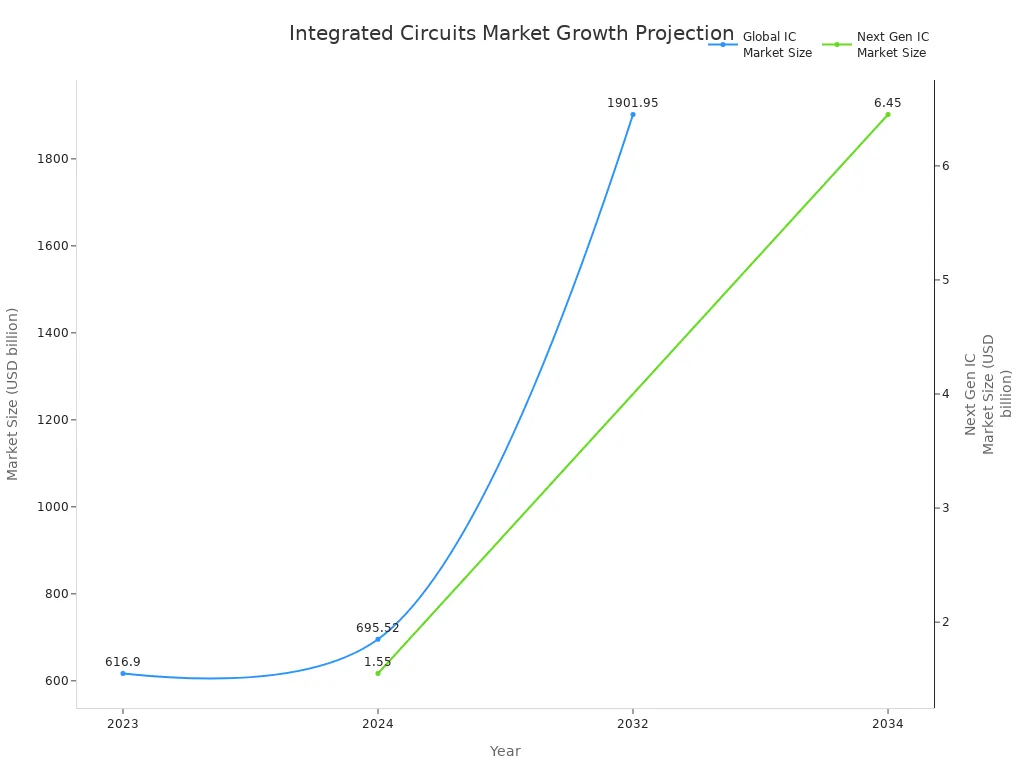
The future of microchips looks bright and full of innovation. The global integrated circuit market is expected to grow from about $695 billion in 2024 to nearly $1.9 trillion by 2032. This growth comes from the rise of IoT devices, 5G networks, and smarter cars.
Emerging technologies will shape the next generation of microchips:
-
Photonic integrated circuits use light for faster data transfer and lower power use.
-
New materials like graphene and gallium nitride offer better performance and flexibility.
-
AI-driven design tools help engineers create better chips more quickly.
-
Quantum computing and neural network hardware promise new possibilities for science and technology.
-
Flexible and wearable electronics expand the use of chips in health and smart clothing.
-
Hardware-level security features protect against new digital threats.
These trends show that microchips will continue to get smaller, faster, and more efficient, powering the next wave of technology.
Integrated circuits shape the foundation of modern electronics.
-
They power innovations like artificial intelligence, virtual reality, and wearable technology.
-
ICs make devices smaller, faster, and more reliable, transforming communication, healthcare, and automotive safety.
-
Advances in ICs have reduced costs and improved access to technology worldwide.
Experts expect new breakthroughs in photonic integrated circuits and analog ICs. These advances will drive growth in AI, 5G, and smart devices, ensuring that integrated circuits continue to lead the future of technology. 🚀
FAQ
What is the main purpose of an integrated circuit?
An integrated circuit combines many electronic parts on one chip. This design helps devices work faster, use less power, and become smaller. ICs make modern electronics possible.
How do integrated circuits help save energy?
ICs use less electricity than older parts like vacuum tubes. They reduce heat and power loss. This helps batteries last longer in phones and laptops.
Where can people find integrated circuits in daily life?
People see ICs in smartphones, computers, cars, and even kitchen appliances. Medical devices and smartwatches also use ICs. These chips power most modern technology.
Can integrated circuits break or wear out?
ICs last a long time because they have few moving parts. However, heat, moisture, or electrical surges can damage them. Good design and protection help ICs stay reliable.
Why do engineers keep making ICs smaller?
Smaller ICs fit more parts on one chip. This boosts speed and lowers cost. Devices become lighter and more powerful. Miniaturization drives progress in electronics.