Integrated Circuit Pricing: Key Factors Driving Cost Fluctuations in 2025
The integrated circuit target market will change a lot in 2025.
The integrated circuit target market will change a lot in 2025. Some main reasons are:
-
Supply chain disruptions make it hard to get semiconductors. This causes integrated circuit pricing to go up for buyers.
-
Raw material shortages, like not enough silicon, make semiconductors cost more to make. This also changes integrated circuit pricing.
-
New technology in consumer electronics, cars, and telecommunications needs better semiconductor solutions.
-
The integrated circuit target market for IoT devices, AI, and electric vehicles is getting bigger. This makes semiconductor design change quickly.
-
Regulatory changes and differences in regions affect the integrated circuit target market. Government investments and stricter rules change how semiconductors are made.
These things make the integrated circuit target market very active. People in the industry need to pay close attention.
Key Takeaways
-
Supply chain issues and not enough raw materials make prices change a lot for integrated circuits in 2025. Advanced chip technology and more demand from AI, electric vehicles, and consumer electronics make prices go up. Geopolitical problems and new trade rules make things less certain and change semiconductor costs everywhere. Companies can lower price risks by having many suppliers, making long contracts, and keeping enough inventory. Energy costs and green rules make it cost more to make chips but also help chips be better for the environment.
Integrated Circuit Pricing Drivers
Supply Chain Disruptions
Supply chain problems are still a big issue in 2025. Many companies have to wait longer for important parts. Some Power Discretes now take up to nine months to arrive. U.S. export rules on AI processors to China make supply smaller and prices higher. European car makers pay 25% tariffs on vehicles and parts from other countries. This causes trade problems and makes prices less certain. Not enough workers and new immigration rules make things harder. Manufacturers use smart manufacturing to help fix chip shortages and make the supply chain stronger. Even with these changes, the integrated circuit target market still has ups and downs in supply and pricing.
Note: Natural disasters, like the earthquake in Myanmar and Thailand, did not hurt manufacturing much in Q1 2025. This shows the supply chain is getting stronger than before.
Raw Material Costs
Raw material costs are very important for semiconductor prices. The report "Global Integrated Circuit Packaging and Testing Technology Market Risk Analysis 2025-2032" talks about how changing raw material prices and new technology affect integrated circuit pricing. New ways to package and test chips help lower production costs, but prices still change a lot. For example, tariffs on semiconductors went from 25% to 50% in early 2025. This made costs go up for many buyers. Suppliers like Corning raised their prices, and printed circuit boards (PCBs) could cost 10-25% more because of tariffs. The table below shows how material prices changed:
|
Material |
Price Change Q1 2025 vs Q1 2024 |
Cause(s) |
|---|---|---|
|
Steel |
-16% |
Weak demand and supply chain constraints |
|
Lumber |
+17% |
Production cutbacks and tariff pressures |
These changes in raw material costs affect the integrated circuit target market. Companies need to watch these trends to control spending and stay competitive.
Geopolitical Tensions
Geopolitical tensions are still a big reason for changes in semiconductor prices in 2025. U.S. export controls on advanced chips and AI processors make it hard for some places to get them. This changes supply and demand around the world. Tariffs on semiconductors and related products are higher now, so manufacturers and buyers pay more. European car companies pay more tariffs on imported parts, which makes prices less certain in the integrated circuit market. Not enough workers and new rules in big manufacturing countries also make costs go up. All these things together make integrated circuit pricing complicated. People in the industry need to keep learning and be ready to change fast.
Technology and Process Trends

Advanced Nodes
Advanced semiconductor nodes are changing the integrated circuit target market in 2025. Top companies now use 3nm and 4nm process nodes for AI chips and data center processors. These nodes give better performance and use less energy. Since 2020, compute performance has grown eight times. GPUs like Nvidia’s Hopper and Blackwell have over 250GB of high-bandwidth memory. Custom AI ASICs use new designs to save money and work better. Multi-chiplet designs and wafer-scale packaging help make more chips and improve scaling. These upgrades let companies charge more for advanced node semiconductors. Experts think sub-1nm nodes will arrive by 2035. This will change how much integrated circuits cost and how well they work.
-
The global data center processor market could grow from $150 billion in 2024 to over $370 billion by 2030.
-
GPUs and AI ASICs are growing fast because of AI needs.
-
Advanced packaging like TSMC’s CoWoS-L and chiplets help chips work together and improve results.
Mature Process Pricing
Mature semiconductor processes are still needed for many products. These processes are used for things like driver ICs, analog chips, and microcontrollers. In 2025, driver IC prices are not dropping as fast. Companies changed how much they make to match what people want. The table below shows recent price changes for NAND flash and similar products:
|
Statistic / Factor |
Details |
|---|---|
|
Month-over-month price increase (Feb 2025) |
128Gb MLC NAND flash went up 5.29% to $2.29 per unit |
|
Planned price hikes (starting April 2025) |
Big companies (Micron, Samsung, SK Hynix, SanDisk, YMT) plan to raise prices over 10% |
|
Production cuts |
Samsung: about 20%, SK Hynix: over 10%, Micron: 15-25%, Kioxia: 15-25% less production |
|
Supply disruptions |
Micron’s Singapore factory lost wafer capacity after a power outage in Jan 2025 |
|
Demand drivers |
AI needs more storage for servers, SSDs, and data centers |
|
SSD price trend |
SSD prices went up for two weeks because of low supply and higher prices |
|
Market outlook |
Prices are expected to bounce back in 2025 because of less supply and more AI demand |
NAND flash prices started going up in January 2025. SSD prices also rose for two weeks in March because there were not enough in stock and prices went up. Big companies made fewer chips, which helped prices go up again. China’s government gave money to help smartphone sales and lower extra stock.
AI and Data Center Demand
AI and data center growth are making big changes in the semiconductor industry. Battery energy storage systems now help power AI data centers. For example, Google’s St. Ghislain data center in Belgium uses a 2.75 MW battery for backup and grid help. Meta’s Arizona project uses 300 MW of solar and a 1,200 MWh battery system. These projects help data centers run more AI and meet green goals. The need for special integrated circuits like ASICs and GPUs keeps rising.
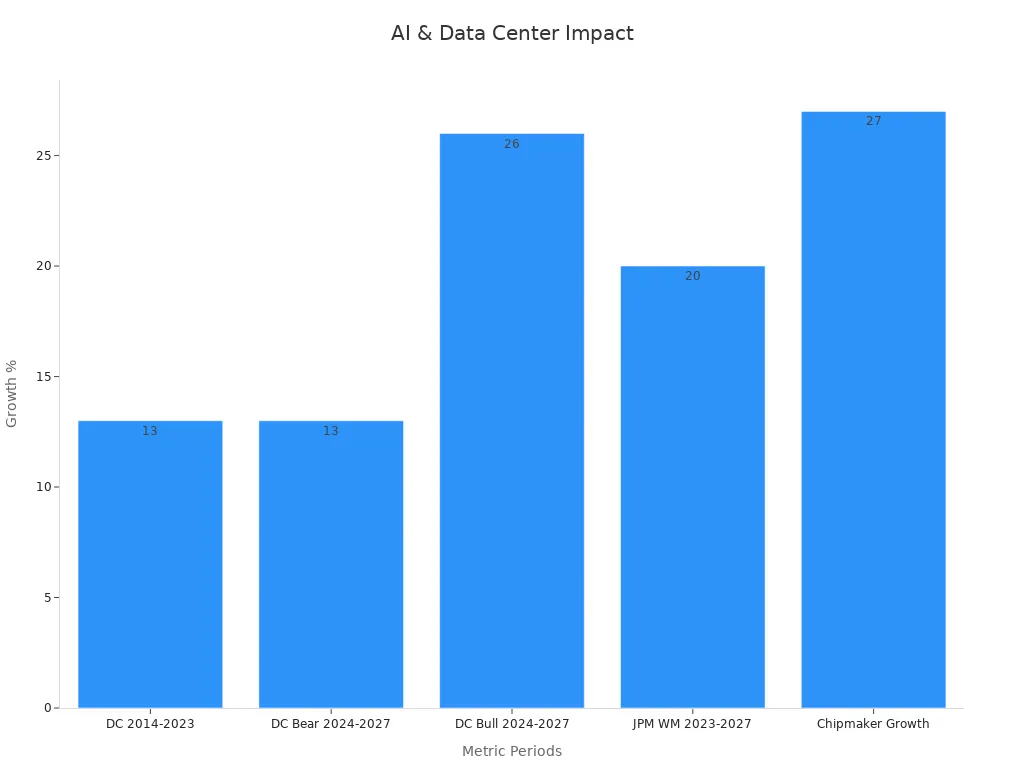
Big tech companies like Microsoft, Meta, Google, and Amazon plan to spend over $240 billion on data centers by 2027. Data center electricity use could grow up to 26% each year until 2027. Chipmaker revenue from data centers may go up by 27% by 2028. These facts show the integrated circuit target market will keep growing. The semiconductor industry must keep up with this demand, control costs, and make sure there are enough chips.
Integrated Circuit Target Market
Consumer Electronics
The integrated circuit target market for consumer electronics is getting bigger in 2025. Smartphones, smartwatches, and tablets help this growth. Companies want better chips for 5G, AI, and clear screens. Asia-Pacific is the top region for this market. India is growing the fastest. Makers work on making chips faster and more efficient. They use more semi-custom ASICs to keep up with new needs. The table below shows some recent numbers:
|
Metric |
Value / Insight |
|---|---|
|
Market Size 2024 |
|
|
Market Size 2025 |
$446.8 billion |
|
CAGR (2024-2025) |
11.2% |
|
Key Demand Drivers |
IoT, 5G, smartphone adoption |
|
Regional Leaders |
Asia-Pacific, North America |
Note: Consumer electronics are still the biggest part of the integrated circuit target market. This pushes new ideas and changes prices.
Automotive and Industrial
Automotive and industrial areas are changing the integrated circuit target market. Electric vehicles and smart factories use more semiconductors. Companies put money into chips with sensors and strong microcontrollers. Cars need more safety and ways to connect. This makes the market for these chips grow. Factories need reliable chips to work well. More people want chips that help with real-time data and saving energy.
-
Automotive ICs now have better sensors and AI features.
-
Industrial uses need tough semiconductors for hard places.
Commodity vs. High-Performance ICs
The integrated circuit target market has two main parts. One is commodity ICs, like simple microcontrollers. These face lower prices because there are too many. The other is high-performance ICs, like AI accelerators and custom ASICs. These cost more and are in high demand. People want more high-end chips than basic ones. Chip makers change how much they make to match what people want.
|
Segment |
Price Trend |
Market Demand Trend |
|---|---|---|
|
Commodity ICs |
Stable or falling |
Moderate |
|
High-Performance ICs |
Rising |
Strong |
Companies that watch the integrated circuit target market closely can react fast to price and demand changes.
Economic and Regulatory Factors
Inflation and Currency
Inflation is still important for the semiconductor industry in 2025. When prices go up, it costs more to make chips. Companies spend more on workers, machines, and shipping. These extra costs make semiconductors more expensive to buy. Changes in currency values also matter a lot. If the dollar gets stronger, chips cost more for people in other countries. If the dollar gets weaker, it costs more to buy materials from outside the U.S. Many chip companies work in different countries, so they watch currency changes closely. They use special money tools to help with these risks. When currency values stay steady, chip prices are easier to predict. If currency values change a lot, chip prices can go up or down quickly for both sellers and buyers.
Energy and Sustainability
Energy prices and new rules about the environment affect chip prices in 2025. Factories need lots of power to make semiconductors. When energy costs rise, making each chip costs more. New green rules mean companies must spend money to make cleaner factories. These rules make it more expensive to produce chips. Companies use safer materials and try to save energy. They also try to make less waste and reuse things when they can. These changes mean companies spend more money to run their business.
-
Green rules and eco-friendly needs make companies spend more to make chips.
-
Using safer materials, saving energy, and making less waste are big trends for the IC market.
-
These green changes mean companies spend more money, which affects chip prices in 2025.
-
The industry is working on better local supply chains, teaming up with governments, getting help from subsidies, training workers, and doing research to make factories better.
-
Being green also means making chips that use less energy and making factories cleaner, which helps the planet but can cost more.
Chip companies are building more local supply chains and working with governments. They spend money on research and train workers to do a better job. They also design chips that use less power. These steps help the environment but can make chips cost more. Buyers and sellers have to find a way to be green and keep prices fair.
Managing Cost Fluctuations
Supply Chain Resilience
Making the supply chain stronger helps companies handle price changes. Good supply chains help buyers act fast if there are shortages or delays. Many companies use digital tools to watch shipments and inventory all the time. They also work with delivery partners to find quicker ways to get semiconductors. Training workers and checking for risks often helps find problems early. Companies that spend money on strong supply chains can stop sudden cost jumps and keep making products without stopping.
Tip: Check your supply chain partners often and practice backup plans to get ready for surprises.
Supplier Diversification
Having more than one supplier lowers risk in the semiconductor business. If buyers only use one supplier, they have bigger trouble if that supplier is late or raises prices. By using several suppliers, companies can look at prices and pick the best deal. This also helps if one area has trade problems or disasters. Having many suppliers gives companies more power to talk about prices and control costs. The table below shows how having more suppliers helps:
|
Benefit |
Impact on Semiconductor Cost |
|---|---|
|
More supplier options |
Lower risk of price spikes |
|
Better negotiation power |
More stable semiconductor prices |
|
Regional flexibility |
Fewer delays and shortages |
Contracts and Inventory
Long contracts help buyers keep semiconductor prices steady and avoid big cost jumps. These contracts have clear rules for delivery and payment. Companies can plan their spending better and not pay extra when there are shortages. Keeping enough inventory also helps with price changes. By watching inventory closely, buyers can order semiconductors before prices go up. Good inventory management keeps production going and helps control costs.
Note: Watching price trends and acting early helps companies handle changes in semiconductor costs.
The integrated circuit target market is changing very quickly in 2025. Problems with the supply chain, higher raw material costs, and new technology are making things different for semiconductors. The integrated circuit target market is growing fast for cars, electronics, and factories. Companies pay more for advanced processes and for using materials that are better for the environment. The table below shows how each cost part affects the integrated circuit target market and gives tips to save money.
|
Cost Component |
Percentage of Total Cost |
Optimization Tip |
|---|---|---|
|
Raw Materials |
35-45% |
Use standard FR-4, minimize thickness |
|
Layer Count |
25-35% |
Optimize routing to reduce layers |
|
Manufacturing |
15-25% |
Avoid unnecessary advanced finishes |
|
Drill Costs |
5-10% |
Minimize via count and complexity |
|
Tooling/Setup |
5-10% |
Increase volume to amortize costs |
|
Labor Costs |
5-15% |
Leverage automation, choose low-cost regions |
|
Overhead/Profit |
5-10% |
Compare multiple manufacturers |
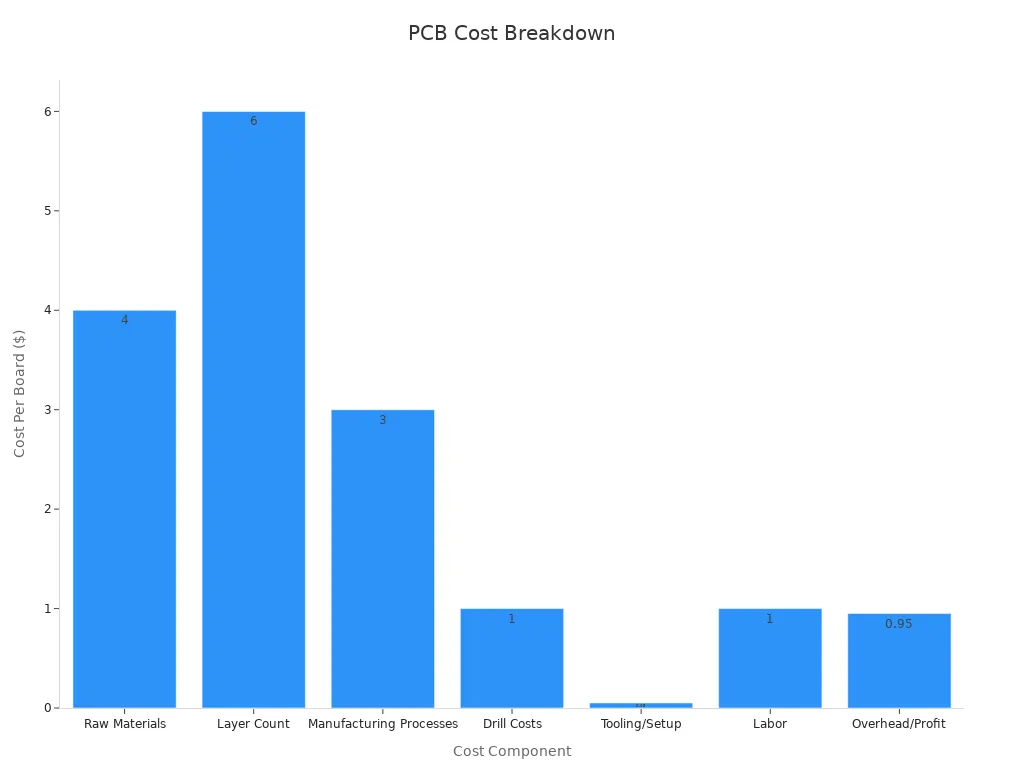
To lower cost risks, buyers should make designs better and pick cheaper materials. They should work with companies that use machines to make semiconductors. Buyers also need to watch the integrated circuit target market and use digital tools to plan better. If companies stay alert, they can react fast to price changes and keep a good spot in the semiconductor market.
FAQ
What causes the biggest changes in integrated circuit prices in 2025?
Supply chain problems, higher material costs, and new technology change prices most. Geopolitical issues and energy costs also matter. Companies need to watch these things to control spending.
How can buyers reduce the risk of price spikes?
Buyers should use more than one supplier and sign long contracts. They should also keep extra chips in stock. These steps help stop sudden price jumps and keep factories running.
Why do advanced chips cost more than basic chips?
Advanced chips use smaller nodes and special designs. They need more research and better materials. This makes them cost more than basic chips.
How do energy and green rules affect chip prices?
|
Factor |
Impact on Price |
|---|---|
|
Higher energy |
Raises the cost |
|
Green rules |
Adds extra fees |
Energy costs and green rules make chips more expensive to make. Companies must pay more to follow new rules.
Will integrated circuit prices keep rising in 2025?
Prices might go up for advanced chips and popular products. Basic chip prices may stay the same or drop. What happens next depends on market trends and supply problems.