How the 220 Ohm Resistor Works with Color Code and Applications
A 220 ohm resistor helps you manage how much electric current moves in a circuit. This resistor keeps the current low so your devices do not get hurt.
A 220 ohm resistor helps you manage how much electric current moves in a circuit. This resistor keeps the current low so your devices do not get hurt. You often use a 220 ohm resistor with LEDs or microcontrollers. The resistor works like a wall, stopping too much current from going through. When you put in a 220 ohm resistor, you keep delicate parts safe from harm. Every resistor, even the 220 ohm resistor, has color bands to help you know its value. You will see the 220 ohm resistor in many starter projects because it gives steady current control.
Key Takeaways
-
A 220 ohm resistor limits electric current. It keeps LEDs and microcontrollers safe from harm.
-
You can spot a 220 ohm resistor by its color bands. The bands are red, red, brown, and gold.
-
The resistor has a ±5% tolerance. This means its resistance can change a little but still works fine.
-
Using a 220 ohm resistor makes circuits safe and steady. It is very helpful in LED and microcontroller projects.
-
Ohm’s Law helps you see how the resistor controls current and voltage in your circuit.
220 Ohm Resistor Basics
Resistance Value
You often see the 220 ohm resistor in many electronic projects. This resistor has a fixed resistance of 220 ohms. The resistor value tells you how much the resistor slows down the flow of electric current. If you look at the color bands on the resistor, you can find the resistor value without using a meter. The 220 ohm resistor always gives you the same resistance, so you can trust it to protect your parts.
Tip: Always check the resistor value before you put it into your circuit. This helps you avoid mistakes and keeps your devices safe.
You can use a table to see how the resistor value compares to other common resistors:
|
Resistor Type |
Resistor Value (Ohms) |
|---|---|
|
100 ohm resistor |
100 |
|
220 ohm resistor |
220 |
|
470 ohm resistor |
470 |
|
1k ohm resistor |
1,000 |
The 220 ohm resistor stands out because it gives you just the right amount of resistance for many tasks. You do not need to adjust it. You get a steady and reliable performance every time.
Circuit Role
You use a 220 ohm resistor to control how much current flows in your circuit. This resistor acts like a gatekeeper. It lets only a safe amount of current pass through. If you connect an LED, the 220 ohm resistor stops too much current from burning it out. You also use this resistor to protect microcontrollers and other sensitive parts.
Here are some ways you might use a 220 ohm resistor in your projects:
-
Limit current to LEDs so they shine bright but do not burn out.
-
Divide voltage between two points in a circuit.
-
Protect the input pins of a microcontroller from too much current.
You choose the 220 ohm resistor because it matches the needs of many small devices. The resistor value fits well with the voltage and current in most beginner circuits. When you use this resistor, you make your circuit safer and more reliable.
Remember: The right resistor value keeps your project working and your parts safe.
220 Ohm Resistor Color Code
Color Bands
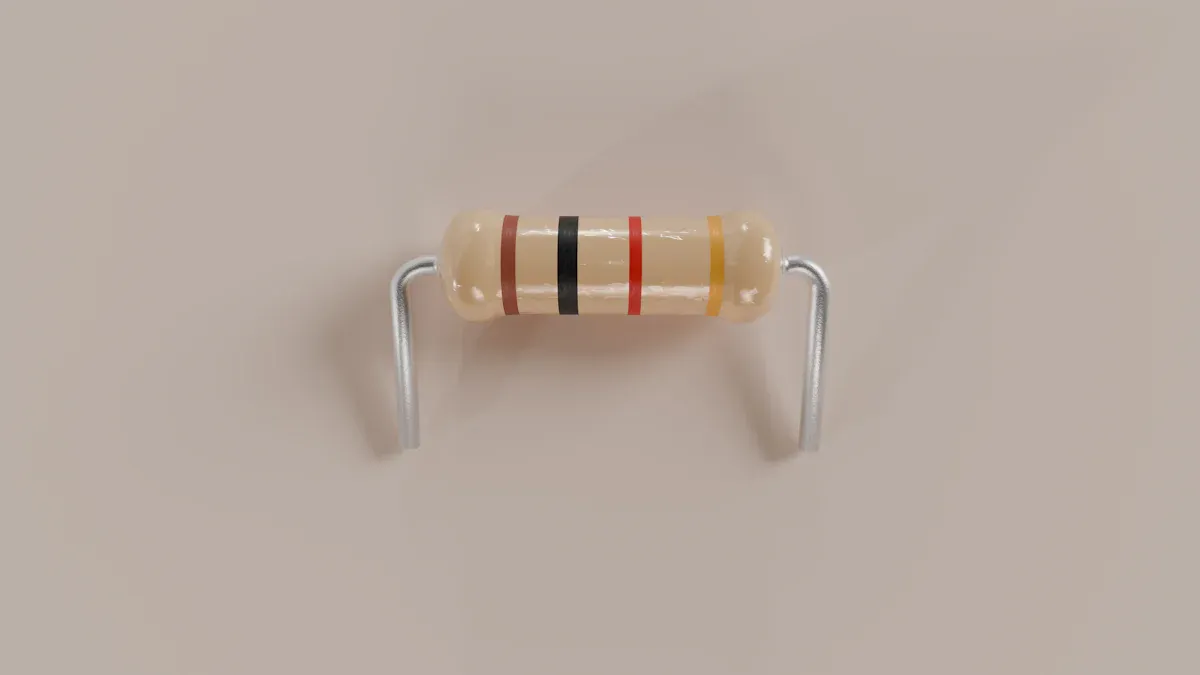
When you look at a 220 ohm resistor, you see four colored bands painted on its body. These bands help you find the resistor value without any tools. The color code system uses different colors to show numbers and other important details. This system makes it easy for you to pick the right resistor for your project.
Here is a table that shows what each band means on a 4-band resistor:
|
Band Position |
What It Shows |
|---|---|
|
1st Band |
1st Digit (Color to Number) |
|
2nd Band |
2nd Digit (Color to Number) |
|
3rd Band |
Multiplier (How Many Times) |
|
4th Band |
Tolerance (Accuracy) |
For a 220 ohm resistor, the standard color code is:
-
1st Band: Red
-
2nd Band: Red
-
3rd Band: Brown
-
4th Band: Gold (or sometimes Silver)
You can use this table to see what each color means:
|
Color |
Digit Value |
Multiplier |
Tolerance |
|---|---|---|---|
|
Black |
0 |
x1 |
|
|
Brown |
1 |
x10 |
±1% |
|
Red |
2 |
x100 |
±2% |
|
Gold |
÷10 |
±5% |
|
|
Silver |
÷100 |
±10% |
The color bands on a 220 ohm resistor follow industry standards. This means every manufacturer uses the same color code. You can trust that a resistor with red, red, brown, and gold bands will always be a 220 ohm resistor with ±5% tolerance. This system helps you avoid mistakes and makes your work easier.
Tip: Always check the color bands before using a resistor. This simple step helps you make sure you have the correct value.
Reading the Code
You can read the resistor color code by looking at each band from left to right. Start with the band closest to one end of the resistor. For a 220 ohm resistor, you will see the following:
-
The first band is red. Red stands for the number 2.
-
The second band is also red. This is another 2.
-
The third band is brown. Brown means you multiply by 10.
-
The fourth band is gold. Gold shows the tolerance, which is ±5%.
Now, you can calculate the value:
-
Take the first digit (2) and the second digit (2) to make 22.
-
Multiply 22 by 10 (the value from the brown band).
-
22 × 10 = 220 ohms.
So, the color code for a 220 ohm resistor is red, red, brown, gold.
The last band, gold, tells you about tolerance. Tolerance shows how close the actual resistance is to the labeled value. For example, a 220 ohm resistor with a gold band can have a real value between 209 and 231 ohms. This small range is important when you need your circuit to work just right.
The resistor color code system helps you quickly find the right resistor. You do not need to measure each one. You just read the bands and know the value. This makes building and fixing circuits much faster.
Note: The color code system is universal. You can use it anywhere in the world, and it always means the same thing.
Key Features
Tolerance
When you pick a resistor, you need to know how close its real value is to the number on its label. This is called tolerance. The 220 ohm resistor often comes with a gold band. This gold band means the resistor has a tolerance of ±5%. If you choose a 220 ohm resistor, its real resistance can be a little higher or lower than 220 ohms. For example, a 220 ohm resistor with 5% tolerance can measure anywhere from 209 to 231 ohms. This small range helps your circuit work even if the resistor is not perfect.
Tip: Always check the tolerance band before you use a resistor. This helps you build circuits that work as planned.
Power Rating
Every resistor can handle only a certain amount of power before it gets too hot. This is called the power rating. Most 220 ohm resistors for small projects have a power rating of 1/4 watt (0.25W). You can also find 220 ohm resistors with higher ratings, like 1/2 watt or 1 watt. If you use a resistor with too much current, it can burn out. You should always choose a resistor with a power rating that matches your circuit.
Here is a simple table to help you:
|
Power Rating |
Common Use |
|---|---|
|
1/4 watt |
LEDs, microchips |
|
1/2 watt |
Small motors |
|
1 watt |
Speakers, relays |
Size and Material
The size of a resistor depends on its power rating. A 220 ohm resistor with a higher power rating looks bigger. You will see small resistors in breadboards and larger ones in power circuits. Most 220 ohm resistors use carbon film or metal film as their material. These materials help the resistor stay stable and last longer. You can trust a 220 ohm resistor made from good material to work well in your projects.
-
Carbon film resistors are common and cost less.
-
Metal film resistors give better accuracy and less noise.
Remember: The right size and material help your resistor last longer and keep your circuit safe.
Applications of 220 Ohm Resistor
LED Current Limiting
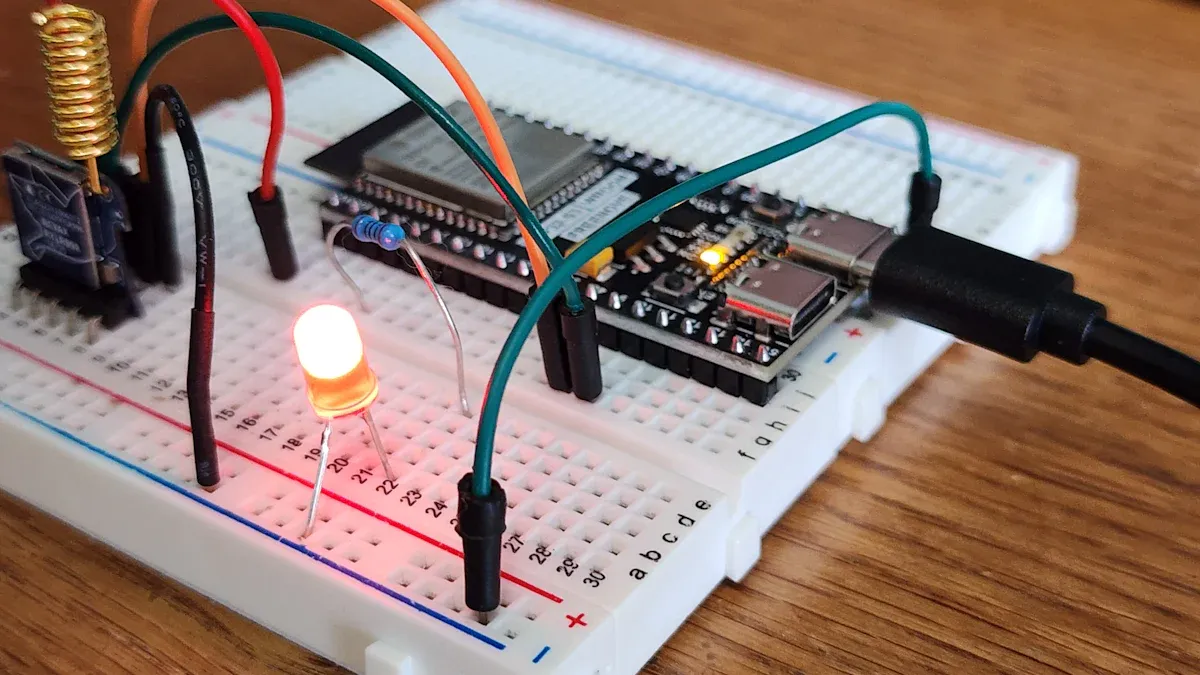
A 220 ohm resistor helps keep LEDs safe in circuits. LEDs need the right amount of current to work well. If you connect an LED straight to a battery, it can get too much current and break. Putting a 220 ohm resistor in series with the LED controls the current. This way, your LED stays bright and does not get damaged.
For example, if you use a 5V power supply and a red LED, the 220 ohm resistor keeps the current at about 14mA. This amount is good for most LEDs. You do not have to guess or do hard math each time. The 220 ohm resistor is a good choice for many LED projects.
Tip: Always use a resistor with your LED so it does not get ruined.
Voltage Divider
A 220 ohm resistor can be used in a voltage divider. A voltage divider lets you make a lower voltage from a higher one. This is helpful when you need to send a safe voltage to sensors or other parts.
Here is an easy example:
|
Resistor 1 |
Resistor 2 |
Input Voltage |
Output Voltage |
|---|---|---|---|
|
220 ohm |
220 ohm |
5V |
2.5V |
If you use two 220 ohm resistors in a row, the voltage splits in half. You get half the input voltage in the middle. This helps you match voltage levels for different things.
Microcontroller Protection
Microcontrollers have pins that can be damaged by too much current. You can use a 220 ohm resistor to keep these pins safe. Put the resistor in line with the input or output pin. The resistor limits the current and protects your microcontroller.
You often see this when connecting buttons, switches, or LEDs to a microcontroller. The 220 ohm resistor acts like a guard. It stops short circuits or spikes from hurting your device.
Using a 220 ohm resistor in these ways makes your circuits safer and more dependable. You pick this value because it gives both protection and good performance for many parts.
How It Works in Circuits
Ohm’s Law
You can use Ohm’s Law to understand how a 220 ohm resistor works in your circuit. Ohm’s Law is a simple rule that connects voltage, current, and resistance. The formula looks like this:
V = I × R
-
V stands for voltage (measured in volts).
-
I stands for current (measured in amperes or amps).
-
R stands for resistance (measured in ohms).
If you know two of these values, you can always find the third. For example, if you use a 220 ohm resistor with a 5V power supply, you can find the current like this:
I = V / R = 5V / 220Ω ≈ 0.023A (23mA)
This calculation helps you pick the right resistor for your project. You make sure your LED or microcontroller gets the correct amount of current. You avoid burning out your parts by using the right value.
Tip: Always use Ohm’s Law before you build your circuit. This step keeps your devices safe.
Current and Voltage Effects
When you add a 220 ohm resistor to your circuit, you control both current and voltage. The resistor slows down the flow of current. It also drops some voltage across itself. This means less voltage reaches the next part in your circuit.
Here’s what happens when you use a resistor:
-
The resistor limits how much current can pass.
-
The resistor causes a voltage drop, which protects sensitive parts.
-
The resistor helps you split voltage in a voltage divider.
For example, if you connect an LED and a 220 ohm resistor in series, the resistor takes some voltage. The LED gets just enough voltage to light up safely. You can see this effect in many circuits.
|
Component |
Voltage Across (V) |
Current Through (A) |
|---|---|---|
|
220 ohm resistor |
3.8 |
0.005 |
|
LED |
1.2 |
0.005 |
You can change the resistor value to get different results. A lower value lets more current flow. A higher value reduces the current. The 220 ohm resistor gives you a safe balance for most small projects.
Remember: The resistor is your tool for controlling current and voltage. You protect your circuit and make it work better.
You now know how to spot a 220 ohm resistor by its color code and understand its features. This resistor controls current, protects parts, and helps you build safe circuits. You use the resistor in LED circuits, voltage dividers, and microcontroller projects. When you learn how a resistor works, you make better choices in your designs. Knowing how to use a resistor in a 5V LED circuit keeps your parts safe and working. Try using a resistor in your next project to see the difference.
FAQ
What does a 220 ohm resistor do in a circuit?
You use a 220 ohm resistor to control how much current flows. This keeps your parts safe. The resistor helps prevent damage to LEDs and microcontrollers by limiting the current.
How do you identify a 220 ohm resistor?
You look for the color bands: red, red, brown, and gold. These bands show the value and tolerance. You can check the bands before you use the resistor in your project.
Can you use a different value instead of a 220 ohm resistor?
You can use a different value, but the current will change. If you use a lower value, more current flows. If you use a higher value, less current flows. Always check what your circuit needs.
Why is the 220 ohm resistor common for LEDs?
You often use a 220 ohm resistor with LEDs because it gives safe current for most standard LEDs. This value helps your LED shine bright without burning out.