How Crystal Oscillators Ensure Stability in Modern Technology
Modern electronics rely on precision and stability to function reliably, and this is where a crystal oscillator plays a critical role. These devices use quartz crystals to maintain a stable frequency, ensuring consistent performance. Quartz crystals are known for their exceptional quality factor (Q), which measures their energy efficiency during oscillation.
Modern electronics rely on precision and stability to function reliably, and this is where a crystal oscillator plays a critical role. These devices use quartz crystals to maintain a stable frequency, ensuring consistent performance. Quartz crystals are known for their exceptional quality factor (Q), which measures their energy efficiency during oscillation.
-
Most quartz crystals have Q values ranging from 10,000 to several hundred thousand.
-
In specialized cases, Q values can reach up to two million.
Such stability makes crystal oscillators indispensable in applications requiring precise timing and frequency control, from communication systems to consumer electronics.
Key Takeaways
-
Crystal oscillators use quartz crystals to create steady frequency signals. These signals are important for electronics to work well.
-
Quartz crystals have a quality factor (Q) from 10,000 to 2 million. This shows how well they save energy while working.
-
Special designs, like temperature-compensated and oven-controlled ones, improve stability. These are great for important uses like GPS and phones.
-
Knowing how things like temperature and humidity affect them helps keep them working properly.
-
Checking them often and replacing parts when needed keeps them lasting longer and working better.
-
Voltage-controlled crystal oscillators (VCXOs) can change frequencies when needed. This makes them useful in communication systems.
-
Crystal oscillators are key in gadgets like smartphones and laptops. They help keep time accurate in these devices.
-
New technology keeps making crystal oscillators better and more precise. This helps them meet the needs of today’s technology.
What Is a Crystal Oscillator?
Definition and Core Functionality
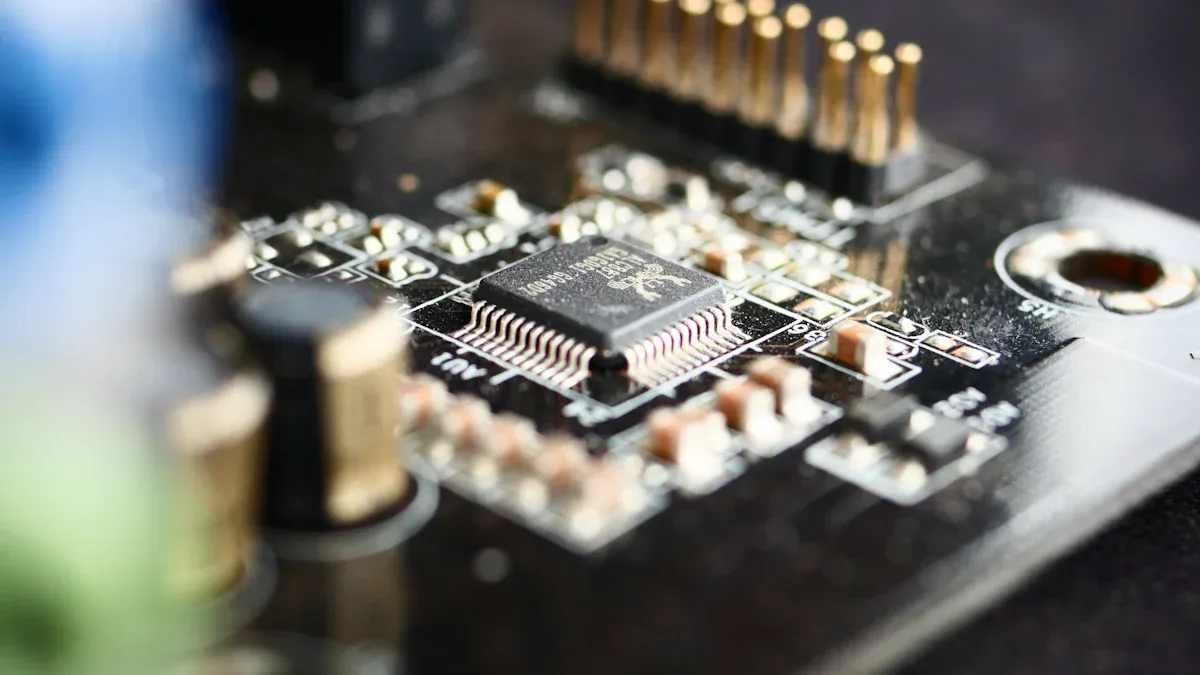
A crystal oscillator is a device that generates a precise and stable frequency signal using the natural properties of quartz crystals. You can think of it as the heartbeat of many electronic systems, providing the timing signals necessary for their operation. These oscillators are widely used because of their ability to maintain consistent frequency output, even under varying conditions.
The core functionality of a crystal oscillator lies in its ability to convert mechanical vibrations into electrical signals. Quartz crystals, known for their piezoelectric properties, vibrate at a specific frequency when subjected to an electric field. This frequency remains highly stable, making crystal oscillators ideal for applications requiring precise timing, such as microcontrollers and communication systems.
Research highlights the importance of crystal oscillators in ensuring device reliability. For instance, advanced modeling techniques can predict their performance under different configurations and temperature conditions. This predictive capability ensures that devices relying on crystal oscillators, like smartphones and laptops, operate reliably. Additionally, these oscillators provide stable clock signals for microcontrollers, enabling accurate communication between devices and enhancing overall system performance.
The Role of Quartz Crystals in Oscillation
Quartz crystals play a pivotal role in the operation of a crystal oscillator. Their unique piezoelectric properties allow them to generate mechanical vibrations when exposed to an electric field. These vibrations occur at a natural resonant frequency determined by the crystal's size, shape, and cut. This frequency is then converted into an electrical signal, which serves as the oscillator's output.
The stability of quartz crystals makes them superior to other materials for frequency generation. Unlike other oscillators, quartz-based systems exhibit lower phase noise and jitter, ensuring cleaner and more accurate signals. This is why they are preferred in applications like precision instruments, where high frequency accuracy is critical.
In addition to their stability, quartz crystals are highly durable. They can maintain their performance over long periods, even in challenging environmental conditions. However, temperature changes can affect their frequency stability. Studies show that advanced modeling techniques, such as dual-layer LSTM architectures, can predict these deviations, ensuring reliable performance in varying environments.
Quartz crystals also outperform alternatives like MEMS oscillators in terms of phase noise and jitter. While MEMS oscillators are cheaper and more shock-resistant, they may struggle with frequency stability due to digital correction methods. This makes quartz crystals the material of choice for applications where precision and reliability are paramount.
How Crystal Oscillators Work
The Piezoelectric Effect
The piezoelectric effect is the cornerstone of how a crystal oscillator operates. This phenomenon occurs when certain materials, like quartz, generate an electric charge in response to mechanical stress. You can think of it as a two-way street: applying an electric field causes the material to vibrate, while mechanical vibrations produce an electric signal. This unique property makes quartz crystals ideal for generating stable frequencies.
In a crystal oscillator, the quartz crystal is connected to an electronic circuit. When power is applied, the circuit sends a small alternating current (AC) through the crystal. This current causes the crystal to vibrate at its natural resonant frequency. The circuit then amplifies and sustains these vibrations, creating a stable oscillation.
To ensure high accuracy, modern crystal oscillators often use temperature-compensated or oven-controlled designs. These methods keep the crystal at a constant temperature, minimizing frequency variations caused by environmental changes.
Research into piezoelectric materials has revealed fascinating insights. For example, studies on piezoelectric patches in turbulent fluid flow show that vibrations can generate significant voltage outputs. This principle is not only essential for oscillators but also has applications in energy harvesting for devices like cell phone chargers and LED lights.
|
Aspect |
Details |
|---|---|
|
Objective |
Study the performance of piezoelectric materials in dynamic conditions. |
|
Key Findings |
Turbulent flow enhances voltage output; optimal spacing improves energy transfer. |
|
Applications |
Micro-scale energy harvesting, including powering small electronic devices. |
Conversion of Mechanical Vibrations to Electrical Signals
The conversion of mechanical vibrations into electrical signals is a critical step in the functioning of a crystal oscillator. When the quartz crystal vibrates, it produces an alternating electric field due to the piezoelectric effect. This electric field is then captured and processed by the oscillator circuit to generate a precise frequency output.
Transducers play a vital role in this process. These devices convert physical phenomena, such as vibrations, into electrical signals. For example, accelerometers, a type of transducer, measure acceleration and transform it into voltage signals. In crystal oscillators, the quartz crystal itself acts as a transducer, directly converting its mechanical vibrations into an electrical signal.
Modern measurement techniques further enhance this process. Digital Signal Analyzers (DSAs) use advanced modules to measure and process these signals. The analog signal from the crystal is conditioned and digitized using an analog-to-digital converter (ADC). A digital signal processor (DSP) then performs rapid calculations to ensure the output frequency remains stable and accurate.
Here’s a simplified breakdown of how the process works:
-
The circuit sends a small AC voltage to the quartz crystal.
-
The crystal vibrates at its resonant frequency.
-
The circuit amplifies and sustains these vibrations.
-
The output buffer delivers a precise frequency to the system.
This process ensures that the crystal oscillator provides a stable and reliable frequency, which is essential for applications like embedded systems, wireless communication, and precision measurement equipment.
Types of Crystal Oscillators
Simple Crystal Oscillators (XO)
Simple crystal oscillators (XOs) are the most basic type of crystal oscillator. You’ll find them in many consumer electronics because they are cost-effective and compact. These oscillators provide moderate accuracy, which works well for basic timing applications. Devices like smartphones, watches, and entry-level microcontrollers often rely on XOs for their timing needs.
💡 Tip: If your application doesn’t require extreme precision or environmental tolerance, XOs are a practical choice.
XOs operate by using a quartz crystal to generate a stable frequency. Their design focuses on simplicity, which makes them affordable and easy to integrate into electronic systems. However, their accuracy may not be sufficient for applications requiring high stability under varying environmental conditions.
Here’s why XOs are popular:
-
They are inexpensive, making them ideal for low-cost devices.
-
Their compact size allows them to fit into small electronic systems.
-
They provide reliable performance for basic timing tasks.
Temperature-Compensated Crystal Oscillators (TCXO)
Temperature-compensated crystal oscillators (TCXOs) take stability to the next level. These oscillators use temperature compensation techniques to maintain frequency accuracy even when the surrounding temperature changes. You’ll often see TCXOs in applications where temperature fluctuations could affect performance, such as GPS devices and communication systems.
TCXOs achieve this by incorporating a circuit that adjusts the frequency output based on temperature variations. This compensation ensures that the oscillator remains stable across a wide temperature range. For example, a TCXO in a GPS receiver ensures accurate positioning data, even in extreme weather conditions.
🔍 Note: TCXOs are slightly more expensive than XOs, but their enhanced stability makes them worth the investment for critical applications.
Oven-Controlled Crystal Oscillators (OCXO)
Oven-controlled crystal oscillators (OCXOs) are the most precise type of crystal oscillator. These oscillators use a small oven to keep the quartz crystal at a constant temperature. By maintaining a stable temperature, OCXOs eliminate frequency variations caused by environmental changes.
You’ll find OCXOs in high-performance applications like scientific instruments, telecommunications, and military systems. Their exceptional stability makes them ideal for tasks requiring ultra-precise timing. For instance, OCXOs are used in atomic clocks and radar systems, where even minor frequency deviations could lead to errors.
OCXOs are larger and more expensive than other types of oscillators. However, their unmatched accuracy and reliability justify their use in demanding environments.
⚠️ Alert: If your application requires extreme precision, OCXOs are the best choice, but consider their size and cost before integrating them into your system.
Voltage-Controlled Crystal Oscillators (VCXO)
Voltage-controlled crystal oscillators (VCXOs) offer a unique advantage in applications where you need to adjust the output frequency dynamically. These oscillators allow you to fine-tune the frequency by applying a control voltage, making them ideal for systems requiring synchronization or frequency modulation.
How VCXOs Work
The operation of a VCXO revolves around the interaction between the quartz crystal and a variable capacitor. When you apply a control voltage, the capacitance changes, which slightly alters the crystal's resonant frequency. This adjustment enables the oscillator to produce a frequency that matches your system's requirements.
For example, in communication systems, VCXOs help maintain synchronization between transmitting and receiving devices. By adjusting the frequency in real-time, they ensure smooth data transmission without interruptions.
💡 Did You Know?
VCXOs are often used in phase-locked loops (PLLs), which are circuits designed to synchronize an output signal with a reference signal. This makes them essential in applications like radio transmitters and digital audio systems.
Advantages of VCXOs
VCXOs provide several benefits that make them a popular choice in modern technology:
-
Frequency Adjustability: You can fine-tune the frequency to meet specific requirements.
-
High Stability: Despite their adjustable nature, VCXOs maintain excellent frequency stability.
-
Compact Design: These oscillators are small, making them easy to integrate into various systems.
-
Versatility: They are suitable for a wide range of applications, from telecommunications to audio processing.
Applications of VCXOs
You’ll find VCXOs in many industries due to their flexibility and precision. Some common applications include:
-
Telecommunications: VCXOs ensure stable and synchronized signals in cellular networks and satellite communications.
-
Audio Systems: They help reduce jitter in digital audio processing, improving sound quality.
-
Video Broadcasting: VCXOs maintain synchronization between video and audio signals, ensuring seamless playback.
-
Test and Measurement Equipment: These oscillators provide precise timing for accurate measurements.
Key Considerations
When choosing a VCXO, you should consider factors like frequency range, control voltage range, and phase noise performance. These parameters determine how well the oscillator will perform in your specific application.
🔍 Pro Tip: If your system requires frequent frequency adjustments, opt for a VCXO with a wide control voltage range. This will give you greater flexibility and control.
Factors Affecting Frequency Stability
Crystal oscillators play a vital role in ensuring precise frequency output, but several factors can impact their stability. Understanding these influences helps you design systems that maintain reliable performance.
Environmental Influences
Environmental conditions significantly affect the frequency stability of crystal oscillators. Temperature changes, humidity, and mechanical vibrations can alter the resonant frequency of quartz crystals. For example, temperature fluctuations cause the crystal to expand or contract, leading to slight frequency deviations. Humidity can affect the oscillator's circuitry, while vibrations introduce mechanical stress that disrupts stable oscillation.
Studies have quantified these impacts through rigorous testing:
|
Test Type |
Description |
|---|---|
|
Measure output frequency under various temperatures to assess temperature impact. |
|
|
Temperature Cycling Test |
Simulate real-world temperature variations and record frequency changes at specified points. |
|
Vibration and Shock Test |
Apply mechanical stress to evaluate frequency stability under vibration and shock conditions. |
These tests highlight how environmental factors can compromise oscillator performance. By understanding these influences, you can take steps to mitigate their effects.
Internal Factors
Internal factors also play a role in frequency stability. The design and quality of the quartz crystal, as well as the oscillator circuit, determine how well the system maintains its frequency. Impurities in the crystal or imperfections in its cut can introduce inconsistencies. Similarly, the electronic components in the oscillator circuit may degrade over time, affecting performance.
Statistical trends reveal the importance of stable frequency in various applications:
-
Variations in frequency disrupt power grid synchronization, as seen in the European power grid incident in January 2021.
-
Stable frequency prolongs the lifespan of electrical equipment, reducing wear and tear.
-
Systems operate efficiently at their designated frequencies, minimizing energy consumption and maximizing performance.
By addressing internal factors, you can enhance the reliability and longevity of your devices.
Methods to Improve Stability
Improving frequency stability requires a combination of design enhancements and advanced techniques. Temperature-compensated designs, such as TCXOs, adjust the frequency output to counteract temperature changes. Oven-controlled designs, like OCXOs, maintain a constant temperature around the crystal, ensuring consistent performance.
Numerical research has validated innovative methods for improving stability. One approach involves using internal resonance in nonlinear micromechanical oscillators. By coupling different vibrational modes, this technique stabilizes the oscillation frequency, overcoming challenges posed by nonlinearities in smaller resonators. This method offers promising results for applications requiring ultra-precise timing.
To further enhance stability, you can implement vibration-damping materials and humidity-resistant coatings. These measures protect the oscillator from environmental stress, ensuring reliable operation in challenging conditions.
💡 Tip: When designing systems, prioritize oscillators with advanced stability features to minimize frequency deviations and optimize performance.
Applications of Crystal Oscillators in Modern Technology
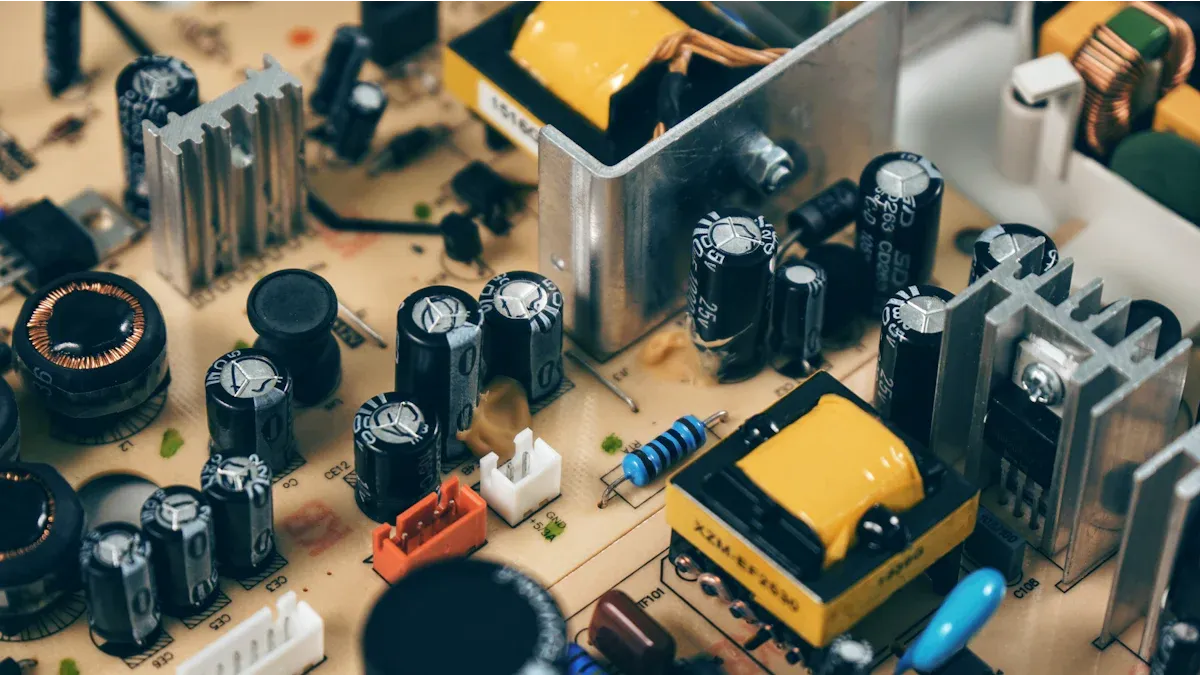
Crystal oscillators play a pivotal role in modern technology, enabling precise timing and frequency control across various industries. Their versatility and reliability make them indispensable in consumer electronics, communication systems, and industrial applications.
Consumer Electronics
You encounter crystal oscillators daily in devices like smartphones, laptops, and wearables. These oscillators ensure smooth operation by providing accurate timing signals. For instance, your smartphone relies on a crystal oscillator to synchronize its internal processes, enabling seamless multitasking and communication.
The demand for crystal oscillators in consumer electronics continues to grow. Portable devices like tablets and smartwatches require compact and power-efficient oscillators to enhance battery life and reliability. High-performance data centers and IoT applications also depend on these oscillators for precise synchronization, ensuring efficient operation.
-
Key Contributions in Consumer Electronics:
-
Provide reliable clock signals for devices like smartphones and laptops.
-
Enhance battery life in wearables and portable devices.
-
Support IoT applications with precise timing for connectivity.
-
💡 Did You Know?
Consumer electronics represent the largest market segment for crystal oscillators, driven by the need for accurate timing in devices you use every day.
Communication Systems
Crystal oscillators are the backbone of modern communication systems. They ensure accurate timing and synchronization in networks, enabling reliable data transmission. In telecommunications, these oscillators maintain stable frequencies, ensuring smooth communication between devices.
For example, 5G infrastructure relies heavily on crystal oscillators to maintain frequency stability across networks. This stability supports high-speed data transfer and low-latency communication, which are critical for applications like video streaming and online gaming. Satellite communications and radar systems also depend on these oscillators for precise timing, ensuring uninterrupted performance.
-
Applications in Communication Systems:
-
Synchronize signals in cellular networks and satellite communications.
-
Maintain frequency stability in 5G infrastructure.
-
Enable reliable data transmission in radar and navigation systems.
-
🔍 Note: Without crystal oscillators, modern communication systems would struggle to deliver the speed and reliability you expect.
Industrial and Scientific Applications
In industrial and scientific fields, crystal oscillators enable precise operational control. They are essential in industrial automation, where they provide accurate timing for machinery, ensuring efficient operations. Automotive electronics also rely on these oscillators for navigation systems and electronic control units (ECUs), enhancing vehicle safety and communication.
Scientific instruments use crystal oscillators as precision reference sources for accurate measurements. For example, test instrumentation and GPS systems depend on these oscillators for stable frequency control, ensuring reliable results. The increasing sophistication of electronic devices drives the demand for smaller and more precise oscillators, further highlighting their importance.
|
Application Area |
Contribution of Crystal Oscillators |
|---|---|
|
Industrial Automation |
Provide precise timing for machinery, ensuring efficiency. |
|
Automotive Electronics |
Enhance navigation systems and ECUs for safety and communication. |
|
Scientific Instruments |
Serve as precision reference sources for accurate measurements. |
|
GPS |
Deliver precise timing for accurate positioning and navigation. |
|
5G Technology |
Maintain synchronization and frequency stability in advanced networks. |
⚙️ Pro Tip: When designing industrial systems, prioritize oscillators with advanced stability features to ensure reliable performance in demanding environments.
Crystal oscillators continue to drive innovation across industries, enabling the development of smarter, more efficient technologies.
Challenges in Crystal Oscillator Design and Maintenance
Design Challenges
Designing crystal oscillators involves overcoming several technical hurdles. You need to ensure the oscillator maintains frequency stability under diverse conditions. Environmental factors like temperature fluctuations, humidity, and mechanical stress can disrupt the resonant frequency of quartz crystals. These challenges demand innovative solutions to preserve performance.
Material selection plays a critical role in oscillator design. Impurities in quartz crystals or suboptimal cuts can lead to inconsistencies in frequency output. Manufacturing processes must address these issues by controlling contaminants sealed inside the resonator's package. Humidity during production also affects the oscillator's reliability. Advanced manufacturing techniques, such as MEMS technology, offer improved resistance to environmental factors and mechanical stress.
Another challenge lies in miniaturization. Modern devices require smaller oscillators without compromising performance. You must balance compact designs with the need for high stability and low phase noise. This balance becomes even more critical in applications like telecommunications and medical devices, where precision is non-negotiable.
💡 Tip: When designing oscillators, prioritize materials and manufacturing processes that minimize contamination and enhance durability. This approach ensures reliable performance in demanding environments.
Maintenance and Longevity
Maintaining crystal oscillators is essential for ensuring their long-term reliability. Regular inspection and calibration help you verify that oscillators meet performance specifications. Aging components can degrade over time, so replacing them before they fail is crucial for maintaining system stability.
|
Maintenance Activity |
Description |
|---|---|
|
Regular Inspection |
Periodically inspect and calibrate oscillators to ensure they meet performance specifications. |
|
Component Replacement |
Replace aging components before they reach the end of their useful life. |
Longevity depends on the quality of materials and manufacturing processes. Contaminants sealed inside the resonator's package can compromise durability. Humidity control during production reduces the risk of corrosion and degradation. Sources of out-gassing or contamination from materials must be minimized to extend the oscillator's lifespan.
Crystal oscillators are widely used in critical applications like telecommunications, GPS systems, and medical devices. These systems demand consistent performance over extended periods. Advancements in material science continue to enhance durability. For example, MEMS oscillators offer promising alternatives with improved resistance to environmental stress.
🔍 Note: To maximize the lifespan of your oscillators, implement regular maintenance schedules and use high-quality components during manufacturing.
Crystal oscillators play a vital role in modern electronics. They provide the precise frequency control needed for reliable operation in countless devices and systems. You rely on them every day, whether using a smartphone, navigating with GPS, or connecting to a communication network. Their ability to maintain stability ensures the seamless performance of these technologies.
Advancements in crystal oscillator technology continue to push the boundaries of innovation. Engineers develop smaller, more efficient designs to meet the growing demands of modern applications. These improvements ensure that crystal oscillators remain indispensable in shaping the future of electronics.
FAQ
What makes crystal oscillators better than other oscillators?
Crystal oscillators provide unmatched frequency stability and precision. Quartz crystals have a high-quality factor, which ensures minimal energy loss during oscillation. This makes them ideal for applications requiring accurate timing, such as communication systems and scientific instruments.
How do temperature changes affect crystal oscillators?
Temperature changes can cause quartz crystals to expand or contract, leading to slight frequency shifts. Advanced designs like TCXOs and OCXOs counteract this by using temperature compensation or maintaining a constant temperature around the crystal.
💡 Tip: Choose temperature-compensated oscillators for environments with fluctuating temperatures.
Can crystal oscillators fail over time?
Yes, crystal oscillators can degrade due to aging, contamination, or environmental stress. Regular maintenance, such as inspection and calibration, helps ensure long-term reliability. High-quality materials and manufacturing processes also extend their lifespan.
Are crystal oscillators used in GPS systems?
Absolutely! GPS systems rely on crystal oscillators for precise timing. These oscillators ensure accurate positioning by synchronizing signals between satellites and receivers. TCXOs and OCXOs are commonly used in GPS devices for their superior stability.
What is the difference between TCXO and OCXO?
TCXOs use temperature compensation circuits to adjust frequency output, while OCXOs maintain a constant temperature around the crystal using a small oven. OCXOs offer higher precision but are larger and more expensive than TCXOs.
Why are VCXOs important in communication systems?
VCXOs allow you to adjust the output frequency dynamically using a control voltage. This feature ensures synchronization between transmitting and receiving devices, making them essential for smooth data transmission in communication systems.
How do crystal oscillators contribute to 5G technology?
Crystal oscillators provide the stable frequencies needed for 5G networks. They ensure accurate timing and synchronization, enabling high-speed data transfer and low-latency communication. Without them, 5G infrastructure would struggle to deliver reliable performance.
Are MEMS oscillators better than quartz crystal oscillators?
MEMS oscillators are more shock-resistant and compact, but they may lack the frequency stability of quartz crystal oscillators. Quartz oscillators are preferred for applications requiring high precision, while MEMS oscillators suit environments with mechanical stress.
🔍 Note: Choose quartz oscillators for precision and MEMS oscillators for durability.