Custom PCB Printing and Assembly: Comparing In-House vs. Outsourced Manufacturing Solutions
When companies choose between in-house and outsourced manufacturing for Custom PCB Printing, the decision often centers on cost, control, speed, quality, and scalability.
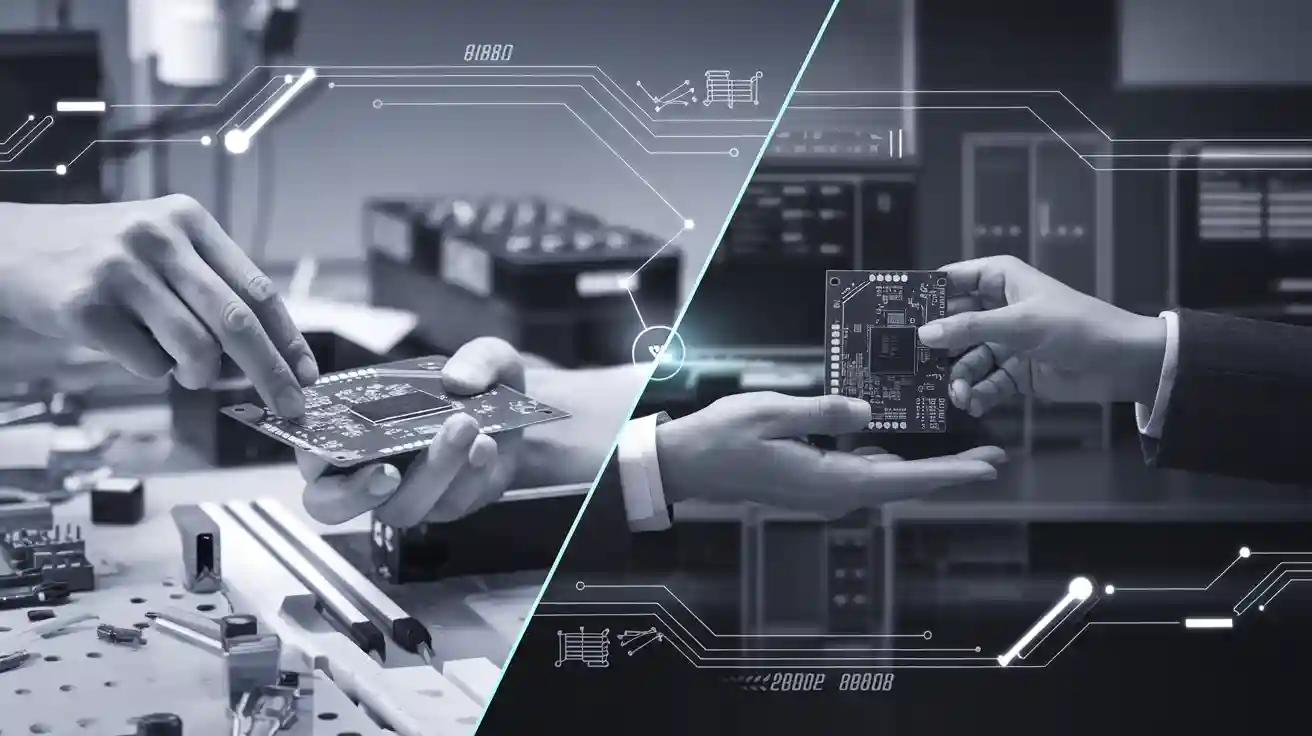
When companies choose between in-house and outsourced manufacturing for Custom PCB Printing, the decision often centers on cost, control, speed, quality, and scalability. For example, outsourcing can reduce the unit cost from $10 to $2 as production volume rises, while in-house methods may offer better oversight for sensitive projects. The table below highlights key differences:
|
Factor |
In-House |
Outsourced |
|---|---|---|
|
Cost |
Higher at low volume |
Lower at scale |
|
Control |
High |
Moderate |
|
Speed |
Fast for prototyping |
Faster for volume |
|
Quality |
Customizable |
Consistent |
|
Scalability |
Limited |
Excellent |
Key Takeaways
-
In-house PCB manufacturing offers full control, quick adjustments, and strong protection for sensitive designs, making it ideal for small runs and prototypes.
-
Outsourced manufacturing reduces costs at scale, speeds up production, and provides access to advanced technology and skilled experts for large volumes.
-
Choosing between in-house and outsourcing depends on company size, budget, production volume, and the need for quality control or intellectual property protection.
-
In-house assembly requires significant investment and skilled staff but allows real-time problem solving and direct quality oversight.
-
Outsourcing provides flexibility, scalability, and certified quality processes but requires careful partner selection to avoid risks in communication and control.
Custom PCB Printing Overview
What Is Custom PCB Printing?
Custom PCB printing creates unique circuit boards tailored for specific electronic applications. Engineers design these boards to fit the exact needs of a device, from shape and size to the number of layers and types of components. Customization allows companies to optimize performance, reduce wasted space, and improve reliability.
The global market for custom PCB printing continues to expand. According to industry research, the printed circuit board market reached $67.9 billion in 2023 and is projected to grow to $92.4 billion by 2029. This growth comes from rising demand for advanced electronics, flexible PCBs, and new technologies like IoT and AI. Flexible PCBs, in particular, help manufacturers create smaller, more durable devices. The introduction of 3D printing in PCB production also enables faster turnaround and greater design freedom.
Note: Custom PCB printing supports innovation by allowing circuits to be printed on complex shapes and with multiple materials. This capability proves essential for industries that require specialized solutions.
PCB Fabrication vs. Assembly
PCB fabrication and assembly represent two distinct stages in the creation of a functional circuit board. Fabrication refers to the process of manufacturing the bare board. This stage includes layering materials, etching circuit patterns, and drilling holes for components. The result is a blank board with copper traces that form the electrical pathways.
Assembly follows fabrication. During assembly, technicians or machines place and solder electronic components onto the fabricated board. This step transforms the blank PCB into a working device. Printed circuit board assembly requires careful attention to detail, as even small errors can affect performance.
-
Fabrication creates the physical structure and circuit layout.
-
Assembly adds components and brings the board to life.
Together, these steps ensure that each custom PCB meets the exact requirements of its intended application.
In-House PCB Manufacturing
In-House Assembly Process
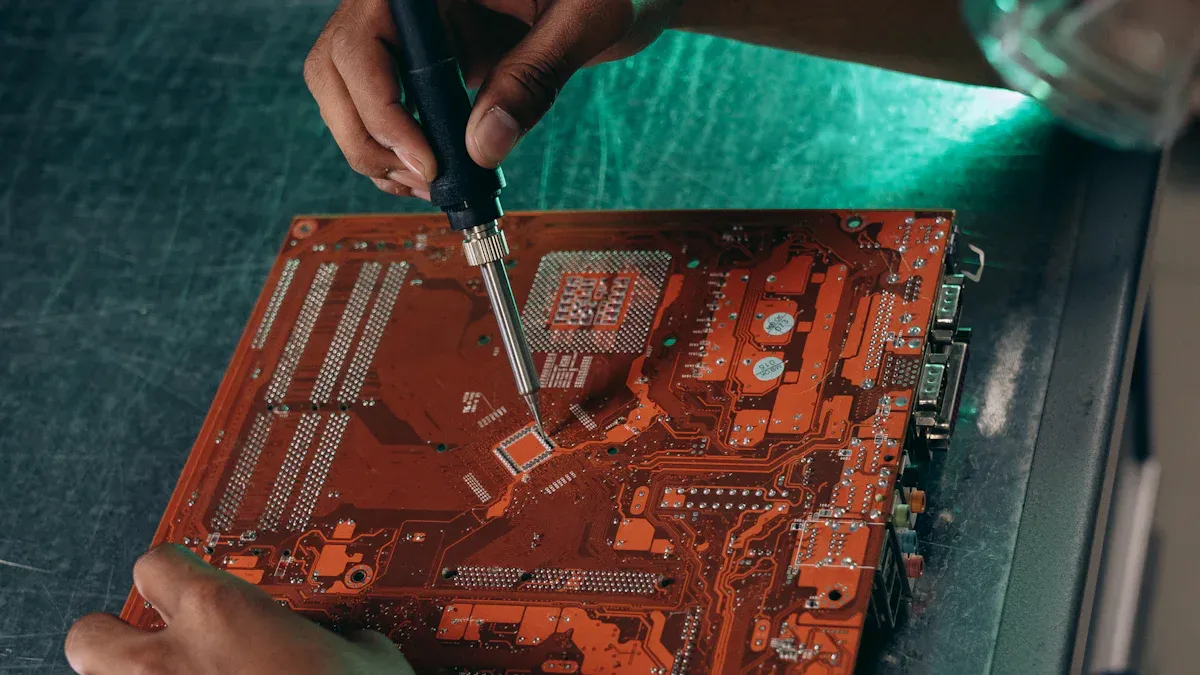
In-house assembly starts with preparing the circuit board and gathering all required components. Engineers use specialized equipment to place each part onto the PCB. Automated machines or skilled technicians handle the soldering process. After assembly, the team performs testing to check for defects and ensure the circuit works as designed. The process includes several quality checks, such as visual inspection and electrical testing. If any issues appear, immediate adjustments can be made. This approach allows for quick changes and real-time problem solving.
|
Metric |
Description |
Significance for Process Efficiency |
|---|---|---|
|
Measures the number of defects per million defect opportunities. Standardizes defect frequency measurement. |
Helps compare quality across processes and identify defect trends. |
|
|
First Pass Yield (FPY) |
Percentage of PCBs passing all inspections on the first attempt without rework. |
Indicates how well the process produces defect-free boards initially, reflecting efficiency. |
|
Rework Rate |
Percentage of PCBs requiring additional work or repairs after initial assembly. |
Lower rates show higher process quality and less time spent fixing issues. |
|
Scrap Rate |
Percentage of PCBs discarded due to defects or quality issues. |
Minimizing scrap reduces waste and improves productivity. |
Benefits of In-House Assembly
In-house assembly gives companies full control over every step of pcb manufacturing. Teams can select materials, set quality standards, and monitor each stage closely. This control leads to higher quality and faster turnaround times. Engineers can inspect, adjust, and rerun production if a prototype fails. On-site testing allows for quick signal checks and thermal validation. Immediate feedback helps teams fix problems without delay. All steps happen in one location, which removes shipping delays and speeds up the entire process. In-house pcb assembly also supports real-time process modifications, ensuring each circuit meets exact needs.
Tip: Direct monitoring during in-house pcb manufacturing helps detect defects early and maintain uniform quality.
Challenges of In-House Manufacturing
In-house manufacturing requires significant investment in equipment, skilled staff, and training. Companies must manage supply chains, maintain machines, and keep up with new technologies. High costs can limit scalability, especially for small production runs. Teams must track key performance indicators like production efficiency, cost per unit, and defect rates. Achieving industry benchmarks, such as a 95% yield rate or 98% on-time delivery, demands constant attention. In-house pcb manufacturing also means handling all testing, assembly, and quality control internally. This responsibility can strain resources if not managed well. Despite these challenges, many companies choose in-house assembly for sensitive projects or when they need full oversight of the manufacturing process.
Outsourced Manufacturing
How Outsourcing Works
Outsourced manufacturing in pcb assembly involves hiring a contract manufacturing partner to handle the entire process. Companies send their circuit designs to the partner, who manages design review, prototyping, component sourcing, assembly, and testing. This approach streamlines communication by bringing together mechanical, electrical, and software engineering under one roof. The contract manufacturing firm uses a Design for Manufacturability (DFM) approach, optimizing the pcb design for efficient fabrication and assembly. The workflow includes repeated design improvements, simulations, and prototype iterations. Once the design is ready, the partner transitions smoothly from prototype to mass production, using automated pick-and-place machines and advanced testing methods.
Note: Some firms, like Sunsoar, combine rapid 3D pcb prototyping with traditional manufacturing, delivering prototypes in as little as 24 hours and enabling quick shifts to full-scale production.
Advantages of Outsourcing
Outsourced manufacturing offers several benefits for electronics manufacturing:
-
Lower labor costs, especially in regions like China, reduce overall expenses for assembly.
-
Large production volumes allow contract manufacturing partners to achieve economies of scale, lowering per-unit costs and enabling bulk component purchasing.
-
Integrated supply chains improve component availability and reduce logistics costs.
-
Access to skilled labor and advanced technology ensures high-quality assembly and testing.
-
Outsourcing pcb assembly provides flexibility and scalability without the need for upfront infrastructure investment.
|
Outsourcing Advantage |
Description |
|---|---|
|
Labor Cost Advantages |
Lower manual assembly costs, especially overseas |
|
Economies of Scale |
Bulk purchasing and reduced per-unit costs |
|
Supply Chain Integration |
Faster problem resolution, better component access |
|
Quality Management |
Certifications and established quality processes |
|
Production Efficiency |
Streamlined operations and high equipment utilization |
Drawbacks of Outsourcing
Despite its strengths, outsourced manufacturing presents challenges:
-
Selecting the wrong contract manufacturing partner can cause quality and cost issues.
-
Overlooking technical capabilities or quality control increases risk.
-
Rushing the selection process or focusing only on cost may lead to long-term problems.
-
Communication gaps and distance can delay responses and affect assembly quality.
-
Outsourcing pcb assembly can expose intellectual property and reduce control over circuit design.
|
Aspect |
Outsourcing Drawbacks |
In-House Production Advantages |
|---|---|---|
|
Quality Control |
Variations due to standards and distance |
Direct oversight, real-time adjustments |
|
Long-Term Investment |
Reduced control, IP exposure |
Better IP protection, supports innovation |
|
Communication & Responsiveness |
Delays due to geography |
Faster response, easier customization |
Tip: Companies should treat contract manufacturing as a strategic partnership, not just a transaction, to avoid quality and investment pitfalls.
Side-by-Side Comparison

Key Differences
Choosing between in-house and outsourced solutions for PCB production involves careful evaluation of several critical factors. Each approach offers unique strengths and limitations that impact a company's ability to meet project goals. The following table provides a concise comparison of in-house manufacturing and contract manufacturing across key dimensions:
|
Factor |
In-House Manufacturing |
Contract Manufacturing (Outsourced) |
|---|---|---|
|
Cost |
High upfront investment in equipment, facilities, and staff. |
No large capital investment; payment divided over time; possible savings through suppliers. |
|
Control |
Direct oversight of design, assembly, and quality processes. |
Less direct control; relies on partner’s processes and quality agreements. |
|
Quality |
Company manages quality directly; results depend on internal expertise. |
Quality depends on provider’s reputation; managed through contracts and standards. |
|
Speed |
May be slower due to setup and resource limits. |
Faster time-to-market with established infrastructure and streamlined assembly. |
|
Scalability |
Limited by internal resources and infrastructure. |
Easy to scale up or down without managing logistics or inventory directly. |
|
Expertise |
Requires hiring and developing skilled staff internally. |
Access to specialized engineers and sourcing experts through the provider. |
Note: Companies often select contract manufacturing to access advanced assembly skills and scale production quickly. In-house manufacturing suits organizations that need strict control over sensitive projects or proprietary designs.
Quick Reference Points
-
Cost: In-house manufacturing demands significant investment but can reduce long-term expenses by avoiding external markups. Contract manufacturing spreads costs over time and leverages supplier relationships for savings.
-
Control: In-house teams maintain full control over every step, ensuring alignment with company standards. Outsourcing shifts control to the partner, requiring trust in their processes.
-
Quality: Direct oversight in in-house assembly can improve quality if the team has strong expertise. Contract manufacturing quality depends on the partner’s reputation and adherence to agreements.
-
Speed: Internal production may face delays from setup and resource constraints. Contract manufacturing often delivers faster results due to established workflows and equipment.
-
Scalability: In-house operations scale only as fast as resources allow. Contract manufacturing enables rapid scaling to meet changing production needs.
-
Expertise: Building internal expertise takes time and investment. Outsourcing provides immediate access to skilled engineers and advanced assembly capabilities.
Tip: Companies should assess their current resources, project requirements, and long-term goals before choosing a manufacturing approach. The right decision balances control, speed, and quality with available expertise and production needs.
Decision Factors
Company Size and Volume
Company size and expected production volume play a major role in choosing between in-house and outsourced PCB manufacturing. Large organizations with steady, high-volume needs often benefit from investing in their own facilities. They can spread fixed costs over many units, making each circuit board project more cost-effective. Smaller companies or startups may not have the resources to support such investments. For them, outsourcing provides a practical way to access scalable production without heavy upfront costs. When a company expects frequent changes or only needs small batches, outsourcing offers flexibility and reduces the risk of underused equipment.
Companies should match their manufacturing approach to their current and future production needs. Outsourcing works well for low to medium volumes, while in-house solutions suit high-volume, stable demand.
Budget and Investment
Budget constraints and investment priorities shape the decision between in-house and outsourced production. In-house PCB manufacturing requires significant upfront spending. Companies must buy equipment, set up facilities, and hire skilled staff. These costs can range from a few thousand dollars for basic tools to hundreds of thousands for advanced automation. Ongoing expenses include labor, materials, and quality control. Outsourcing, on the other hand, avoids these large capital outlays. It allows companies to pay for services as needed, which is ideal for those with limited budgets or unpredictable demand.
-
Economies of scale lower costs as batch sizes increase.
-
Expedited delivery raises costs due to rush fees.
-
Packaging choices, such as moisture-proof or anti-static options, affect total cost.
-
Higher manufacturing standards and certifications increase expenses.
-
Advanced equipment boosts efficiency but requires more investment.
-
Maximizing production volume helps lower unit costs.
Companies should weigh these factors carefully. Outsourcing often proves more cost-effective for small to medium runs, while in-house production can pay off for large, ongoing projects.
Expertise and Resources
A company’s ability to manage in-house PCB assembly depends on its expertise and available resources. Effective management requires skilled engineers, advanced equipment, and a stable supply chain. Companies must also plan for lifecycle analysis and obsolescence management to ensure long-term success for each circuit board project. Access to specialized expertise, such as quality control specialists and production experts, supports high-quality outcomes.
|
Aspect |
Details |
|---|---|
|
UL, IPC, and J-Std certified processes |
|
|
Production Scale |
Large facilities and multiple SMT lines |
|
Equipment |
Automated pick-and-place, reflow ovens, AOI, X-RAY |
|
Processes |
Lead-free and leaded assembly, conformal coating |
|
Team Expertise |
Dedicated, vertically integrated teams with advanced technology |
Companies lacking these resources may struggle to maintain quality and efficiency. Outsourcing provides immediate access to specialized skills and equipment, making it easier to move from prototype to production without major investments.
Quality and IP Concerns
Quality and intellectual property (IP) protection remain top priorities in custom PCB manufacturing. Companies must ensure that every circuit board project meets strict quality standards through testing and compliance. Secure data transmission, access control, and cybersecurity measures help protect sensitive designs. Supply chain security also plays a key role in safeguarding IP and maintaining quality.
-
Quality assurance includes thorough testing and adherence to industry standards.
-
IP protection strategies involve secure storage, employee training, and disaster recovery plans.
-
Supply chain security reduces the risk of counterfeit components and malicious code.
-
Collaboration and clear communication help maintain quality and protect IP throughout the process.
The global counterfeit electronics trade and high-profile security breaches highlight the risks of poor IP management. Companies must choose partners and processes that prioritize both quality and IP protection, especially when moving from prototype to production.
Speed and Flexibility
Speed and flexibility influence a company’s ability to respond to market changes and deliver products on time. Outsourcing to electronics manufacturing service (EMS) providers offers operational flexibility by keeping unit costs steady, even when demand fluctuates. EMS companies can quickly adjust capacity, enabling faster time to market and improved on-time delivery. In-house production may face higher unit costs if equipment sits idle during slow periods.
Research shows that outsourcing can accelerate time to market by sharing risks and providing access to new technologies. However, successful transitions require careful planning and knowledge transfer. Companies must document processes and ensure smooth handoffs to maintain speed and flexibility. Strategic sourcing through outsourcing enhances the ability to modify designs and scale volumes quickly, supporting both rapid prototyping and full-scale production.
Companies seeking faster time to market and agile responses to customer needs should consider how each approach supports speed and flexibility from prototype to production.
Recommendations
When In-House Is Best
Companies should choose in-house PCB assembly when they need full control over the process. This approach works well for early-stage development, small production runs, or projects that require strict oversight. Teams can make quick changes, test prototypes, and protect sensitive designs. In-house assembly also suits organizations with skilled staff and available equipment.
In-house assembly allows engineers to monitor every step, catch problems early, and adjust quickly. This method supports innovation and keeps intellectual property secure.
Actionable scenarios for in-house assembly:
-
Developing prototypes or custom designs that need frequent changes.
-
Managing small batch production where setup costs remain low.
-
Handling sensitive projects that require strict IP protection.
-
Using existing staff and equipment during periods of low production volume.
-
Needing direct oversight to meet unique quality standards.
The following table summarizes when in-house assembly fits best:
|
Scenario |
In-House Assembly Advantage |
|---|---|
|
Early-stage product development |
Quick changes and real-time feedback |
|
Small production runs |
Lower risk of underused equipment |
|
High IP sensitivity |
Strong control over proprietary designs |
|
Available internal resources |
Efficient use of skilled staff and tools |
|
Custom quality requirements |
Direct monitoring and process adjustment |
When Outsourcing Is Best
Outsourcing PCB manufacturing offers strong benefits for companies aiming to scale production, reduce costs, and access specialized expertise. Contract manufacturers use automated lines and strict quality controls to deliver consistent results. This approach works best for high-volume production, tight deadlines, or when internal resources are limited.
Outsourcing frees internal teams to focus on core business tasks. It also speeds up time to market and ensures high quality through formal certifications and advanced testing.
Actionable scenarios for outsourcing:
-
Scaling up production to meet growing demand.
-
Reducing internal workload and freeing up staff for other projects.
-
Achieving lower per-unit costs through economies of scale.
-
Meeting strict quality standards with certified processes.
-
Accessing advanced equipment and specialized engineers.
Companies often see better outcomes when they partner with experienced contract manufacturers. These partners use rigorous testing, maintain detailed records, and follow industry certifications like IPC-A-600. They also manage supply chains, reduce risks of shortages, and improve pricing through bulk purchasing.
|
Scenario |
Outsourced Manufacturing Advantage |
|---|---|
|
High-volume production |
Lower costs and rapid scaling |
|
Tight deadlines |
|
|
Limited internal expertise |
Access to skilled engineers and technology |
|
Need for formal quality systems |
Certified processes and traceability |
|
Complex supply chain management |
Integrated sourcing and risk reduction |
Companies that need to ramp up quickly, improve quality, or manage complex projects often benefit most from outsourcing. This approach supports long-term growth and helps maintain a competitive edge.
Summary Table: Actionable Scenarios for Choosing PCB Assembly Approach
|
In-House Assembly |
Contract Manufacturing (Outsourced) |
|
|---|---|---|
|
Scalability |
Limited by staff and equipment |
Designed for rapid volume increases |
|
Cost at High Volumes |
Higher due to fixed overhead |
Lower per unit with efficiency and scale |
|
Speed to Market |
Slower, requires team coordination |
Faster, with dedicated processes |
|
Quality Systems |
Varies, may be informal |
Formal QA, certifications, traceability |
|
Internal Workload |
High, teams manage all aspects |
Lower, partner handles production |
For small runs, sensitive designs, or when internal expertise is strong, in-house assembly is the best fit. For scaling, cost savings, and advanced quality needs, outsourcing delivers the greatest value.
A clear comparison shows both in-house and outsourced PCB manufacturing offer unique strengths. The table below highlights key differences:
|
Key Factor |
In-House Manufacturing |
Outsourced Manufacturing (Bittele) |
|---|---|---|
|
Flexibility |
Fast design changes |
Quick updates, minimal losses |
|
Quality Control |
Direct, dedicated focus |
High standards, any order size |
|
Production Control |
Better planning, resource limits |
Meets demand, handles spikes |
|
Logistics/Cost |
Saves time, less supply chain hassle |
Turnkey, reduces extra costs |
Companies should define inspection needs, assess expertise, and review equipment before changing strategies. Next steps include simplifying PCB designs, using automated DFM checks, and monitoring production with real-time tools for better results.
FAQ
What is the main difference between PCB fabrication and assembly?
PCB fabrication creates the physical board. Assembly adds electronic components to the board. Fabrication shapes the board and forms circuits. Assembly makes the board work by attaching parts.
Can small companies benefit from outsourcing PCB manufacturing?
Yes. Small companies often save money and time by outsourcing. They avoid buying expensive equipment. Outsourcing also gives them access to skilled workers and advanced technology.
How does in-house PCB assembly protect intellectual property?
In-house assembly keeps sensitive designs within the company. Teams control who sees the project. This reduces the risk of leaks or theft. Companies can set strict security rules.
What quality standards should PCB manufacturers follow?
Manufacturers should follow standards like IPC-A-600 and ISO 9001. These standards ensure boards meet industry requirements. Quality checks and certifications help prevent defects and improve reliability.