Circuit Protection: Technologies, Components, and Implementation Strategies
You need circuit protection to keep electrical systems safe. It helps stop expensive damage. Circuit protection devices stop dangerous faults.
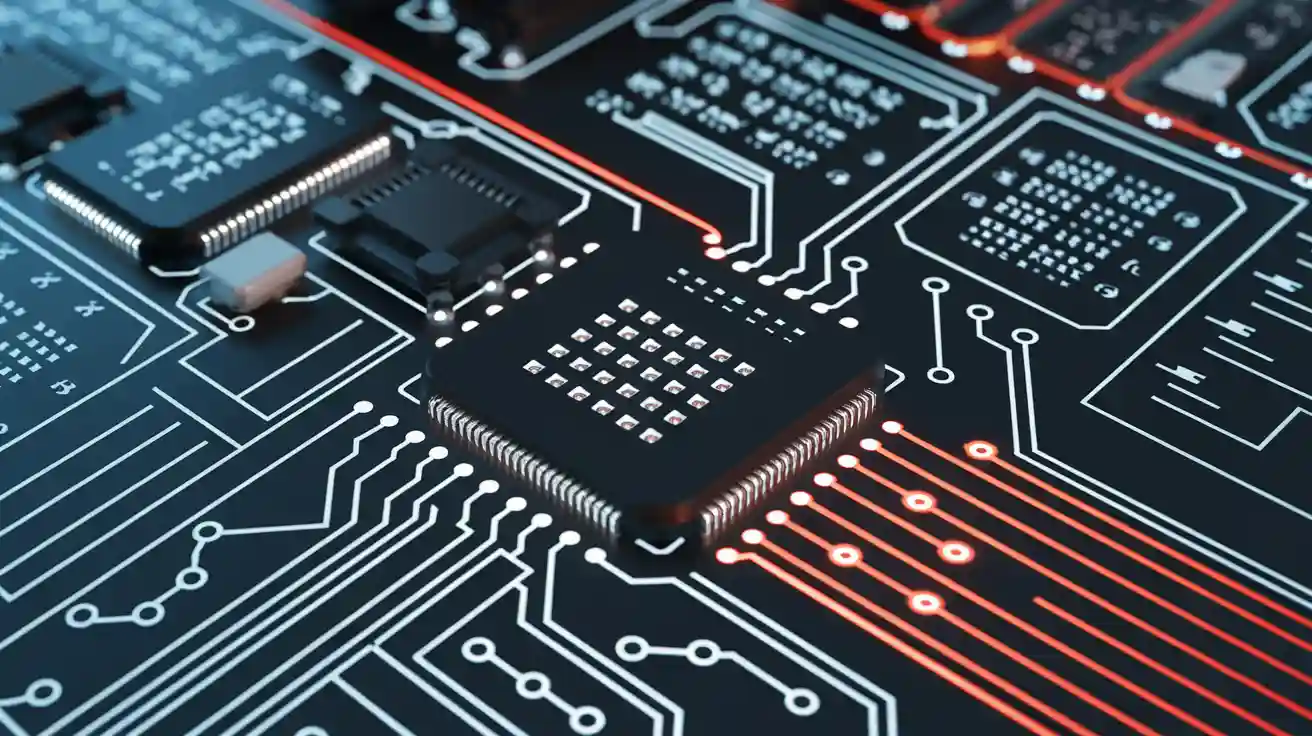
You need circuit protection to keep electrical systems safe. It helps stop expensive damage. Circuit protection devices stop dangerous faults. These faults, like arc faults, can cause fires in homes and buildings. Arc faults cause 25 percent of building fires. This shows how important good protection is for safety. As technology grows, the market for circuit protection devices grows fast.
|
Year |
Market Size (USD Billion) |
Notes |
|---|---|---|
|
2015 |
Base year market size |
|
|
2022 |
53.56 |
Recent market size |
|
2024 |
Latest reported |
|
|
2030 |
72.68 |
Forecasted market size |
|
2033 |
94.84 |
Long-term forecast |
You should learn about both old and new circuit protection methods. This helps keep your systems safe and working well.
Key Takeaways
-
Circuit protection devices stop electrical faults very fast. This helps prevent fires, shocks, and damage to equipment. These devices help keep people and property safe.
-
You need to pick the right protection device for your system. Think about your system’s voltage, current, and where it will be used. Following industry standards helps make things safe and reliable.
-
Some common devices are fuses, circuit breakers, surge protectors, and ESD protection parts. Each device works best for certain uses and situations.
-
Good circuit design and PCB layout help protection work better. Testing and taking care of devices often keeps them working right.
-
New smart and smaller protection technologies can watch for problems and stop them faster. This makes systems safer and work better.
Importance of Circuit Protection
Why Circuit Protection Matters
Circuit protection keeps people and equipment safe. The right devices stop shocks, fires, and damage. Circuit protection finds problems like overloads and short circuits. It stops dangerous current fast. This helps your devices last longer.
Without circuit protection, you could get hurt. Electrical accidents can burn you or hurt your nerves. Sometimes, they cause health problems that last a long time. In Sweden, about 300 electrical accidents happen each year. Many people miss work or have issues like anxiety or memory loss. These dangers show why circuit protection is so important for safety and health.
You must also follow industry standards. Standards like ANSI 50/50TD/51 and UL 508A help you pick and install devices. They help you pass inspections and avoid legal trouble. Following these rules makes your system safer and more reliable.
Note: Circuit protection is not just for equipment. It saves lives, stops downtime, and keeps workplaces safe.
Common Electrical Hazards
There are many dangers in commercial and industrial places. Some common ones are:
-
Exposed wiring can shock you or start fires.
-
Overloaded circuits can get too hot and break things.
-
Old or broken equipment can spark or stop working.
-
Bad grounding makes shocks more likely during problems.
-
Water near wires can cause shorts and fires.
-
DIY repairs often make unsafe connections.
-
Skipping maintenance lets small problems get worse.
When you know about these dangers, you see why circuit protection matters. It lowers risks, protects your stuff, and keeps everyone safer.
Circuit Protection Devices
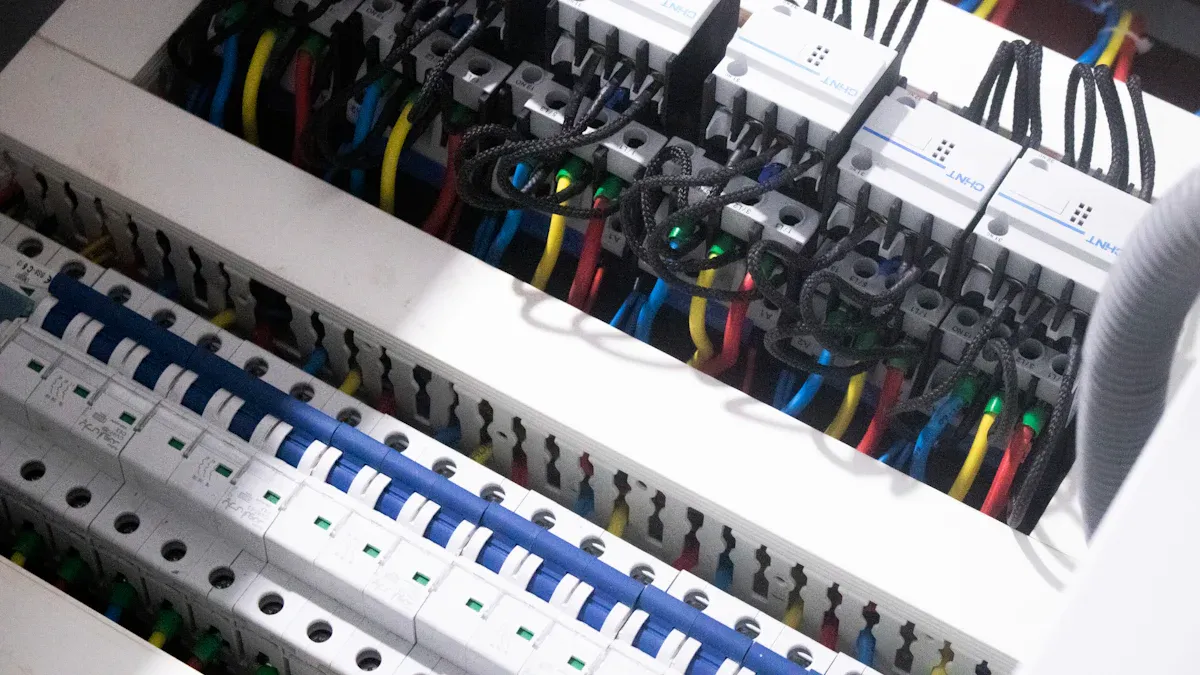
When you work with electrical systems, you need circuit protection devices. These devices help keep people and equipment safe. They find problems, stop dangerous currents, and prevent damage. There are many types of circuit protection devices. Each type has special features and uses.
Fuses and Circuit Breakers
Fuses and circuit breakers are used the most. You see them in homes, factories, cars, and electronics. Both stop current when there is a problem, but they work differently.
A fuse has a thin wire inside. If too much current flows, the wire melts. This stops the electricity. Fuses come in different shapes, like glass tubes, cartridges, and blades. Glass tube fuses are common in electronics. Blade fuses are often in cars. Fuses are cheap and work fast. They are good for things that use a lot of power, like heaters.
Circuit breakers have a switch inside. When there is a problem, the switch opens. This stops the current. You can reset a circuit breaker after it trips. This makes them easy to use for motors and VFDs. You find circuit breakers in homes, factories, and big buildings.
Here is a table that compares fuses and circuit breakers:
|
Aspect |
Fuses |
Circuit Breakers |
|---|---|---|
|
Response Time |
Generally faster response times |
Typically slower than fuses |
|
Current Rating |
Higher SCCR values, often starting around 100kA |
Usually between 10kA to 65kA |
|
Application Suitability |
Suitable for high current applications (e.g., heating resistors); cheaper short-term; fuse blocks allow easy fuse replacement |
Better for protecting motors and VFDs; convenient reset after tripping; may require replacement or adjustment for different motor sizes |
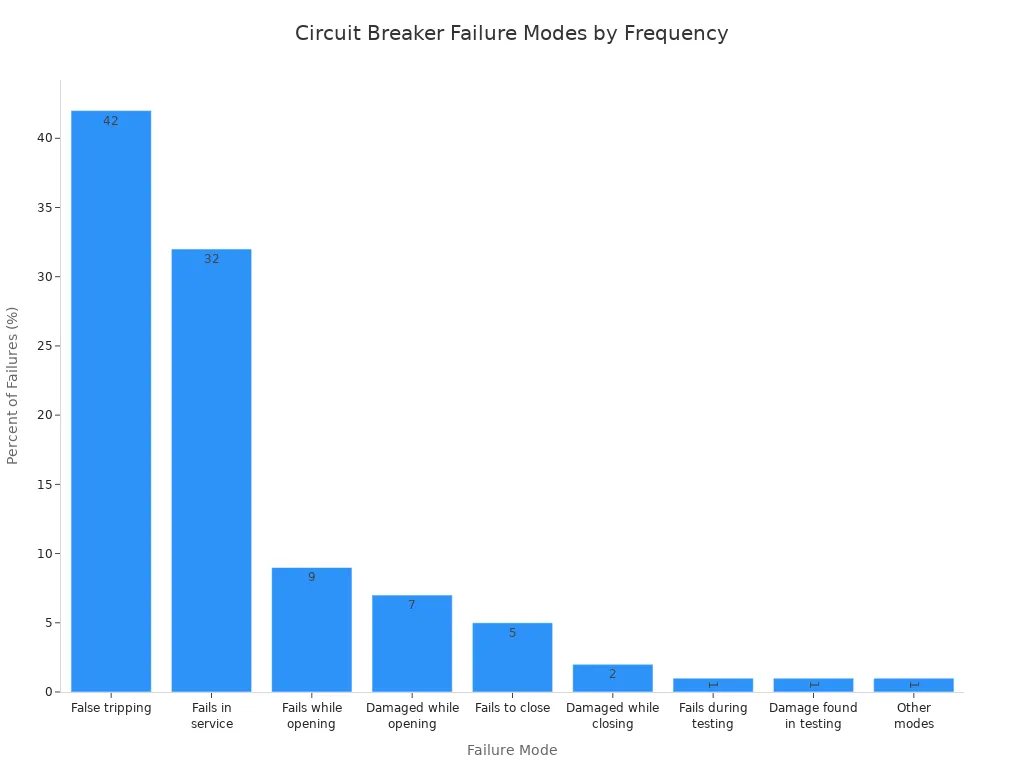
Circuit breakers can fail sometimes. The most common problem is false tripping. This happens 42% of the time. The breaker opens when it should not. This can be caused by wrong settings or relay problems. Other failures are not opening or closing, or getting damaged.
This table shows where you use different circuit protection devices:
|
Device Type |
Typical Applications |
Functions and Benefits |
|---|---|---|
|
Miniature Circuit Breakers (MCB) |
Residential and commercial electrical systems |
Protects against overloads and short circuits; quick response, easy installation, reliable |
|
Molded Case Circuit Breakers (MCCB) |
Industrial and large commercial settings |
Protects against overloads, short circuits, ground faults; adjustable trip settings, robust design |
|
Air Circuit Breakers (ACB) |
High-voltage power distribution, industrial plants |
Protects high voltage systems from overcurrents and short circuits; durable, handles high power loads |
|
Ground Fault Circuit Interrupters (GFCI) |
Wet environments like bathrooms, kitchens, outdoor areas |
Protects against ground faults to prevent electric shock; extra safety in wet areas |
|
Glass Tube Fuses |
Electronic devices, household appliances |
Protects from overcurrent; transparent for easy inspection, cost-effective |
|
Ceramic Fuses |
Automotive and industrial applications |
Higher temperature resistance and insulation; suitable for higher current applications |
|
Blade Fuses |
Automotive electrical circuits |
Protects circuits; easy to replace, color-coded ratings |
|
Surge Protection Devices (Type 1 SPD) |
Main electrical service entrance, lightning-prone areas |
Protects against high-energy surges from lightning strikes; first line of defense |
|
Surge Protection Devices (Type 2 SPD) |
Sub-panels, distribution boards |
Protects against residual surges; safeguards sensitive equipment like computers and appliances |
|
Residual Current Circuit Breaker (RCCB) |
Residential, commercial, industrial settings, especially wet areas |
Detects leakage currents; prevents electric shocks and fires; instant disconnection |
|
Residual Current Breaker with Overcurrent (RCBO) |
Residential and industrial installations |
Combines leakage detection with overcurrent and short circuit protection; comprehensive protection |
Tip: Pick the right device for your job. This keeps your system safe and working.
PTC Resettable Fuses
PTC resettable fuses can reset themselves after a problem. They use a special material that changes when it gets hot. If too much current flows, the fuse heats up and its resistance goes up. This stops most of the current. When the problem is gone, the fuse cools and works again. You do not need to replace it. This saves time and money.
You see PTC resettable fuses in computers, phones, home gadgets, and cars. They are small and fit on crowded circuit boards. Most sales are in Asia-Pacific, with 65% of the market.
Here is a table comparing PTC resettable fuses and regular fuses:
|
Aspect |
PTC Resettable Fuses |
Traditional Fuses |
|---|---|---|
|
Reset Capability |
Automatically reset after fault is cleared, no replacement needed, reducing downtime and maintenance costs |
One-time use; permanently interrupt current flow and require physical replacement |
|
Size and Construction |
Compact, available in small SMD packages suitable for high-density PCBs |
Often larger, sometimes not suitable for modern compact electronics |
|
Resistance and Current Flow |
Low resistance under normal conditions; during fault, resistance increases sharply but allows leakage current |
Completely isolate circuit when blown, no leakage current |
|
Suitability for Fault Types |
Suitable for occasional overcurrent/overtemperature faults; not ideal for repeated or prolonged faults |
Can handle repeated faults by replacement; no degradation over cycles |
|
Sensitivity to Environment |
Trip current and time affected by ambient temperature; sensitive to external heat sources |
Less sensitive to ambient temperature |
|
Voltage and Inductance |
Not suitable for circuits with large inductance due to voltage spikes during trip |
Can be selected for high voltage and inductive loads |
|
Maintenance and Replacement |
No need for replacement after trip; self-resetting |
Requires fuse replacement after blowing |
|
Circuit Isolation |
Does not fully isolate circuit during fault; leakage current remains |
Fully isolates circuit when blown |
PTC resettable fuses are best for rare problems. They are not good for circuits with lots of faults. Their trip time and current can change if it is hot or cold. You need to think about where you use them.
TVS Diodes and Varistors
TVS diodes and varistors protect circuits from sudden voltage spikes. These spikes can come from lightning or static electricity. TVS diodes react very fast. They clamp the voltage to a safe level and send extra current away. After the spike, the diode is ready to work again.
Varistors, also called MOVs, start to conduct when voltage gets too high. They also clamp voltage, but at a higher level than TVS diodes. Varistors are good for high-energy places and are not expensive. But they wear out over time and may need to be replaced.
Here is a table comparing TVS diodes and varistors:
|
Device Type |
Function in Circuit Protection |
Clamping Voltage Characteristics |
Additional Notes |
|---|---|---|---|
|
Varistors (MOVs) |
Become conductive when transient voltage exceeds breakdown voltage, clamping voltage to a safe level |
Higher clamping voltage compared to TVS diodes |
Degrade over time, more suitable for high energy/temperature environments, cost-effective, bidirectional, higher capacitance |
|
TVS Diodes |
Respond rapidly to voltage spikes by diverting excess current, clamping voltage at a lower level |
Clamp at lower voltages than varistors |
Do not degrade with time, low capacitance (good for sensitive signals), more expensive, fast response time |
-
TVS diodes act fast and clamp at lower voltages. They are good for sensitive electronics.
-
Varistors can handle more energy but are slower and clamp at higher voltages.
-
TVS diodes are used in devices that need quick and accurate protection from spikes.
Note: Pick a transient voltage suppressor with a clamping voltage close to what your parts can handle.
Surge Protection Devices
Surge protection devices guard your systems from big voltage spikes. These spikes can come from lightning or power changes. Surge protection devices absorb the surge before it reaches your equipment. You put them at the main power entrance, sub-panels, and near important electronics.
For example, the Lightning Surge Arrester YH10W-11 can handle surges up to 10 kA and voltages up to 11 kV. It uses a varistor block and a silicone rubber case. This device meets standards like IEC and ISO/ANSI. It works well in homes and factories.
-
In factories, surge protection devices last long and protect big machines.
-
In homes, they protect computers, TVs, and appliances from small surges. They are cheaper and easy to replace, but may need changing after a big surge.
Always make sure your surge protection devices meet standards like UL 1449 or IEC 61643-11.
Integrated Protection Devices
Modern electronics often use integrated protection devices for better safety. Isolation amplifiers are one example. They keep input and output circuits apart. This stops high voltage or current from crossing over. It keeps equipment and people safe.
You find isolation amplifiers in medical devices, factories, power supplies, and data systems. They help data stay accurate, make equipment last longer, and cut down on signal noise. In medical gear, they help keep patients safe from dangerous voltages.
Integrated protection devices give you good communication, longer equipment life, and less electrical noise. But they can cost more and use more power than simple devices.
Tip: Use integrated protection devices when you need high safety and accuracy.
ESD Protection Circuit

ESD Threats in Electronics
When you work with electronics, ESD can be a big problem. ESD stands for electrostatic discharge. It happens when static electricity jumps from one thing to another. This quick jump can break or ruin esd-sensitive parts inside your devices. Even a tiny shock, too small to feel, can hurt small circuits.
ESD is most dangerous where people touch devices without safety steps. Not using safe handling, skipping ESD rules, and old safety plans make things worse. In one example, more than 20% of integrated circuits failed tests because of ESD. This shows ESD can really hurt your products and business. Medical and aerospace parts can also get hidden problems or stop working because of ESD. These issues show why every design needs a strong esd protection circuit.
-
Handling parts the wrong way during assembly
-
Not wearing grounding wrist straps or shoes
-
No ESD safety plans or old rules
-
No checks or training for workers
ESD can break things right away or cause secret damage. You might not see the problem at first, but it can cost a lot to fix later.
ESD Protection Devices
You can use different devices to make a good esd protection circuit. These devices stop ESD before it gets to esd-sensitive parts. The most common ones are TVS diodes, varistors, and special ESD protection ICs.
TVS diodes act very fast when there is a shock. You put them where static could enter, like USB ports. They clamp the voltage and send extra energy to ground. Varistors also help by soaking up big surges, but they work best in circuits that can handle more energy. Some designs use ESD protection ICs, which have many features in one chip. These ICs protect fast data lines and keep signals clean.
You should pick the right device for your circuit. For fast data lines, use TVS diodes with low capacitance. For power lines with big surges, use varistors. Use ESD protection ICs in small spaces where you need to save room.
|
Device Type |
Best Use Case |
Response Time |
Notes |
|---|---|---|---|
|
TVS Diode |
High-speed data, USB, HDMI |
Nanoseconds |
Low capacitance, fast response |
|
Varistor |
Power lines, general I/O |
Microseconds |
Handles higher energy, slower response |
|
ESD Protection IC |
Compact, multi-line protection |
Nanoseconds |
Combines multiple features |
Tip: Always check your circuit’s voltage and speed before picking an ESD protection device.
PCB Layout for ESD
You can make your esd protection circuit stronger with good pcb layout. How you place parts and wires changes how well your circuit stops ESD. If you do not follow good layout, even the best devices may not work right.
Here are some easy ways to lower ESD risks:
-
Make the wires between the ESD entry and the protection device short and wide. This helps the device work faster.
-
Put ESD diodes close to connectors, buttons, or metal pads. This lets the diode stop static before it gets to important parts.
-
Use more than one via to connect the diode to the ground plane. This gives static a quick path to leave.
-
Try not to use vias in the main ESD path. Vias can slow down the energy and let ESD reach your parts.
-
Add filter resistors and capacitors near ESD entry spots. These help block noise and protect your pcb.
-
Connect the ground plane to the metal case if you can. This gives static a safe way out.
Good pcb layout is just as important as the esd protection circuit. Careful design keeps your devices safe and working well.
You should teach your team about ESD safety and update your rules often. Check your safety steps and use grounding straps to keep ESD risks low. When you use strong esd protection circuits and smart pcb layout, you keep your products safe from both seen and hidden problems.
Selecting Circuit Protection Devices
Load and Voltage Considerations
When you pick circuit protection devices, match them to your load and voltage. Every circuit design starts by knowing the supply voltage and how much it can change. You need to make sure the clamp voltage fits what your electronics can handle. If you choose the wrong level, you might damage sensitive parts or cause false trips.
-
Check the voltage and current your load will use.
-
Look at how fast each device reacts. Faster response gives better esd protection.
-
Think about the size of the device. Some surge stopper ICs save space on your pcb compared to bigger passive parts.
-
Consider how often you want to do maintenance. Surge stopper ICs need less work than fuses.
-
Make sure the device works well with your other parts and does not mess up normal use.
-
Use tables and filters to compare devices by voltage, channels, and features.
-
Pick between active and passive protection. Active surge stoppers give more features and accuracy for modern circuits.
Tip: Always pick a protection device that matches your load, voltage, and esd risk.
Environmental Factors
Your environment changes how well your circuit protection works. High heat can change how metal parts act. When it gets hotter, resistance goes up. This can cause errors in your circuit design. Humidity brings water that can get inside your pcb and devices. Water can cause rust, break insulation, and even short circuits. Over time, humidity can make oxide layers on metal, raising resistance and risking failure.
Vibration is another problem. It can shake parts loose or move them, which makes things less reliable. If your circuit design faces lots of shaking, you need tough devices and strong pcb mounting. You can use temperature fixes, sealing, and coatings to protect your devices from these tough conditions. Always pick materials and layouts that fight rust and water.
Note: Good planning for your environment keeps your esd protection strong and your pcb safe.
Standards and Compliance
You must follow industry standards when you pick circuit protection devices. Standards like UL, IEC, and ANSI set rules for safety and performance. These rules help you pass checks and keep your circuit design legal. They also make sure your esd and surge protection works right.
Check datasheets for compliance marks before you buy. Devices that meet standards protect your pcb and sensitive electronics from esd and other dangers. Following standards also helps you avoid costly recalls or failures in the field.
|
Standard |
Focus Area |
Why It Matters |
|---|---|---|
|
UL 1449 |
Surge protection devices |
Makes sure devices work safely and reliably |
|
IEC 61000 |
esd immunity, surge tests |
Checks if esd protection works well |
|
ANSI/UL 508A |
Industrial control panels |
Proves safe circuit design practices |
Always use certified devices in your pcb and circuit design to meet esd safety needs.
Implementation Strategies
Schematic Design Tips
You can make your circuit design better by using some simple tips. Add diodes or FET circuits to stop reverse polarity problems. Diodes are best for circuits that do not use much power. Use voltage limiters, electronic fuse chips, thermistors, varistors, and TVS diodes to guard against too much voltage and sudden spikes. When you use semiconductors to control relays, always add flyback diodes. These diodes get rid of voltage spikes and keep your parts safe.
Put class X and class Y safety capacitors in the right places. This helps filter AC signals and cuts down on EMI. Pick parts with power ratings that are 1.5 to 2 times higher than what you need. This derating makes your esd protection last longer. Keep a list of all your parts, including how much power they use and what type of package they have. Choose standard part values to save money and avoid waiting a long time for parts. Use EDA tools to test your circuit design before you build it. Write down every step so you can fix problems and help your team learn.
Selective Coordination
Selective coordination lets you shut off only the part of your system that has a problem. If there is a fault or discharge, only the closest upstream device will trip. The rest of your system keeps working. This stops big outages and keeps people and equipment safe. The National Electrical Code says you must use selective coordination for circuits that power important loads.
Plan for selective coordination when you design your circuit. Use power system analysis software to check your setup. Zone-selective interlock methods help you balance safety and reliability. By isolating faults, you lower the chance of big outages and keep your esd protection strong.
Smart and Advanced Solutions
Modern circuit protection uses smart ideas to make things safer and easier to watch. Solid-state circuit breakers react to faults and discharges much faster than old mechanical ones. Electronic breakers now have arc fault detection to help stop fires. Smart breakers can tell you when they need fixing, so you can repair them before they break.
You can link these devices to building energy management systems. This lets you see esd events, surges, and spikes as they happen. Advanced sensors and communication tools help you control your grid and fix problems fast. These smart ideas also make power better and save energy, so your circuit design works better.
Testing and Maintenance
You need to test and take care of your circuit protection devices to keep them working right. Start by looking for cracks, overheating, or other damage. Do electrical tests like insulation resistance, contact resistance, and timing checks. Clean contacts with high-pressure air and add oil to moving parts if needed.
Calibrate your devices so they trip at the right time during a discharge or surge. Keep good records of all checks and repairs. This helps you watch for esd risks and find patterns over time. Use the table below to help with your maintenance routine:
|
Device Type |
Key Maintenance Steps |
|---|---|
|
Circuit Breakers |
Look for damage, test contacts, clean, oil, calibrate, write down results |
|
Surge Arrestors |
Clean, look for damage, test for leaks and grounding, follow maker’s rules |
|
Protective Relays |
Check once a year, test pickup and timing, replace if broken |
Testing often and keeping good records helps you find problems early and keep your esd protection working well.
Trends in Circuit Protection
Miniaturization and Integration
Today, electronics need smaller and stronger circuit protection devices. Phones, wearables, and IoT gadgets all want tiny parts. Makers now use system on chip integration. This puts processors, memory, and power management together in one small piece. It saves space and uses less power. New ways to pack parts, like 3D stacking and flip-chip bonding, help fit more features in less space. Some devices now have many protection jobs, including esd, in one part. This helps make high-density designs where every millimeter matters.
-
Miniaturization lets you make lighter and thinner products.
-
Integrated protection makes systems work better and last longer.
-
High-density parts add esd protection without needing more room.
Smart Protection Devices
Smart protection devices change how you keep things safe and efficient. In factories, smart sensors and analytics watch for problems right away. These devices help you see esd events, track tools, and keep workers safe. Automation means people do fewer risky jobs. This leads to fewer injuries and better safety rules. Smart asset management lets you track equipment, set up tasks, and get alerts if something is wrong. These tools also help you follow rules and make better products. But you need to plan well, because smart devices can bring new security and control problems.
-
Smart devices give real-time data about esd and other dangers.
-
Automation cuts down on mistakes and makes products better.
-
You get safer workplaces and save money with better checks.
Industry Applications
Advanced circuit protection is now very important in many fields. Consumer electronics need small, strong esd protection for phones and laptops. Cars, especially electric ones, use advanced systems to handle high voltages and keep drivers safe. Factories in Germany and Japan use smart protection to run connected machines. Solar and wind energy systems need strong esd protection for voltage spikes. Smart grids and city power networks use these tools to keep power steady. As IoT grows, you need tiny, smart esd protection for many types of devices.
|
Industry/Application |
Key Points |
|---|---|
|
Consumer Electronics |
Has 31.2% of the market in 2024; needs small, powerful devices. |
|
Automotive |
Expected to grow 8.5% each year by 2034; growth comes from electric cars and self-driving tech. |
|
Industrial Automation (Germany, Japan) |
Grows with Industry 4.0, automation, and smart grid projects that need advanced protection. |
|
Renewable Energy (China, India) |
Grows because of solar, wind power, and more electric car charging. |
|
IoT |
Needs more circuit protection for many small and different devices. |
You should keep up with these trends so your esd protection works for new systems.
You help keep systems safe by using circuit protection. Pick the right devices and follow safety rules. Change your plans when new technology comes out. Some new ideas are:
-
Adaptive protection schemes react fast to changes in the grid.
-
Standardized protocols like IEC 61850 help with automation and talking between devices.
Watch for new trends and check your protection plans often. Make circuit protection important so your systems stay safe, work well, and last a long time.
FAQ
What is the main purpose of circuit protection?
Circuit protection stops faults from hurting equipment or starting fires. These devices cut off power fast when they find problems. Problems include overloads or short circuits. This keeps people and property safe.
How do you choose the right circuit protection device?
Pick a device that matches your system’s voltage and current. Think about where you will use it. Always check the ratings from the maker. Use residual current devices for extra safety in wet or risky places.
Can you reset all circuit protection devices after a fault?
Not every device can be reset. Circuit breakers and PTC resettable fuses let you turn power back on. Traditional fuses must be replaced after they work.
Why is regular maintenance important for circuit protection?
Maintenance helps you spot worn or broken parts early. This makes sure your devices work when needed. It also lowers the chance of surprise problems or safety risks.
Where should you install residual current devices?
Put residual current devices where shock risks are higher. Good places are bathrooms, kitchens, and outdoor circuits. These devices cut power fast if they find leakage currents. This makes things safer.