AI Chip Cost: Investment vs. ROI for OEMs and Manufacturers
AI chip cost keeps going up. This makes OEMs and manufacturers explain every ai investment. Studies show automotive OEMs got an average ROI of 15% from new technology.

AI chip cost keeps going up. This makes OEMs and manufacturers explain every ai investment. Studies show automotive OEMs got an average ROI of 15% from new technology. Manufacturers using off-the-shelf analytics tools saw a median ROI of 140%. Even with these gains, high investment and fast hardware loss make profits hard. Data shows the price for a million AI tokens dropped from $20 to $0.07 in two years. Hardware costs also fell 30% each year. Smart ai investments and careful cost control are needed to get the most from ai adoption.
Key Takeaways
-
AI chip prices are going up because many people want them. There are not enough chips, especially memory like HBM. This means companies must spend money wisely and watch costs closely.
-
The total cost for AI includes chips, buildings, and running the system. Using ready-made tools and cloud services can save money. These choices also help finish projects faster.
-
AI chips help factories work better by cutting down on breaks and waste. They also use less energy. This helps factories make more good products in less time.
-
Picking the best AI projects and making work better increases ROI. Cloud and hybrid models give more choices and cost less at the start.
-
Factories need to watch spending, check for risks, and match AI costs with business plans. This helps them get good results and grow over time.
AI Chip Cost Overview
Pricing Trends
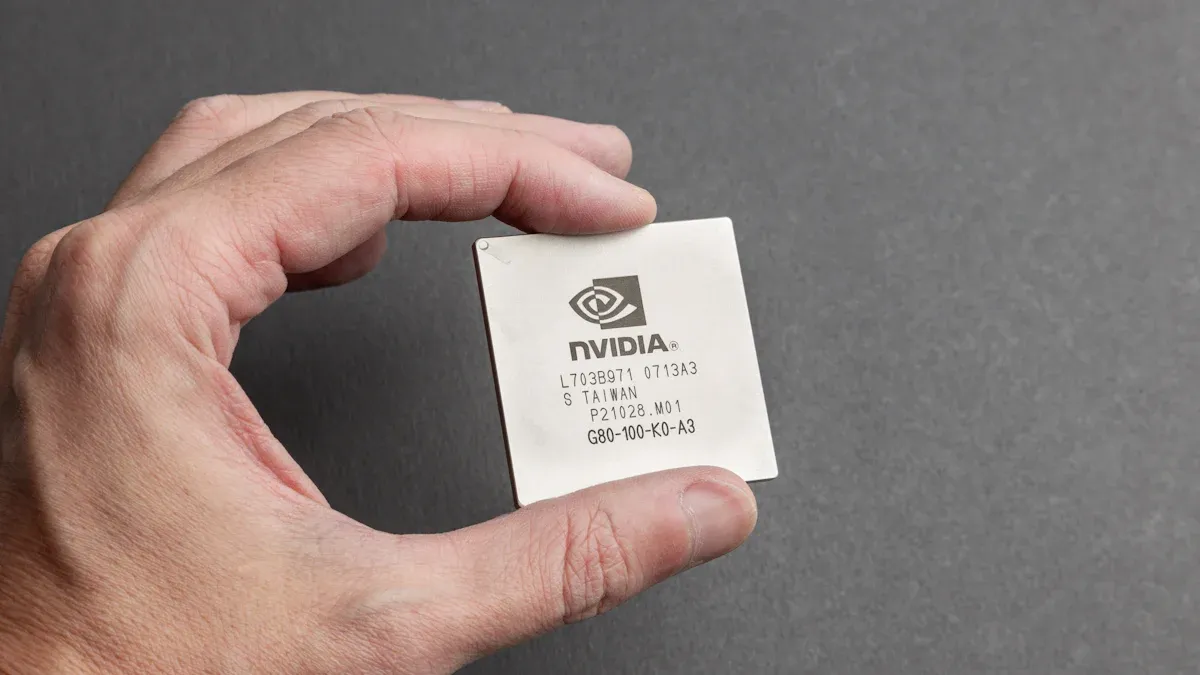
AI chip prices keep going up because more people want them and there are not enough chips. The newest Nvidia Blackwell chips cost between $30,000 and $40,000. The table below shows how price and use change the total cost for companies and cloud services:
|
Scenario |
List Price (USD) |
Utilization |
Cost per Hour (Provider) |
Estimated Customer Price per Hour |
Cost per TFLOP-hour (USD) |
|---|---|---|---|---|---|
|
Conservative |
$40,000 |
65% |
~$2.35 |
~$4+ |
~$0.004–$0.005 |
|
Base Case |
$35,000 |
75% |
~$1.80 |
$3–$4 |
~$0.003 or less |
|
Aggressive |
$30,000 |
85% |
~$1.35 |
$2.50–$3 |
~$0.0025 |
HBM memory is also a big part of the total ai chip cost. For example, 96 GB of HBM3E memory can cost about $16,500. If you need 141 GB, it might cost $25,000. These high memory prices keep ai chip costs high. There are not enough HBM memory chips, so prices will probably stay high. Nvidia can get the best memory, so it controls how many chips are made and how much they cost. This affects how much manufacturers and other buyers pay for ai chips.
Note: Ai hardware is still expensive because there are not enough chips and memory. Manufacturers need to think about these costs when they start using ai.
Key Market Players
A few companies are the leaders in the ai chip market. Nvidia is the biggest, but others are important too. TSMC makes more than 80% of the most advanced ai chips. Its high-performance computing group made 59% of its money in early 2025. AMD made 36% more money, and its data center business grew 57% in one year. Arm Holdings made 34% more money, and about half of new server chips at big cloud companies will use Arm-based designs. Huawei got 2% of the market in 2024 and focuses on its Ascend ai chips.
It is now easier for buyers to see and compare prices. API-based pricing and quick price changes help buyers get the best deal. Nvidia is strong, but AMD and Intel also compete. This changes ai chip prices and affects how manufacturers and other users plan their ai strategies.
Total Investment Factors
Acquisition Costs
Buying AI chips is just the start of spending. Manufacturers pay $30,000 to $40,000 for each chip. But the real cost is much higher. Using AI in big companies can cost over $5 million. This is true if they use AI in many places. Adding AI chips to old systems costs from $25,000 to more than $500,000. The price depends on how hard the project is and what changes are needed. Companies that use commercial hardware save about 20% on development. They save money by skipping hidden costs like extra engineering and fixing problems. They also avoid long waits to finish projects. Using ready-made solutions helps companies sell products faster. It also lowers the risk of running into technical problems.
Infrastructure Needs
AI needs strong infrastructure to work well. Data centers must have powerful chips, good cooling, and steady power. The table below shows how much money is needed for infrastructure:
|
Category |
Numerical Data / Projection |
Timeframe |
Description / Context |
|---|---|---|---|
|
$1.8 trillion (U.S. alone) |
By 2030 |
Money spent to grow data centers for AI needs. |
|
|
Colocation Data Center Investment |
Over $250 billion |
By 2030 |
Spending on machines and power for AI work. |
|
Cost of AI Data Center |
Over $1 billion per facility |
Current |
Building and setting up top AI data centers costs a lot. |
|
AI Data Center Construction Deal |
$7 billion |
Recent |
Example: Blackstone and Digital Realty built AI-focused data centers. |
|
GPUs Deployed by AI Cloud Startup |
45,000 GPUs |
Mid-2024 |
Example: CoreWeave used 45,000 GPUs in 28 places. |
AI use could grow 100 times as companies add new AI agents. Some companies might use old data centers again or change current ones. Both choices need a lot of money and time. Some pick ready-to-use GPU server rows to save time. This can cut setup from weeks to just minutes.
Operational Expenses
Running costs are a big part of owning AI. These costs include power, cooling, software updates, and fixing things. Ready-made solutions give benefits like tested hardware and steady supply chains. They also offer help around the world. Companies using commercial platforms finish projects 20% faster. They also make 50% more profit. The AI chip market may be worth over $400 billion by 2030. This shows there are big chances to invest. Good planning and smart AI spending help companies control costs. They also help get the most value from AI.
Measuring ROI

Efficiency Gains
To measure roi in the AI chip market, you start by looking at how much more efficient things get. Many manufacturers buy expensive AI chips to help them work faster and waste less. Companies like GlobalFoundries and TSMC got much better results after using ai tools for efficiency. For example:
-
GlobalFoundries had 50% less unplanned downtime and made 15% more good products by using AI to predict when machines need fixing.
-
TSMC made 10-15% more good chips by letting AI look at production data.
-
Samsung used AI to find chip problems with 99% accuracy, so they made 20% fewer bad chips.
-
Applied Materials spent 30% less on running their business after using AI to make their processes better.
-
Intel made 10% more good chips and had 20% fewer bad ones by using AI to control how things are made.
These examples show that AI can really help manufacturers. The table below shows how important numbers got better after using AI chips:
|
Metric |
Before AI Implementation |
After AI Implementation |
Improvement |
|---|---|---|---|
|
Overall Equipment Effectiveness (OEE) |
67% |
89% |
+33% |
|
Scrap Rate |
3.8% |
1.2% |
-68% |
|
Changeover Time |
42 minutes |
18 minutes |
-57% |
|
Energy Cost per Unit |
$2.17 |
$1.68 |
-23% |
|
Production Planning Time |
16 hours/week |
3 hours/week |
-81% |
These changes helped companies make 41% more products without spending extra money on new machines. The chart below shows how much better things got after using AI chips:

AI chips also help train and use AI models much faster. For example, Nvidia GPUs can train deep learning models up to 1700 times faster than regular CPUs. This speed lets companies react quickly to changes and get more work done.
Revenue Opportunities
AI chip spending helps companies make money in new ways. The worldwide AI chip market was worth $123.16 billion in 2024 and could grow to $311.58 billion by 2029. The market is growing by about 20% each year. Big tech companies like Google, Microsoft, and Amazon spend billions on AI, showing they believe it will pay off.
-
Venture capitalists have put over $1.5 billion into AI chip startups.
-
Intel sold $1 billion worth of AI chips in one year.
-
At least five AI chip startups each raised more than $100 million.
-
IBM says there is a $2 trillion chance for AI to help with business decisions.
|
Metric/Description |
Value/Projection |
|---|---|
|
Global AI chip market size (2024) |
USD 123.16 billion |
|
Projected AI chip market size (2025) |
USD 166.9 billion |
|
Projected AI chip market size (2029) |
USD 311.58 billion |
|
Compound Annual Growth Rate (CAGR) 2024-29 |
20.4% |
|
AI server penetration (2023) |
8.8% of all servers |
|
AI server penetration (2029 projected) |
30% of all servers |
|
AWS investment in cloud data centers (Saudi Arabia) |
USD 5.3 billion |
|
Microsoft investment in cloud & AI infra (Quebec) |
USD 500 million (next 2 years) |
These numbers show that the industry is changing a lot. Companies use AI to make new products, help customers, and try new markets. AI helps with things like fixing machines before they break, checking quality, and making supply chains better. This helps companies find new ways to make money.
Market Impact
Even though AI is exciting, people still talk about whether it is worth the cost. In 2023, companies spent over $50 billion on AI chips but only made $3 billion in direct revenue. Only about 25% of companies now see a good return from their AI chip spending. This means many companies still have trouble turning their spending into real value.
Most manufacturers get the most value from AI by working faster and making more good products. For example, companies using AI chips say:
-
Training neural networks is up to 572 times faster than with CPUs.
-
Inference speeds are up to 29 times faster.
-
Yields go up by 10-15% and bad products go down by up to 20%.
These improvements help companies use digital tools and stay ahead of others. But not every AI investment pays off right away. Companies need to pick the right projects and watch their ROI to make sure they get real value.
Note: AI chip spending can help companies change and grow, but they must check ROI carefully and make sure their spending matches their business goals to get real results.
Strategies for ROI
Cloud and Hybrid Options
Many manufacturers use cloud and hybrid models to handle high AI chip costs. Cloud services let companies skip big upfront hardware spending. They also give flexibility and make it easy to add more AI work. Companies save money and control resources better:
-
Moving to the public cloud can cut Total Cost of Ownership by up to 40%.
-
Microblink saved 62% by using a hybrid plan, running some AI apps on-premises and others in the cloud.
-
Almost half of IT leaders pick cloud because it lets them add or remove resources as needed.
-
By 2028, AI workloads may use half of all cloud computing power.
-
Global public cloud spending might reach $723.4 billion in 2025, thanks to AI and hybrid plans.
Cloud and hybrid choices help companies change fast by letting them test and grow AI solutions quickly. This helps them get more value from their spending.
Workload Optimization
Making workloads better in ai data centers can raise ROI and performance. Companies save money and get better results by matching the right hardware and software to each job. The table below shows real examples:
|
Workload Type |
Cost Reduction |
Performance Impact |
Migration Effort / Challenges |
Results Summary |
|---|---|---|---|---|
|
EMR workload (AWS Managed Service) |
14% cost savings |
Similar performance |
Easy migration by changing instance type |
Achieved 14% cost savings with minimal effort |
|
Optimized In-House Application |
15% to 20% ongoing |
P90 performance improved by 16% |
Significant engineering effort to add ARM support |
Expected ROI payoff within months due to savings and performance gains |
|
Core AI/ML Kubernetes Workload |
15% initial projected |
Improved performance expected |
Planned migration, Python workload easy to migrate |
Immediate 15% cost savings expected, with potential for further 10% savings through optimization |
Simple steps, like picking the right model or using caching, can lower costs and help things run faster. These actions help companies get more from their AI tools.
Targeted Use Cases
Choosing the best use cases gives the most value from AI spending. Companies should pick AI projects that fix real business problems and match their goals. Projects like predictive maintenance or quality control often give faster ROI and help companies change. Analytics and tracking tools show progress and where AI brings the most value. This focus makes sure AI spending leads to real change and lasting business results.
Decision-Making Factors
Cost Management
Manufacturers have many costs when buying AI chips. They need to think about more than just the price. They must look at the total cost of owning the chips. Smart companies use different ways to save money and get more value:
-
They check all costs, like infrastructure, data, workers, and repairs.
-
They watch how things work and use resources wisely to save money.
-
They look at vendor deals often and try to get better prices.
-
They plan for growth so they do not waste money as they get bigger.
-
They spend on training and new tech to keep future costs down.
Some companies use AI tools or AI-as-a-Service to spend less at first. Others handle data close to where it is made to save on cloud bills. These actions help keep spending low and support good ROI for a long time.
Risk Assessment
Using AI brings both good chances and risks. Companies must think about big rewards but also fast tech changes or bad project choices. They need to:
-
Watch how fast AI hardware and software change.
-
Look out for hidden costs, like rules or problems joining systems.
-
Get ready for supply chain problems or being stuck with one vendor.
Many manufacturers make customers pay some costs, but they must not hurt demand. Checking the market often helps them change plans and avoid big mistakes.
Business Alignment
Making AI chip spending match business goals gives better results. Big tech companies like Google and Amazon make special chips for their own needs and save money. Google’s TPUs, for example, can cut cloud costs by up to 30%. Companies that focus on what they need—like saving energy or faster work—get more from their spending.
|
Market Trend / Driver |
Impact on Business Alignment with AI Chip Investments |
|---|---|
|
Custom AI Chips |
Make things work better and help reach business goals |
|
Give better performance and save energy |
|
|
Cloud and Edge Computing |
Make it easy to use and grow AI |
|
Vendor R&D Investments |
Help with hard tasks and bring new ideas |
When companies pick AI chips that fit their plans, they find new ways to invest and get better ROI.
Manufacturers see chip prices going up, but smart spending can help them get real benefits. The chip market is growing fast and could be worth $341 billion by 2033. Companies should take simple steps to get the most out of their money. They need to buy chips in a careful way and check how their choices affect the environment. The table below shows important things to do for smart investing:
|
Practical Step |
Description |
|---|---|
|
Develop Responsible AI Principles and Governance |
Make teams from different parts of the company to set rules for good and fair use. |
|
Assess Environmental Impacts |
Use special tools to check how much energy, water, and carbon is used. |
|
Leverage Collaborative Tools |
Use shared industry tools to make buying chips clear and fair. |
Checking new trends and costs all the time helps leaders make good choices. This also helps companies reach their goals and keep getting better.
FAQ
What drives the high cost of AI chips?
AI chip prices go up because many people want them. There are not enough chips for everyone. Making chips needs special and costly materials like HBM memory. Big companies like Nvidia and TSMC control most of the market. This makes it hard for prices to go down. Manufacturers have to pay more because of this.
How can manufacturers improve ROI on AI chip investments?
Manufacturers can get better ROI by picking the right projects. They should make workloads run better and use cloud or hybrid options. Planning ahead and checking results often helps companies save money. This way, they get more from their AI spending.
Are cloud-based AI solutions more cost-effective than on-premises hardware?
|
Solution Type |
Upfront Cost |
Flexibility |
Scalability |
|---|---|---|---|
|
Cloud |
Low |
High |
Easy |
|
On-Premises |
High |
Low |
Hard |
Cloud solutions usually cost less at the start and grow fast. On-premises hardware needs more money at first.
What risks do companies face with AI chip investments?
Companies face risks like new tech coming out quickly and supply chain problems. There can also be hidden costs that are hard to see. They need to watch out for being stuck with one vendor. It is important to make sure AI projects fit business goals. Checking plans often helps lower these risks.