Advanced Battery Management Integrated Circuits for Extending Lifespan and Enhancing Safety in Battery Management
You use smart battery management ics to keep batteries safe and working well. These advanced tools watch each cell all the time and make fast choices. With BMS, you stop overcharging, overheating, and cells getting out of balance.
You use smart battery management ics to keep batteries safe and working well. These advanced tools watch each cell all the time and make fast choices. With BMS, you stop overcharging, overheating, and cells getting out of balance. AI-driven BMS and new algorithms help you guess battery State of Health and stop sudden problems. Big studies show lithium-ion batteries with advanced BMS can last up to 50% longer. You get battery management that helps batteries last longer, even as new chemistries and wireless tech are added to your systems.
Key Takeaways
-
Battery management ICs check voltage, current, and temperature. This keeps batteries safe and healthy.
-
Cell balancing and depth of discharge control help batteries last longer. They also help batteries work better.
-
Real-time monitoring uses sensors and AI to find problems early. This makes batteries safer.
-
Good thermal management and fault detection stop batteries from overheating. They also protect batteries from damage.
-
Picking the right battery management IC depends on what you need. You should look for features like accuracy and safety.
Battery Management ICs
Core Functions
You need battery management ICs to keep your battery safe and healthy. These ICs watch your battery all the time. They check voltage, current, temperature, state of charge (SoC), and state of health (SoH). You always know what is happening with your battery. Good data helps you make better choices for your battery management system.
-
Battery management ICs check voltage, current, and temperature for each cell.
-
They look at SoC and SoH, so you know how much energy is left and how old your battery is.
-
These ICs notice changes in resistance, charge cycles, and how fast your battery loses power.
-
Watching in real time helps you find problems early, like losing power or not working well.
-
You can use IoT and AI tools with your battery management system to get even better results.
-
With these features, you make your battery safer, save money, and help it last longer.
Tip: Watching your battery in real time helps you find problems before they get worse. This means your battery fails less and works better.
Role in Battery Management System
Your battery management system needs battery management ICs for safety and control. These ICs watch every cell to stop overcharging, over-discharging, and overheating. They balance the charge so your battery pack works its best.
-
Battery management ICs watch current to guess SoC and SoH.
-
They control charging and discharging to keep your battery safe.
-
These ICs protect against too much current, too much voltage, or not enough voltage.
-
They help you find and fix problems fast.
-
Battery management ICs also help control heat by turning on heaters or coolers when needed.
You get longer battery life, better safety, and more power with a good battery management system. Your battery pack stays strong, and you avoid big problems. Battery monitoring ICs help your systems work safely and well every day.
Key Features for Maximizing Battery Lifespan
Cell Balancing
Cell balancing helps your battery pack stay healthy and strong. In lithium-ion batteries, each cell charges and discharges at its own speed. If one cell gets too full or too empty, it can hurt the whole battery pack. There are two main types of cell balancing: passive and active.
-
Passive cell balancing takes away extra energy from cells with more charge. It turns this energy into heat. This way is easy, but it wastes energy and works slowly.
-
Active cell balancing moves energy from cells with more charge to those with less. This way saves energy and balances cells faster.
A big study looked at passive and active balancing in lithium-ion batteries. The study showed that active balancing, especially cell-to-cell, works faster and saves more energy than passive balancing. Sometimes, the pack-to-cell way can waste more energy than passive balancing if the converter does not work well. You should pick the best balancing way for your battery pack to get good battery performance and safety.
Note: Active cell balancing can raise the state of charge in battery cells from 40% up to 87% or even 100%. This lets you use more of your battery pack’s power and helps it last longer.
You can also use new sensor tools and battery monitoring ics to check each cell’s voltage and temperature. These tools help your bms make smart choices and keep your lithium-ion batteries balanced, even when new chemistries are used.
Depth of Discharge Optimization
Depth of discharge (DOD) shows how much energy you use from your battery pack before charging it again. If you always use all the energy in your lithium-ion batteries, they wear out faster. You can help your battery pack last longer by keeping the DOD between 20% and 80%. Charging over 80% or letting the battery drop under 20% can double energy loss and make the battery age faster.
Studies show that smart charging can more than double your battery pack’s life compared to simple charging. For example, a battery aging model found that controlling the state of charge and when you charge can lower wear. In hybrid systems, like those with batteries and other storage, using DOD and discharge current data helps guess and extend battery life. Real tests on electric vehicles show that staying in the 20%–80% range keeps lithium-ion batteries healthy and makes them work better.
Tip: Use your bms to set charging limits and stop deep discharges. This easy step helps you get the most from your lithium-ion batteries.
Real-Time Monitoring
Real-time monitoring lets you see your battery pack’s health and how it works. Your bms uses sensors to check voltage, current, and temperature for every cell. With these numbers, you can find problems early and fix them before they get worse.
-
AI and IoT tools help your bms collect and look at sensor data fast.
-
Machine learning models use things like state of charge, temperature, voltage, and current to guess battery health and how long it will last.
-
Real-time data lets you plan ahead, fix problems early, and keep your battery pack safe.
You can use smart algorithms to clean and sort sensor data, making your bms smarter. Deep learning models can even guess battery performance and find faults before they cause trouble. In places like electric vehicles and energy storage, real-time monitoring with sensors and AI helps you make your battery last longer and keeps your lithium-ion batteries safe.
Callout: Real-time monitoring with new sensors and AI gives you better control over your battery pack. You can make smarter choices, stop failures, and help your battery stay healthy.
You should always use a bms with strong real-time monitoring. This helps you get the best battery performance and safety from your lithium-ion batteries and new chemistries.
Safety in Lithium-Ion Batteries

Thermal Management
Strong thermal management keeps your battery pack safe. When lithium-ion batteries get hot, they can lose power or catch fire. Your bms uses sensors to watch the temperature all the time. If the battery pack gets too hot, the bms cools it down or slows charging. This keeps the battery pack safe and stops dangerous problems.
Thermal management uses many ways to protect batteries. You can use phase change materials (PCM), liquid cooling, or both together. These methods help spread heat and keep each cell at a safe temperature. The table below shows how different cooling methods change battery pack safety:
|
Parameter/Condition |
Result/Metric |
Description/Impact |
|---|---|---|
|
PCM thickness: 7 mm |
Max temp: 39.1 °C, Mean temp: 32.5 °C |
Thicker PCM keeps batteries cooler than thin PCM (Max: 188.1 °C, Mean: 113.8 °C) |
|
PCM thickness: 1 mm |
Max temp: 188.1 °C, Mean temp: 113.8 °C |
Thin PCM does not cool batteries well |
|
Coolant inlet temp: 5 °C |
Max temp: 29.2 °C, Mean temp: 24.6 °C |
Colder coolant cools batteries better |
|
Coolant inlet temp: 15 °C |
Max temp: 29.8 °C, Mean temp: 26.0 °C |
Warmer coolant does not cool as well |
|
Hybrid PCM-liquid cooling vs. conventional liquid cooling |
Using both PCM and liquid cooling together cools batteries best and keeps temperatures even (within 5 °C) |
You can see that using both PCM and liquid cooling works best. The chart below shows how these methods lower battery pack temperatures and make batteries safer:
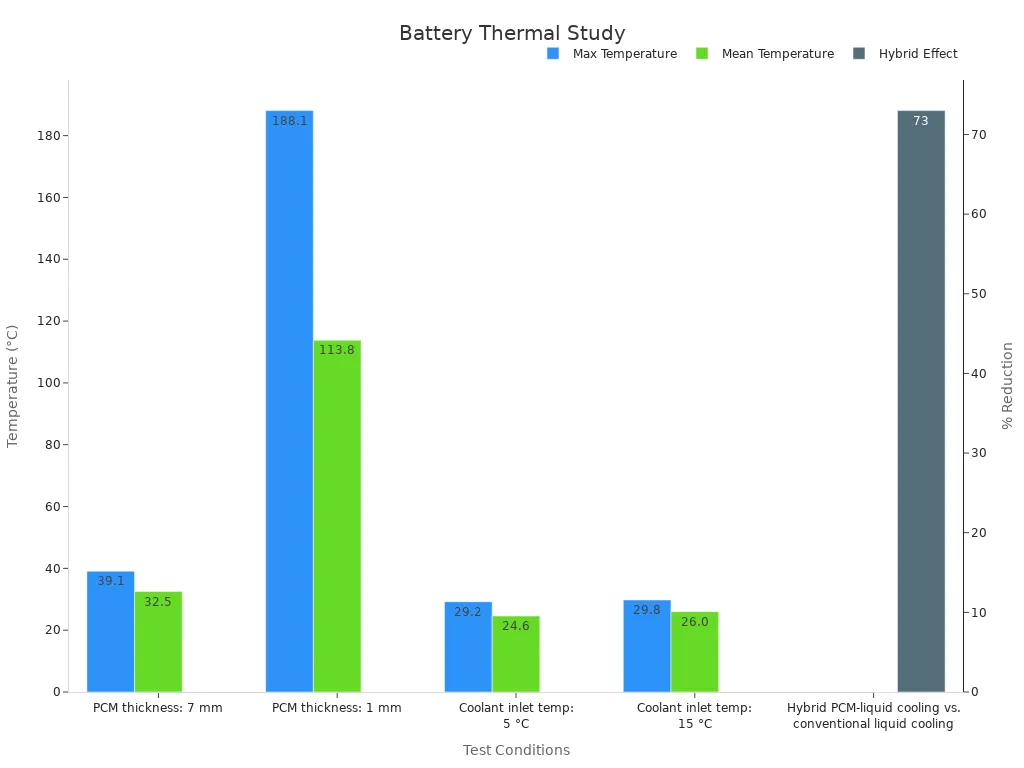
Your bms uses these cooling methods to keep lithium-ion batteries cool and safe. This helps stop thermal runaway and makes your battery pack last longer.
Tip: Always check that your battery pack has good thermal management. This is one of the most important safety features for lithium-ion batteries.
Fault Detection
Fast and accurate fault detection keeps your battery pack safe. Your bms uses sensors to look for trouble, like sudden voltage drops or weird temperature changes. If the bms finds a problem, it can stop charging or discharging right away. This quick action protects your battery pack from damage.
Modern bms systems use smart algorithms and machine learning to find faults early. For example, a study used segmented regression and neural networks to check for faults in lithium-ion batteries. The system found over 99% of problems during both charging and discharging. This means your bms can catch almost every problem before it gets dangerous.
You get functional safety by using these smart fault detection methods. Your battery pack stays safe, and you avoid expensive failures. The bms also helps you plan repairs before small problems get worse.
Callout: Smart fault detection is a key protection feature in every battery pack. It keeps your lithium-ion batteries safe and helps you trust your system.
Overcurrent Protection
Overcurrent protection stops your battery pack from getting hurt by too much current. If you charge or use your lithium-ion batteries too fast, they can get too hot, catch fire, or even explode. Your bms uses sensors to watch the current in every part of the battery pack. If the current goes above safe limits, the bms turns on the protection circuit to stop the flow.
You get several ways to protect your battery with overcurrent protection. The bms can slow charging, shut down the battery pack, or warn you about a problem. This keeps your battery pack safe and stops overcharging or over-discharging.
Functional safety depends on strong overcurrent protection. Your bms checks for both big and steady currents. If it finds a problem, it acts fast to protect your battery pack. This helps you avoid damage and keeps your lithium-ion batteries working longer.
Note: Overcurrent protection is not just for emergencies. It works all the time to keep your battery pack safe, even during normal use.
How BMS and Protection Features Improve Safety
Your bms gives you control over your battery pack’s safety. It uses sensors to check voltage, current, and temperature. The bms sets limits to stop overcharging and over-discharging. It also manages heat and finds faults early. These protection features work together to give you safety and peace of mind.
Advanced battery management systems make lithium-ion batteries safer by watching every important detail. They keep your battery pack in safe zones. This lowers the risk of thermal runaway, fire, or failure. Real-time monitoring and smart algorithms help you avoid unsafe situations. You get better state of health and longer life for your battery pack.
Alert: Always use a bms with strong protection features. This is the best way to keep your lithium-ion batteries safe and reliable.
Advanced Technologies in Battery Management
IoT and Wireless BMS
You can use IoT and wireless BMS to make batteries smarter and safer. NASA and big companies use IoT BMS for real-time data and tracking. These systems watch every cell in your battery pack. You get good guesses about battery health and how long it will last. This matters for electric vehicles and renewable energy storage.
IoT and wireless BMS use sensors to send data without wires. This makes it easier to set up and fix your system. You can check your batteries anytime you want. Wireless BMS also stop wiring problems, which makes things safer and saves energy. In electric vehicles, wireless BMS make cars lighter and more dependable.
A report shows how wireless BMS work in real life. The report uses a LoRa test to see how much power different parts use. You can look at the chart below to see the results:
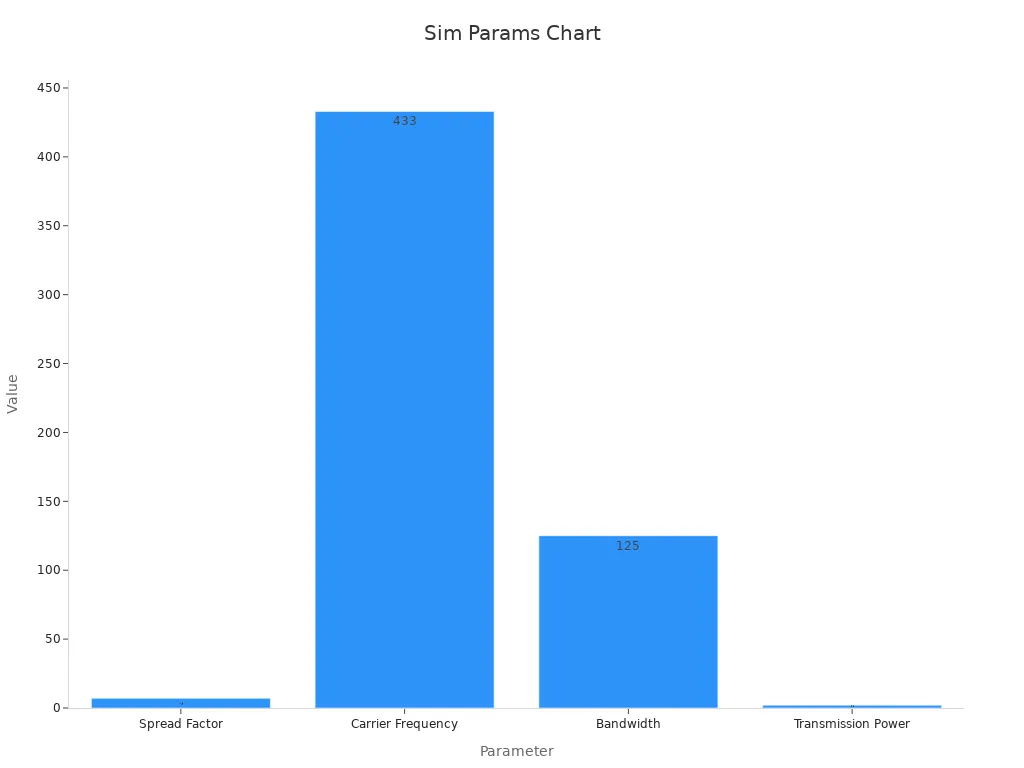
You can use this information to pick the best wireless BMS for your electric vehicles and energy storage.
Tip: IoT and wireless BMS help you control and protect your lithium-ion batteries better.
AI and Predictive Algorithms
You can use AI and predictive algorithms to make your BMS smarter. These tools help you find patterns in battery data. You get better guesses about battery health, safety, and energy use. AI models like CNN, LSTM, and ConvLstm look at voltage, current, and temperature to guess how batteries will work.
Here is a table that shows how AI models help BMS do better:
|
Aspect |
Description / Result |
|---|---|
|
Model Architecture |
Hybrid deep learning model combining CNN, LSTM, and ConvLstm architectures |
|
Optimization Technique |
Particle Swarm Optimization (PSO) used for hyperparameter tuning |
|
Explainability Method |
Explainable AI (XAI) using SHapley Additive exPlanations (SHAP) values |
|
Dataset |
NASA lithium-ion battery dataset |
|
Performance Metrics |
MAE: 0.09, MSE: 0.03, RMSE: 0.17, R2: 98% |
|
Improvement Over Baselines |
Noticeable accuracy improvement compared to individual models without PSO |
|
Key Influential Features |
Battery voltage and current identified as critical factors influencing predictions |
|
Challenges Addressed |
Captures complex, nonlinear battery dynamics affected by temperature, age, and load conditions |
|
Conventional Methods Limitation |
Map-based and model-based methods struggle with complexity and nonlinearity, leading to less accuracy |
|
Practical Benefits |
Enhanced battery safety, reliability, efficiency, and interpretability in Battery Management Systems |
You can trust these AI models to help your BMS make better choices. This is important for electric vehicles, renewable energy storage, and energy storage solutions.
Callout: AI-powered BMS help you get more from your lithium-ion batteries and keep your systems safe.
Support for New Chemistries
You need your BMS to work with new battery chemistries. Modern BMS can handle lithium-ion and solid-state batteries. This lets you use the newest tech in electric vehicles and energy storage. You get better energy use and longer battery life.
Car makers use advanced BMS to manage different battery types. These systems let you switch chemistries without losing safety or power. You can use your BMS in many places, from cars to big energy storage.
Note: Always pick a BMS that works with new chemistries. This keeps your systems ready for new tech and helps you save energy.
Selecting Battery Management ICs
Application Needs
First, think about where you will use your battery management system. Each use has its own needs. Electric vehicles need a bms that can handle tricky battery chemistries and keep people safe. For small gadgets, you want a tiny, low-power bms that fits inside. Big battery groups in telecom or renewable energy need a bms that gives good, timed data and works in loud or hot places.
Market research shows each area changes what features you need in your battery management ICs. The table below helps you see how different uses change what you need:
|
Application Area |
Influence on Battery Management IC Features |
Market Drivers and Insights |
|---|---|---|
|
Automotive (EVs) |
Needs automotive-grade ICs, handles tricky battery chemistry, safety features |
Driven by rules, rewards, and need for safe, reliable lithium-ion battery management |
|
Consumer Electronics |
Needs small, low-power ICs for tiny devices |
Growth comes from more portable devices like smartphones and wearables |
|
Telecommunications (5G) |
More power use needs advanced BMS chips |
5G phones have bigger batteries and use more energy, so BMS is harder |
|
Renewable Energy |
ICs made for energy storage and management in green systems |
Push for clean energy is making this area grow |
|
Industrial Equipment |
ICs help with making things and moving stuff |
Growth comes from more robots and better ways to work |
|
Healthcare |
Reliable ICs for medical device battery management |
Keeps patients safe and makes devices work well |
|
Aerospace |
Strong energy management for things that fly |
Needs high performance and safety |
You must match your bms to your battery pack’s job. For electric vehicles, you need ICs that meet strict safety rules like ASIL-D and ISO 26262. Sometimes, you need ICs that work with special charging or high heat. Picking the right IC keeps your battery pack safe and working well.
Feature Matching
Once you know your needs, match the right features to your battery management system. Think about what matters most for your battery pack. Some features you may need are accurate voltage and current sensing, good thermal management, and fast fault detection.
You can use a list of things to help you choose. The table below shows important things to check:
|
Evaluation Attribute |
Description |
Weighting |
Evaluation Principle / Metric |
|---|---|---|---|
|
Sensor Installation |
Where and how many sensors; outside is better to lower risk and cost. |
0.42 |
Fewer sensors are better if they still work well; inside sensors can hurt the battery. |
|
Monitoring Performance |
How well the battery status is checked by Mean Absolute Error (MAE); lower MAE is better. |
0.32 |
Lower MAE means better accuracy. |
|
Mobility |
Can the network support moving batteries; important for things that move. |
0.04 |
Needed if the battery moves; not as important if it stays still. |
|
Latency |
How long it takes for signals to go through; important for quick jobs. |
0.13 |
Low latency is needed for fast battery management. |
|
Fading |
Signal loss from the environment; affects how well things talk to each other. |
0.09 |
Test fading to make sure signals stay strong; includes small and big fading. |
You can use a score to compare different bms choices. This helps you pick the best one for your battery pack. The chart below shows how much each thing matters:
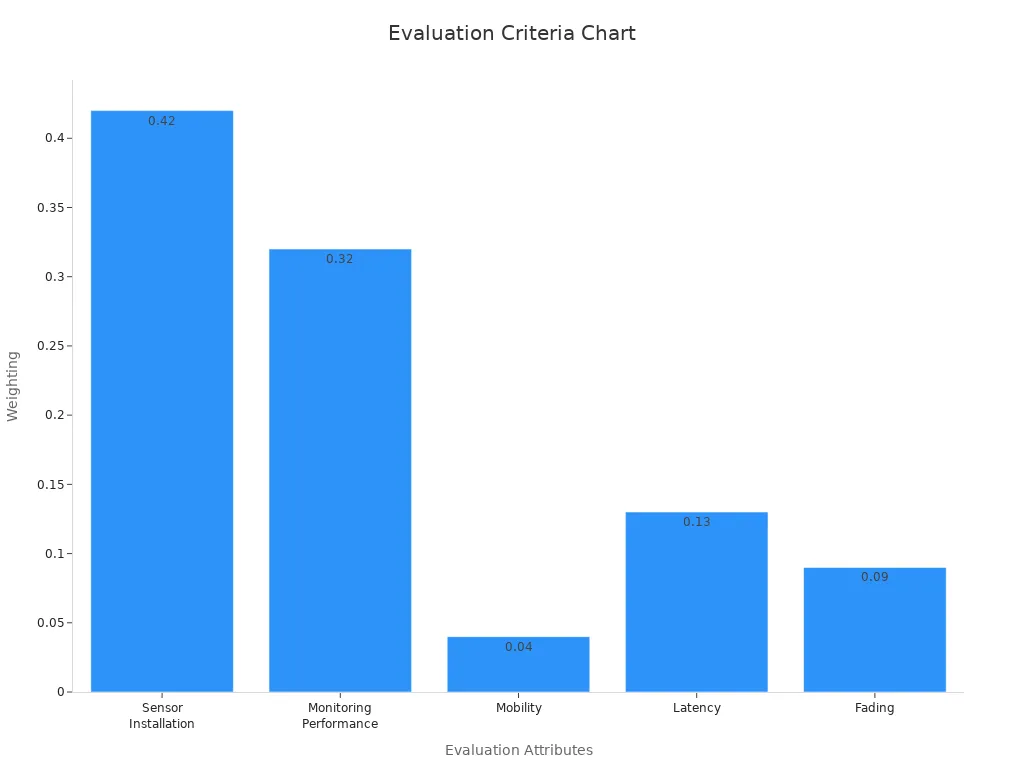
When you match features to your use, your battery management system works better and lasts longer. You also lower the chance of problems. Always check that your bms is safe, accurate, and works well.
You can help your battery systems last longer and stay safer with advanced battery management ICs. These ICs show you what is happening right now. They find problems fast and help control heat. Companies like Texas Instruments, STMicroelectronics, and Analog Devices make ICs that help you use battery power better and spend less on repairs. If you choose the right features for your needs, your batteries will work well, be reliable, and be ready for the future. Try new BMS solutions to keep up with new technology and what the industry needs.
FAQ
What does a battery management IC do?
A battery management IC checks your battery’s voltage, current, and temperature. You get real-time data from it. The IC helps keep your battery safe. It also helps your battery work longer.
Tip: Use a battery management IC to find problems early. This helps you stop battery damage before it happens.
How does cell balancing help my battery?
Cell balancing keeps all cells in your battery pack at the same charge. This stops weak cells from causing trouble. You get more power from your battery. Your battery lasts longer and stays safer.
-
Active balancing moves energy from one cell to another.
-
Passive balancing takes away extra energy as heat.
Why should I choose a wireless BMS?
A wireless BMS makes your battery system lighter and easier to set up. You use fewer wires, so there is less weight. This gives you better safety. You can check your battery from anywhere.
|
Benefit |
Description |
|---|---|
|
Less wiring |
Fewer connection problems |
|
Easy setup |
Faster to install |
|
Remote access |
Check batteries anytime |
Can a battery management IC work with new battery types?
Yes, you can use advanced battery management ICs with lithium-ion, solid-state, and other new chemistries. This gives you more choices for your system. You can use new battery types in the future.
Note: Always check if your IC works with the battery type you want.
How do I pick the right battery management IC?
First, think about what you will use your battery for. Look for features like accurate sensing and strong protection. Make sure it works with your battery type. Compare your choices with a checklist.
-
Check voltage and current sensing.
-
Look at safety features.
-
Make sure it matches your battery chemistry.