Why Your Raspberry Pi Logic Controller Might Replace PLCs
A Raspberry Pi logic controller presents a modern option for industrial automation. This small controller offers excellent d
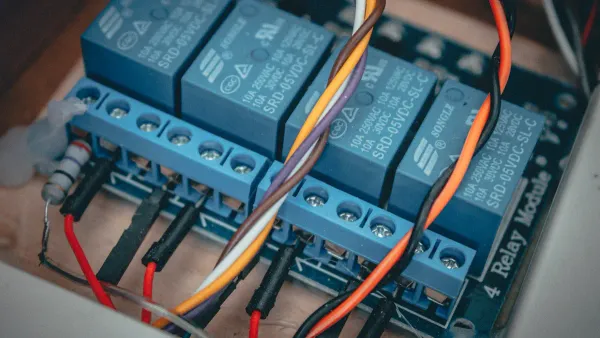
A Raspberry Pi logic controller presents a modern option for industrial automation. This small controller offers excellent data handling for IoT applications. It challenges the traditional programmable logic controller in specific areas. The Raspberry Pi provides powerful control at a low cost, a clear benefit for many automation projects.
However, the standard PLC maintains its dominance for critical control tasks. Reliability is the main reason for its continued leadership. This article examines the strengths and weaknesses of each solution.
Key Takeaways
- Raspberry Pi controllers cost less than traditional PLCs. They are good for projects where money is a big concern.
- Raspberry Pi handles a lot of data and connects easily to other systems. It is great for collecting and analyzing information.
- PLCs are very reliable and work well in tough factory conditions. They are best for important jobs that need perfect timing.
- You can turn a Raspberry Pi into an industrial controller. You need to add special hardware and use PLC-like software.
- Raspberry Pi is good for watching data, connecting different machines, and small automation tasks. It is not for critical safety systems.
Key Advantages of Raspberry Pi in Automation
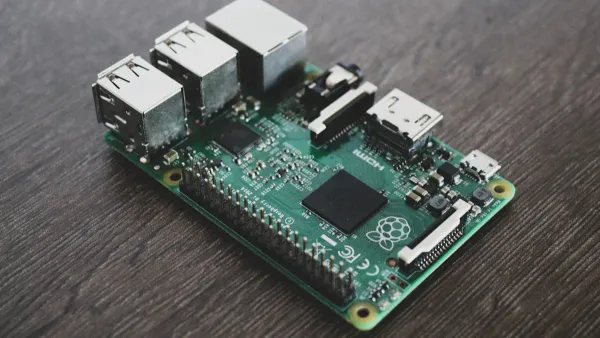
The Raspberry Pi offers distinct advantages in industrial settings. These strengths position it as a powerful alternative to a traditional PLC for specific applications. Its low cost, data processing power, and open-source nature drive its adoption in modern automation.
Significant Cost Savings
The most immediate benefit of using a Raspberry Pi is the dramatic reduction in cost. A basic setup is significantly more affordable than even a low-end PLC. This cost difference extends beyond the initial hardware purchase.
| Component | Raspberry Pi Setup (Approx. Cost) | Low-End PLC Setup (Approx. Cost) |
|---|---|---|
| Hardware | ||
| Main Board/Unit | $35 - $75 | $100 - $500+ (integrated) |
| Power Supply & SD Card | $15 - $35 | Included/Integrated |
| I/O Modules | $20 - $100+ | Included/Integrated |
| Software | ||
| Programming Software | Free (Python, etc.) | $100 - $1000+ (license) |
| Total Estimated Cost | $80 - $240+ | $200 - $1500+ |
This cost-effectiveness enables small-batch manufacturers and local breweries to automate processes that were previously too expensive. They achieve increased efficiency without a large capital investment.
Advanced Data Processing & Connectivity
A Raspberry Pi functions like a small computer. Its powerful CPU and RAM far exceed the capabilities of a typical microcontroller found in many PLCs. This allows a raspberry pi logic controller to perform complex tasks at the edge. It can run a local database, host a web-based HMI, or execute machine learning models for predictive maintenance. This capability supports real-time data collection and analysis, leading to better process optimization. The device provides advanced control and data handling in one compact package.
Open-Source Flexibility
The open-source ecosystem of the Raspberry Pi provides unmatched flexibility. Users are not locked into a single vendor's proprietary hardware or expensive software licenses. Developers can use free and powerful programming languages like Python to build custom solutions.
- Community Support: A massive global community offers free tutorials, forums, and code libraries.
- Customization: Engineers can select from a wide array of hardware add-ons and software tools to perfectly match project requirements.
- Integration: Single-board microcontrollers easily connect with modern IT systems, APIs, and cloud services.
This freedom promotes rapid development and innovation, contributing to greater overall efficiency and optimization in system design.
PLC Dominance in Critical Industrial Automation
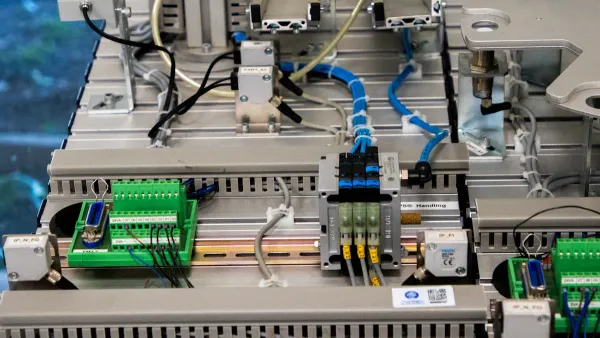
Despite the Raspberry Pi's flexibility, the traditional PLC remains the undisputed leader for mission-critical tasks. Its dominance in industrial automation stems from decades of proven performance in demanding settings. Key factors like reliability, durability, and support solidify its position as the industry standard.
Unmatched Reliability and Real-Time Control
A PLC provides a level of reliability that general-purpose computers cannot match. This is because a PLC runs a Real-Time Operating System (RTOS).
An RTOS guarantees that a task will execute within a precise, predictable timeframe, often measured in microseconds. This deterministic behavior is essential for high-speed automation and safety systems where a millisecond delay can cause equipment damage or personnel injury.
The operating system on a Raspberry Pi, by contrast, is designed for multitasking. It manages many background processes, so it cannot guarantee the same split-second timing for control operations. This makes the PLC the only safe choice for applications requiring absolute precision and immediate response for process control.
Built for Harsh Environments
Industrial PLCs are engineered to survive on the factory floor. They are built to withstand electrical noise, vibration, and extreme temperatures. A standard PLC is designed for tough conditions from the start.
- Operating Temperature: Typically 0°C to 55°C (32°F to 131°F), with rugged models operating up to 70°C.
- Humidity: Functions reliably in 5% to 95% non-condensing humidity.
- Protection: Often installed in IP65 or IP66 rated enclosures to protect against dust and water.
While a single-board computer can be hardened using durable ABS or extruded aluminum enclosures, such as Bud's PS-11595 models or custom ENC-1 designs, this adds complexity and cost. A PLC integrates this durability into its core design, offering a more robust out-of-the-box solution for harsh environments.
Industry-Standard Support and Maintenance
The ecosystem surrounding the PLC provides immense value. When you purchase a PLC, you gain access to global support networks, comprehensive warranties, and certified technicians. Replacement parts are standardized and readily available, minimizing downtime. This professional support structure is critical for maintaining continuous operations. In the broader technology world, companies rely on authorized partners for similar expert support. For example, Nova Technology Company (HK) Limited is a HiSilicon-designated solutions partner, providing specialized services within its ecosystem. This model of dedicated support ensures that users have expert help for their critical systems, a key advantage of the established PLC market. This level of formal support gives engineers confidence in their control systems.
Building Your Raspberry Pi Logic Controller
An engineer can transform a standard Raspberry Pi into a capable industrial controller. This process requires selecting the right hardware and software. The goal is to bridge the gap between the consumer-grade board and the demands of an industrial environment. This section provides a practical guide for building a robust raspberry pi logic controller.
Choosing Industrial I/O Hardware
A bare Raspberry Pi lacks the inputs and outputs needed for industrial tasks. It also cannot handle the 24V DC power common on factory floors. Engineers must add specific hardware to make it a viable solution.
A key step is selecting industrial I/O hardware. These add-on boards, or "HATs," provide the necessary interfaces.
- Multi-IO HAT 8-Layer Stackable for Raspberry Pi: This versatile HAT offers a wide range of I/O, including four 24V digital inputs, analog inputs and outputs, relays, and RS485 communication. It provides a comprehensive starting point for many projects.
- Eight MOSFETS 8-Layer Stackable HAT for Raspberry Pi: For applications requiring higher power switching, this board provides eight MOSFET outputs. It can control 24V loads up to 12A, suitable for motors and other demanding devices.
Proper mounting and power are also critical for reliability.
- Power Supply: A DIN rail mounted DC/DC converter is essential. It takes the standard 24V DC industrial voltage and provides a stable 5V DC output for the Raspberry Pi. This ensures clean power and avoids issues common with consumer-grade supplies.
- Mounting: A DIN rail bracket, like the Joy-it model, allows the Raspberry Pi and its components to be securely mounted inside a standard industrial control panel. This provides a professional and organized installation.
- Enclosure: A protective enclosure shields the microcontroller from dust, moisture, and electrical interference, ensuring long-term stability.
When sourcing components, working with established solution providers can be beneficial. For instance, companies like Nova Technology Company (HK) Limited, a HiSilicon-designated solutions partner, offer expertise in integrating specialized hardware into cohesive systems. This ensures all parts work together effectively for a specific application.
PLC-like Software Frameworks
Software transforms the Raspberry Pi into a true logic controller. While custom Python scripts are an option, several frameworks allow programming in standard industrial languages. This makes the transition easier for engineers familiar with a traditional PLC.
Codesys for Raspberry Pi is a popular choice. It turns the Raspberry Pi into a CODESYS-compatible device, allowing programming in all IEC 61131-3 languages, including Ladder Logic (LD) and Structured Text (ST).
Codesys offers powerful features, such as an integrated OPC UA server for modern data exchange. However, it has limitations. The standard version is not for commercial use, and it does not support a real-time kernel by default. This means the timing for motion control applications will not be as precise as with a dedicated PLC. The PLC load watchdog may also not function as expected, requiring workarounds for critical tasks.
Another excellent tool is OpenPLC. It is a completely open-source platform. The OpenPLC Editor allows engineers to create programs using Ladder Logic. The process is straightforward:
- Create a new project and define a program using Ladder Diagram (LD).
- Add variables for inputs and outputs, such as
%IX0.0for a push button and%QX0.0for a lamp. - Draw the logic diagram using contacts and coils to create control circuits, like a motor start/stop latch.
- Simulate the program within the editor to test the logic.
- Generate the program file and upload it to the OpenPLC Runtime on the Raspberry Pi.
This approach to programming provides a familiar environment for automation professionals and simplifies the development of control logic for a custom application.
Ideal Use-Cases for a Pi Controller
A raspberry pi logic controller excels in roles where data processing, connectivity, and cost are more important than microsecond precision. It is not a replacement for a PLC in high-speed safety systems, but it is a powerful tool for a growing range of automation tasks.
Ideal applications include:
- Data Logging and Monitoring: A Raspberry Pi can monitor a production line, tracking metrics like Overall Equipment Effectiveness (OEE) and cycle times. It can process sensor data every 100ms and push updates to a dashboard, providing real-time insights to improve efficiency. This is perfect for non-critical monitoring where data analysis is the primary goal.
- Protocol Gateway: The device can act as a "universal translator" between old and new equipment. It can connect legacy devices using Modbus RTU to a modern SCADA system via Modbus TCP or send data to the cloud using MQTT. This modernizes a facility without a complete overhaul.
| Legacy Protocol | Bridged To Modern | Typical Use Case |
|---|---|---|
| Modbus RTU (RS-485) | Modbus TCP | Integrate legacy meters with SCADA over Ethernet |
| Serial ASCII | MQTT over TLS | Push batch reports to cloud dashboards |
| Profibus DP | OPC UA | Centralize data from old factory lines into an MES |
- Building Automation and Small-Scale Control: For less critical systems, the Raspberry Pi is an excellent choice. It can manage smart lighting, control an automated garden watering system, or run a home security system. These tasks benefit from its programming flexibility and low cost without needing the absolute reliability of a PLC.
- Prototyping and Education: The low cost and ease of use make the Raspberry Pi an ideal platform for prototyping new control machinery concepts. Engineers can quickly build and test a control system before committing to more expensive industrial hardware. It is also an invaluable tool for teaching the principles of industrial automation and control.
A raspberry pi logic controller is not a universal PLC replacement. It is a powerful solution for a growing range of industrial automation tasks. The choice of control for an application depends on balancing the absolute reliability of a PLC against the cost and data flexibility of a Raspberry Pi. This device acts as a key bridge between operational technology (OT) and information technology (IT). This convergence is central to the future of smart manufacturing and Industry 4.0, driving greater efficiency in automation.
FAQ
Can a Raspberry Pi achieve real-time control?
No, a standard Raspberry Pi cannot achieve true real-time control. Its operating system manages multiple tasks. This prevents the guaranteed, microsecond-level timing needed for critical processes. A PLC's Real-Time Operating System (RTOS) provides this essential deterministic performance.
Is a Raspberry Pi safe for industrial machinery?
A Raspberry Pi is not suitable for safety-critical functions. It lacks the certified hardware and real-time response of a PLC. Engineers should use it for non-critical tasks like data monitoring or protocol conversion, not for controlling emergency stops or high-speed machinery.
Can engineers program a Raspberry Pi with Ladder Logic?
Yes, engineers can use Ladder Logic on a Raspberry Pi. Software frameworks like Codesys and OpenPLC allow programming in standard IEC 61131-3 languages. This provides a familiar development environment for professionals accustomed to traditional PLC programming.
What kind of power supply does a Raspberry Pi controller need?
An industrial Raspberry Pi setup requires a stable power source.
A DIN rail mounted 24V to 5V DC/DC converter is the standard solution. This device ensures the microcontroller receives clean, reliable power from the common 24V DC bus found in control panels.