Is Your Car Stalling? It Might Be The Cam Sensor
Is your car giving you a headache? You might be dealing with sudden stalling or a rough-running engine. These frus
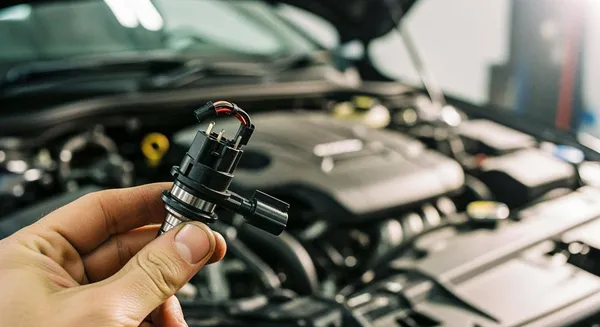
Is your car giving you a headache? You might be dealing with sudden stalling or a rough-running engine. These frustrating engine-related issues often point to a common problem. A faulty camshaft position sensor is frequently the culprit behind these exact camshaft position sensor symptoms. If you have a bad camshaft position sensor, your engine's timing gets thrown off. This guide will help you understand the cam sensor fault symptoms. A faulty camshaft position sensor can make your engine act unpredictably.
Key Takeaways
- A bad cam sensor can make your car stall or run rough. It can also cause hard starts.
- Your car might use more gas and have less power. This happens when the cam sensor is faulty.
- A 'Check Engine' light often comes on. You can use a scanner to find codes like P0340, which points to a cam sensor problem.
- Do not ignore a bad cam sensor. It can cause more damage and is a safety risk.
- Replacing a cam sensor is usually not expensive. The cost is often between $100 and $300.
Common Cam Sensor Fault Symptoms
Think of your car's engine as a complex orchestra. For the music to sound right, every instrument must play in perfect time. The camshaft position sensor is the conductor of this orchestra. It tells the engine's computer (the ECM) exactly when to inject fuel and when to create a spark. When this conductor gets confused or stops working, the whole performance falls apart. You will start noticing several key cam sensor fault symptoms.
Let's look at the most common camshaft position sensor symptoms you might experience.
Stalling and Hard Starts
This is one of the most alarming signs. You might be driving along, and your engine suddenly quits. Or, you try starting your car, and it just cranks and cranks without ever firing up.
Why does this happen?
- Sudden Stalling: If the camshaft position sensor signal cuts out intermittently, the ECM instantly loses its timing reference. It no longer knows the position of the engine's internal parts, so it stops sending fuel and spark. This causes the engine to stall.
- Hard Starting: When you turn the key, the ECM waits for a clear signal from the cam sensor before starting the fuel and spark sequence. A weak or absent signal leaves the computer guessing. This confusion leads to long cranking times, or in some cases, a complete failure to start.
Tech Tip: Your car's computer is always monitoring this sensor. If it detects an intermittent signal (like from a loose wire or failing sensor), it may log a trouble code like
P0344. This code specifically means the signal was lost, which directly causes these starting and stalling issues.
Rough Idle and Misfires
Does your car shake, sputter, or sound uneven when you're stopped at a red light? You're likely experiencing a rough idle caused by engine misfires. This is a classic sign of a faulty camshaft position sensor.
The sensor's job is to ensure each cylinder gets fuel and spark at the precise millisecond it's needed for smooth combustion. When the timing is off, you get misfires. Here’s what’s going on:
- The faulty sensor sends bad information to the ECM.
- The ECM incorrectly times the fuel injection or the spark plug firing.
- Combustion in one or more cylinders becomes inefficient or fails completely.
- You feel this incomplete combustion as a shudder or a "hiccup" from the engine.
These constant misfires not only make for an unpleasant ride but also put extra stress on your engine components.
Poor Acceleration and Power Loss
When you press the gas pedal, you expect your car to respond. With a bad cam sensor, you might find the response is sluggish and weak. This poor acceleration happens because your engine can't produce its maximum power.
Without accurate timing data, the ECM cannot optimize the engine for performance. It defaults to a "safe" but inefficient mode. The engine struggles to burn fuel effectively, which directly reduces its horsepower. In some vehicles, a severe sensor failure can even trigger a "limp mode."
What is Limp Mode? ⚠️ Limp mode is a self-preservation feature in your car. When the ECM detects a critical problem, like a total loss of the cam sensor signal, it drastically reduces engine power and limits your speed. This is designed to protect the engine from severe damage while allowing you to "limp" to a safe location or a repair shop.
Worse Gas Mileage
Are you visiting the gas station more often than usual? The same issues that cause misfires and power loss also destroy your fuel economy. These camshaft position sensor symptoms might be the reason for your extra fuel costs.
An engine running with incorrect timing is an inefficient engine. It wastes fuel in two primary ways:
- Incorrect Fuel Delivery: The ECM might inject too much fuel or inject it at the wrong time, meaning it doesn't burn completely.
- Inefficient Combustion: Misfires mean fuel is being sent into a cylinder but isn't being used to create power. That unburnt gasoline is simply pushed out the exhaust pipe.
Ultimately, your engine has to work much harder (and use more gas) to produce the same amount of power, which is why you see your MPG drop. Recognizing these cam sensor fault symptoms early can save you money and prevent further engine trouble.
How to Confirm a Cam Sensor Problem

The symptoms we've covered are strong clues, but they can sometimes overlap with other engine problems. Before you replace any parts, you need to confirm the issue. Here are two key steps for diagnosing camshaft position sensor symptoms.
Cam Sensor vs. Crank Sensor
You might hear your mechanic mention both a camshaft position sensor and a crankshaft position sensor. It's easy to confuse them, but they do different jobs. Your engine has a crankshaft position sensor to track the engine's bottom end and a camshaft position sensor for the top end. The crankshaft position sensor is the master clock for the entire engine.
A bad crankshaft position sensor can cause stalling, just like a bad camshaft position sensor. The crankshaft position sensor, however, is more fundamental. If the crankshaft position sensor fails completely, your engine will not run at all. Think of the crankshaft position sensor as the main power switch, while the camshaft position sensor fine-tunes the operation.
- The Camshaft Position Sensor (CMP) handles:
- Fuel injection synchronization
- Ignition coil firing sequence
- The Crankshaft Position Sensor (CKP) handles:
- Overall engine speed and piston position
- Ignition and fuel injection timing
Because a faulty crankshaft position sensor can mimic cam sensor issues, diagnosing is key. A problem with the crankshaft position sensor is a serious engine issue. The crankshaft position sensor is vital.
Reading the Check Engine Light Code
Is your check engine light on? That little light is your car's way of telling you it has already found a problem. You can read the specific error code with a simple tool. Most auto parts stores will scan it for free, or you can buy an inexpensive OBD-II scanner. These tools plug into a port under your dashboard and give you a code.
For a faulty camshaft position sensor, you will likely see codes related to its circuit.
P0340: Camshaft Position Sensor Circuit MalfunctionP0341: Camshaft Position Sensor Circuit Range/PerformanceP0342: Camshaft Position Sensor Circuit Low InputP0343: Camshaft Position Sensor Circuit High Input
A code like P0340 is a huge clue. It confirms the engine computer is seeing a problem with the sensor's signal. However, it could mean the sensor is bad, the wiring is damaged, or there's another engine issue. Getting the code is the first and most important step in diagnosing the problem correctly.
What to Do About a Faulty Cam Sensor
So, you've diagnosed the symptoms and read the codes. Now you're facing the big question: what's next? Let's cover whether your car is safe to drive and what you can expect to pay for a fix.
Can You Still Drive Your Car?
Technically, you might be able to drive with a faulty camshaft position sensor, but it's a bad idea. The risks often outweigh the convenience. Your engine performance will suffer, with sluggish acceleration and terrible gas mileage. This happens because the computer, lacking good data, defaults to a "safe" mode with a rich fuel mixture to prevent damage.
In some cases, your car may become completely undrivable. You should not drive if:
- The engine won't start at all.
- The engine stalls frequently and unpredictably while you are driving.
- The signal from the sensor is too weak for the computer to deliver fuel and spark.
Urgent Warning! ⚠️ If your check engine light is blinking, pull over as soon as it is safe. A blinking light signals a severe misfire. Continuing to drive can quickly destroy your expensive catalytic converter with unburnt fuel.
Driving with a faulty camshaft position sensor puts unnecessary stress on your engine and creates a safety hazard. The best move is to get it to a repair shop as soon as possible.
Replacement Costs
The good news is that fixing this issue won't break the bank. The camshaft position sensor part itself is usually affordable, often costing between $30 and $100, depending on your vehicle.
The other part of the cost is labor. Fortunately, this is often a quick job for a mechanic. Labor costs to replace the sensor typically range from $75 to $170. According to data from thousands of repairs, the average labor cost falls between $127 and $203.
To give you a better idea, here are some real-world examples of labor costs for different cars:
| Car Model | Labor Cost |
|---|---|
| 2009 Toyota Corolla | $69.55 |
| 2009 Honda Odyssey | $67.55 |
| 2005 Honda CR-V | $85.00 |
| 2004 Ford Mustang | $81.69 |
| 2006 Honda Ridgeline | $96.42 |
Overall, you can expect the total replacement cost to be somewhere between $100 and $300. This is a small price to pay to restore your car's reliability and prevent more serious engine problems down the road.
You now know the key cam sensor fault symptoms. Stalling, a rough-running engine, and a check engine light all point toward a bad camshaft position sensor. While these signs are strong clues, only a diagnostic scan can confirm the problem. Don't ignore the issue, as it can lead to bigger problems for your engine.
Take Action Now! 🏁 Getting your car checked by a professional is the best next step. A new camshaft position sensor can restore your engine's performance and reliability. Acting quickly helps you avoid:
- Accelerated wear on engine parts.
- More expensive future repairs.
- Potential damage to your starter and battery.
FAQ
Can I replace a cam sensor myself?
Yes, you often can! If you have basic mechanical skills, this is a great DIY job. The sensor is usually held by one bolt and is easy to reach. Just be sure to disconnect your battery first and follow a guide for your specific vehicle.
How many camshaft sensors does my car have?
It depends on your engine type.
- Inline engines (like a 4-cylinder) typically have one sensor.
- V-type engines (like a V6 or V8) usually have two sensors, one for each side.
Check your car's repair manual to be certain.
What happens if I ignore a bad cam sensor?
Ignoring the problem will only make things worse. You will face poor gas mileage and constant performance issues. Most importantly, frequent stalling is a safety risk, and severe misfires can quickly destroy your catalytic converter, turning a small repair into a very expensive one.
Does a cam sensor code always mean the sensor is bad?
Not always. A code like P0340 points to a problem in the sensor's circuit. While the sensor itself is the most common failure point, the issue could also be damaged wiring, a loose connection, or even a problem with the engine's computer (ECM).